Mold in air ducts in Raleigh, NC

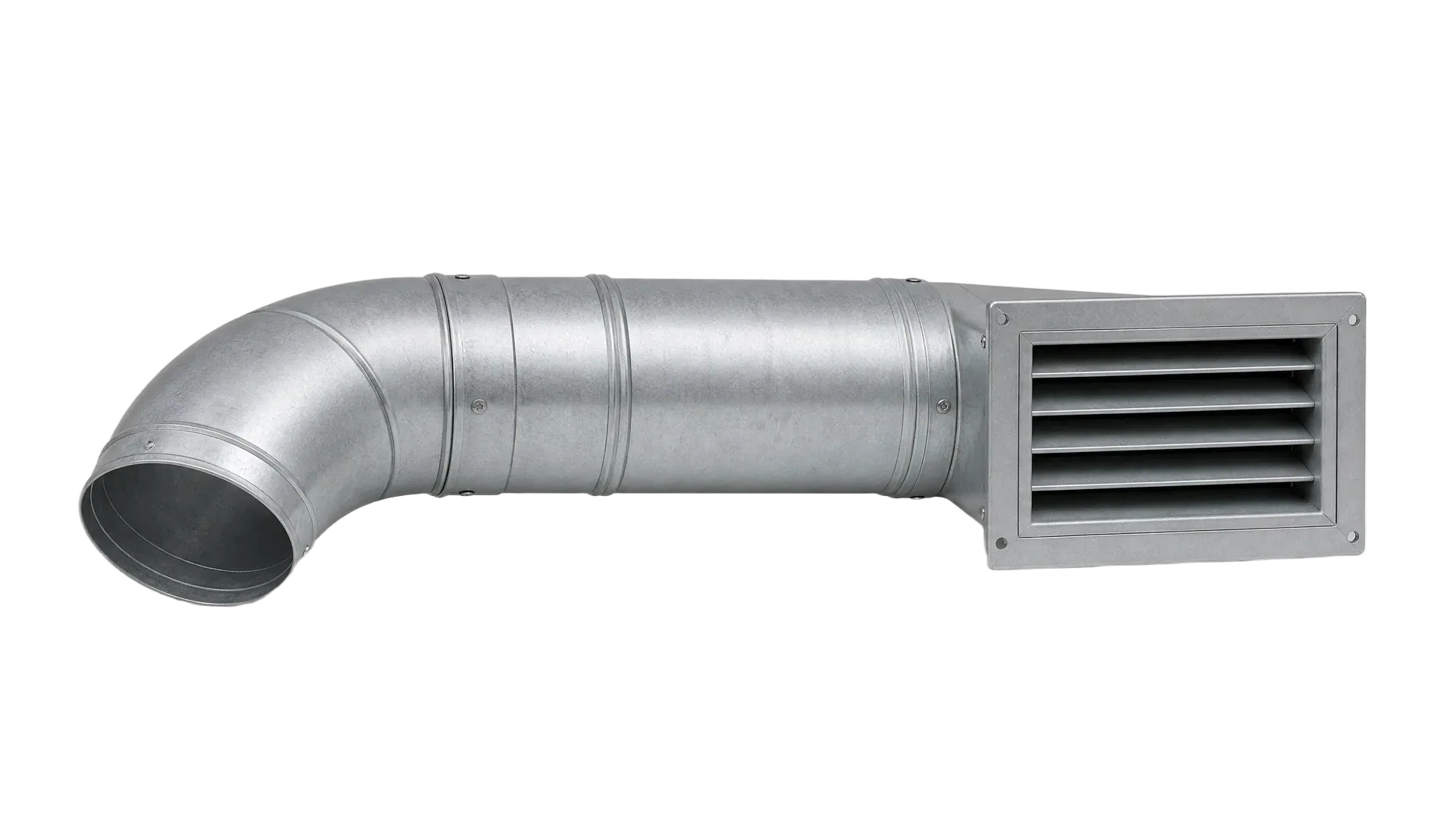
A galvanized metal round duct with a 90-degree elbow connected to a rectangular louvered vent grille, shown against a plain gray background.
Hand it off

Mold in your air ducts usually means moisture got in somewhere, and summer here gives it plenty of chances. Raleigh summers stay sticky for months, and when humid air meets a cold duct surface or sits in a duct that never fully dries out, mold gets a foothold and spreads along the inside of the metal or flex line. You might notice a musty smell when the system kicks on, dust that seems to come back no matter how often you clean, or a feeling that the air is heavier in certain rooms. Mold doesn't stay put inside a duct. Every time air moves through the system, it carries spores into the rooms you spend your evenings in. The duct system has to be cleaned to get rid of it, and whatever is letting moisture collect, a leak, condensation, poor drainage, needs to be found so it doesn't just grow back.

Why does mold keep coming back in your ducts?

  • Half the homes here were built by 2000

    Half the homes in Wake County were built in 2000 or earlier, so a lot of duct systems here have had decades to collect moisture and dust that feed mold.

  • Heat runs October through April

    Cooling runs May through September, five months of cold duct surfaces meeting warm, humid air, which is exactly the setup mold needs to take hold.

  • Cooling runs May through September

    Heat runs October through April, seven months where ducts sit dry, so what grows over summer gets pushed through the house before it has a chance to clear out on its own.

ACS 2020-2024 · NOAA nClimDiv 1991-2020

Cleaning the ducts yourself

You can pull a return vent cover and wipe what you can reach with a cloth and soapy water. That takes care of surface dust and the mold you can actually see on the metal near the opening. It does nothing for mold growing further back in the duct run, behind bends, or down near the coil and drain pan, because a shop vac and an arm's reach only go so far. If the mold keeps showing up a few weeks after you clean it, that tells you the growth is coming from somewhere inside the system you can't get to, not from what's settling on the grille.

Having the system cleaned

A full duct cleaning uses equipment that reaches the whole run, not just the first few feet, and it can get into the coil and drain pan where a lot of Raleigh duct mold actually starts. That matters because mold in those spots keeps feeding spores into the air you breathe no matter how often you wipe the vents. A contractor doing this work can also tell you whether the mold is a cleaning problem or a sign of a leak, a condensation issue, or a duct that isn't sealed right, which wiping alone will never tell you.

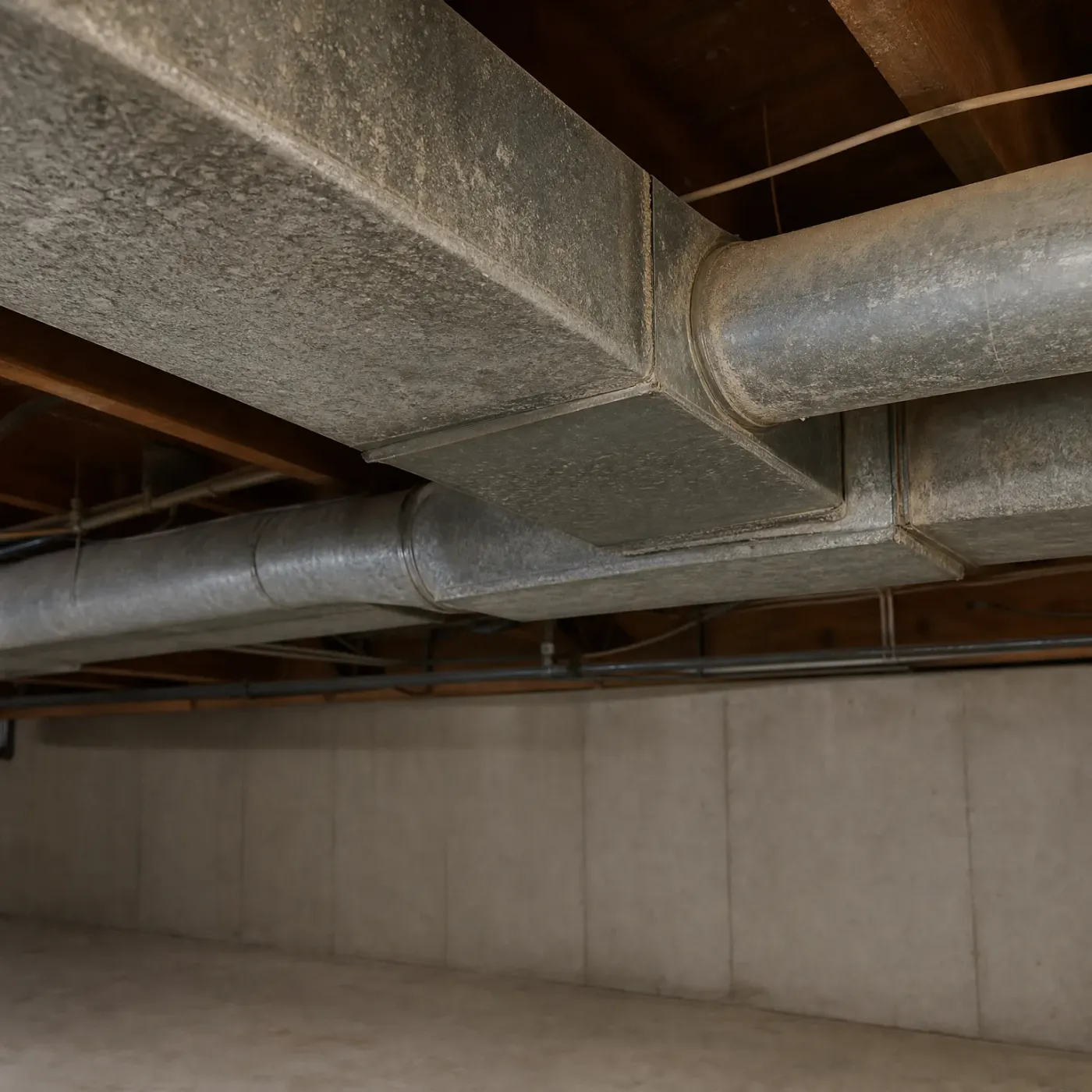
Galvanized rectangular and round sheet-metal ductwork running beneath a wood-joist ceiling in a basement with concrete walls and floor, with pipes and wiring alongside.
Before you get your ductwork cleaning
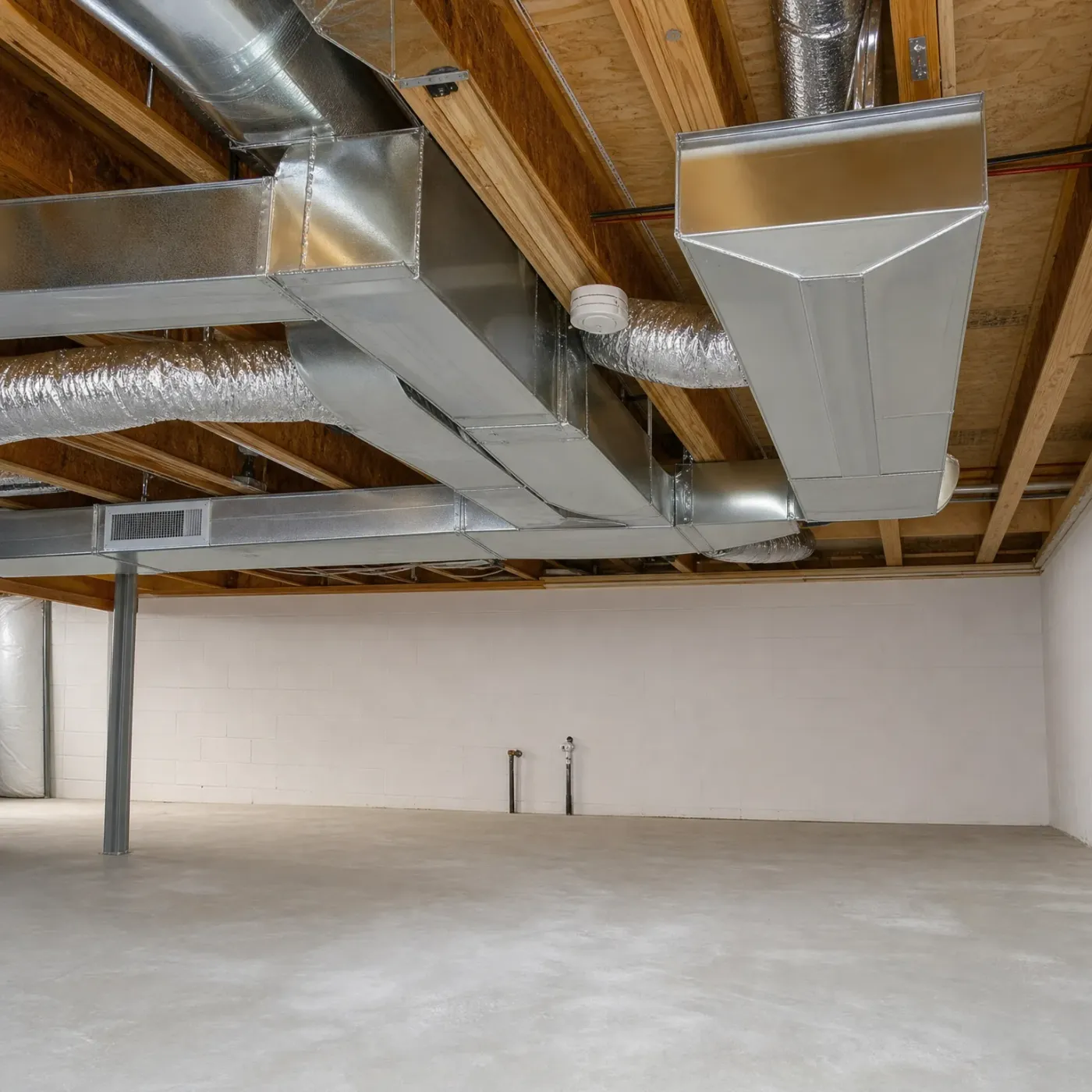
Empty basement with bare concrete floor, painted block walls, and an exposed wood-joist ceiling with sheet-metal and insulated flexible ductwork and a steel support column.
After you get your ductwork cleaning

Mold needs two things to grow in a duct: moisture and something to eat. The dust that settles on duct walls month after month is enough food on its own. Moisture usually comes from condensation, and it tends to show up where a duct runs through an attic or crawlspace, places that don't stay conditioned like the rest of the house. The metal there runs colder than the air around it, and when humid air meets that cold surface, water collects on the inside liner. Flex duct holds onto that moisture longer than sheet metal does, which is why it's often the first place mold takes hold. Once a duct stays damp for even a day or two, mold has what it needs. The coil plays a part too. If mold is growing there, the blower pushes spores into the duct system every time it runs, so a coil problem becomes a duct problem fast. A musty smell right when the air kicks on is usually mold sitting close to the vents themselves, not buried somewhere in the line.

How Mold Actually Gets In

  • Mold needs a food source to grow, and the dust and skin cells that collect on duct walls over months are enough to feed it.
  • Condensation often forms where a duct runs through unconditioned space, like an attic, because the metal gets colder than the humid air around it.
  • A musty smell when the system first kicks on usually means mold is sitting right at the supply vents, not deep in the line.
  • Mold growing on the evaporator coil gets pulled into the duct system every time the blower runs, so the coil and the ducts are tied together.
  • A duct that stays wet for more than a day or two gives mold enough time to take hold on the inside surface.
  • Insulated flex duct holds moisture against its inner liner longer than sheet metal, which is one reason it shows mold more often.
Empty unfinished basement with concrete walls and floor, exposed wood joists, metal HVAC ducts and pipes overhead, and a steel support column near a framed wall.
Clean ducts like these move air without spreading mold spores through the basement or the rooms above it.
Empty basement with bare concrete walls and floor, a steel support column, and galvanized sheet-metal ductwork and pipes running along the exposed wood joist ceiling.
Once mold takes hold in ducts branching this many ways, it can travel with the air to every room they feed.
A smiling bearded man in a dark long-sleeved shirt sits on a brown leather sofa in a living room, with a large glass bowl of popcorn on a table in the foreground and a houseplant and doorway behind him.
A smiling man with gray-streaked hair and a beard in a dark blue sweater reclines on a sofa in a living room with a lit wood stove, shelves, wicker baskets and a bowl of popcorn on a table.
A smiling bearded man in a dark plaid shirt sits on a green couch beside a cushion and a wooden bowl of popcorn, with a blurred kitchen and living area behind him.
A smiling bearded man in a dark green henley shirt sits on a gray couch in a living room with a bookshelf, lit lamp, houseplant and framed picture behind him, and a bowl of popcorn in the foreground.

Done looking for a duct system pro

Skip searching for someone who cleans ducts in Wake County.

Asking costs nothing, and the choice to hire stays yours.

What a musty smell tells you

If the air coming out of your vents smells musty when the system first kicks on, that usually means mold is sitting somewhere in the duct run, not just at the vent cover. The smell often fades after a few minutes because the air dilutes it, but the source is still in there. A smell that comes and goes with the thermostat, rather than one that lingers all the time, points to the ducts instead of a damp spot elsewhere in the house.

Why some rooms smell it worse

Mold in ducts rarely spreads evenly through a house. Rooms fed by a duct run that passes through the attic or crawl space tend to smell it more, since that's usually where the moisture problem started. A room right next to the air handler can smell it strongest of all. If one or two rooms always smell worse than the rest, that's worth mentioning when you describe the problem, since it helps point to where the moisture is getting in.

Power here costs 14.92 cents per kilowatt-hour

At just under 15 cents a kilowatt-hour, running the blower longer than you need to doesn't cost much to notice. But a system fighting mold-clogged ducts pulls air through dirtier coils and narrower passages, and that extra runtime shows up on the bill every month it goes unfixed.

EIA-861 2025

Mold in the ducts doesn't stay in the ducts. It rides the air into bedrooms and living rooms every time the system turns on, all summer long.

So the smell you notice in one room is really a sign of what's moving through all of them, and it keeps moving until the ducts get cleaned.

A woman in a cream knit sweater reclines on a gray sofa with her eyes closed and a slight smile, covered by a fleece blanket with a closed book on her lap, a lit table lamp and potted plants behind her.
A smiling man with curly graying hair and a dark knit sweater sits at a candlelit dinner table with a glass of red wine, a water glass and a bowl of salad in the foreground, in a dimly lit room with a lamp, framed picture and window behind him.

Where this leaves you

  • Mold in ductwork almost always traces back to moisture, and Wake County's long, humid summers keep giving it chances to take hold.
  • A musty smell at the vents, mold around a duct run, or a system that seems to work harder than it should are all signs worth acting on.
  • Wiping down what you can reach at the vent covers helps the surface but leaves whatever is growing further down the duct run untouched.
  • Once mold is in the ducts, it travels with the air to every room the system feeds, not just the one where you noticed it.
  • Finding a contractor who cleans ducts for a living means you skip the searching, the calling around, and repeating the same explanation to each one.
  • The problem doesn't clear on its own, and the question is whether you deal with it now or after it's spread further through the house.

Mold in your ducts started with moisture, and Wake County summers make sure there's no shortage of it. By the time you notice a musty smell when the system kicks on, or you've spotted mold around a duct run, it's already had time to settle in. Wiping down a vent cover tells you something is there. It doesn't tell you how far it's spread, and it doesn't do anything about the part you can't reach, which is most of the duct run. Every time the blower runs, whatever is growing back there moves with the air, into whatever room that duct feeds. Not just the room where you first noticed the smell.

None of that clears up by leaving it alone. The system keeps running the same way it has been, the air keeps carrying what's in the ducts, and the longer it sits the more of the house it reaches. The only real choice is whether you deal with it now or after it's had more months to work through the house.

Getting someone out to look at it is its own chore, separate from the mold itself. Finding a contractor who actually does duct cleaning, calling around to see who can come out, explaining the musty smell and the vent and the room it's worst in to each one you call. That part doesn't have to be yours. The cleaning itself still takes a contractor's time and equipment. But finding the right one to call stops being something you have to sort out on your own.
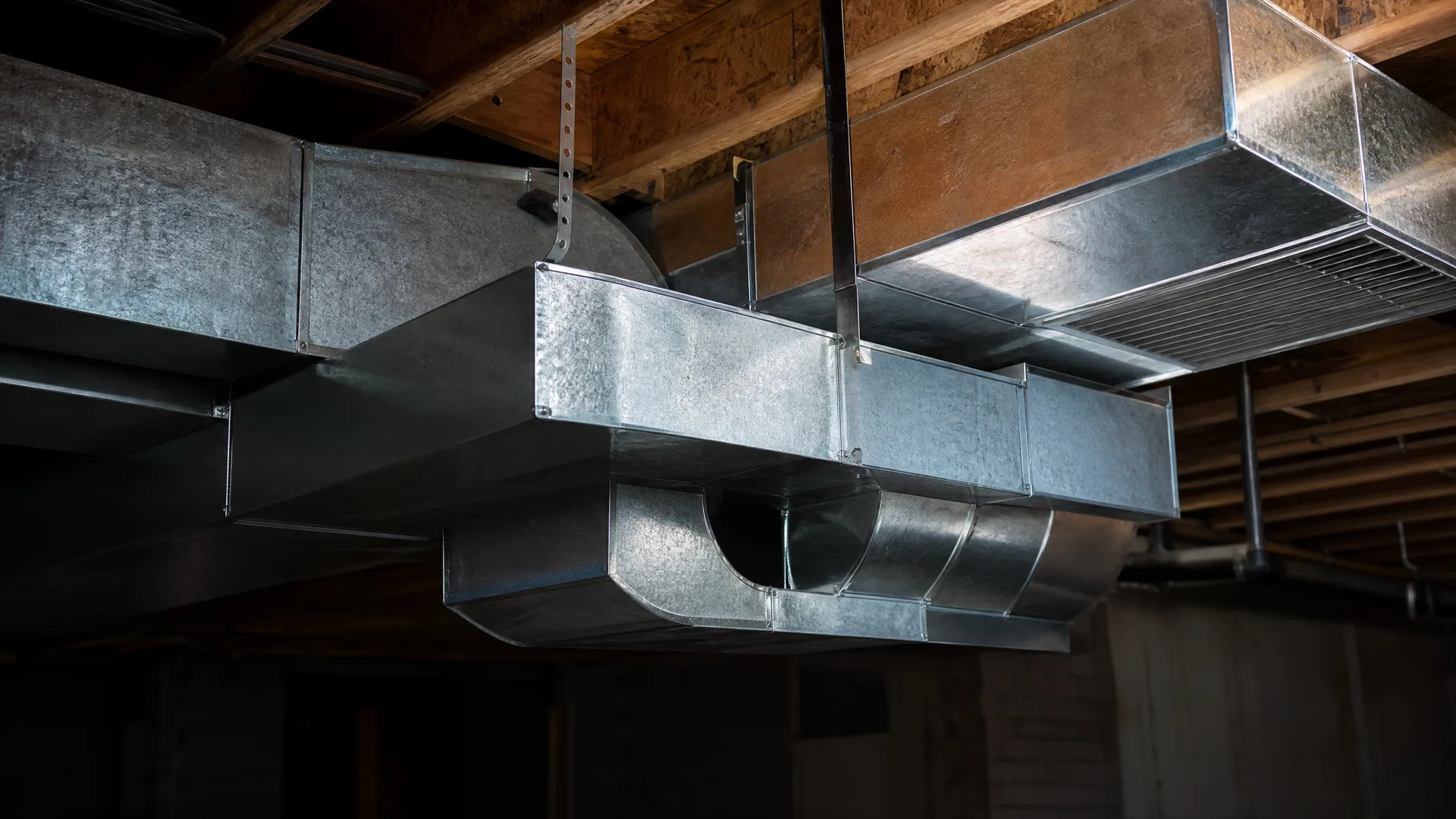
Galvanized sheet metal HVAC ductwork with rectangular trunks and round takeoffs suspended from wooden floor joists in an unfinished basement ceiling.

It's off your list after this

Duct and vent cleaningDucts or ventsWake County, NC
Step 1 of 2

What ZIP code is the job in?