A few hours a day, every summer day
That's how long the coil sits wet during a Charlotte cooling run. Moisture that doesn't drain or dry out fast enough is what feeds the smell coming through your vents.
One request and it's handed off
That musty smell coming through your vents usually means moisture sitting somewhere in the duct system, not just dusty air. With Charlotte summers running long and sticky, ducts stay damp longer than you'd think, and that smell is worth tracking down. This page gets into what's behind it and what cleaning it out involves. Send the form once and skip the part where you're calling around town explaining the same thing over and over.
Hand it overA musty smell from your vents almost always means mold or mildew growing somewhere inside the ductwork, usually where moisture has collected on cooling coils, in a drain pan, or along duct walls that stay damp. In Charlotte, the air conditioner runs for months at a stretch, and every time it runs it pulls humidity out of the air and turns it into water that has to drain away. If that water sits instead of draining, or if condensation keeps forming on ducts that run through a damp crawlspace or attic, mold has what it needs to grow. Once it takes hold, the smell comes through every vent in the house, not just one room, because the air handler pushes it through the whole system. It will not go away on its own, and it usually means something in the system needs to be cleaned or repaired, not just covered up with an air freshener.


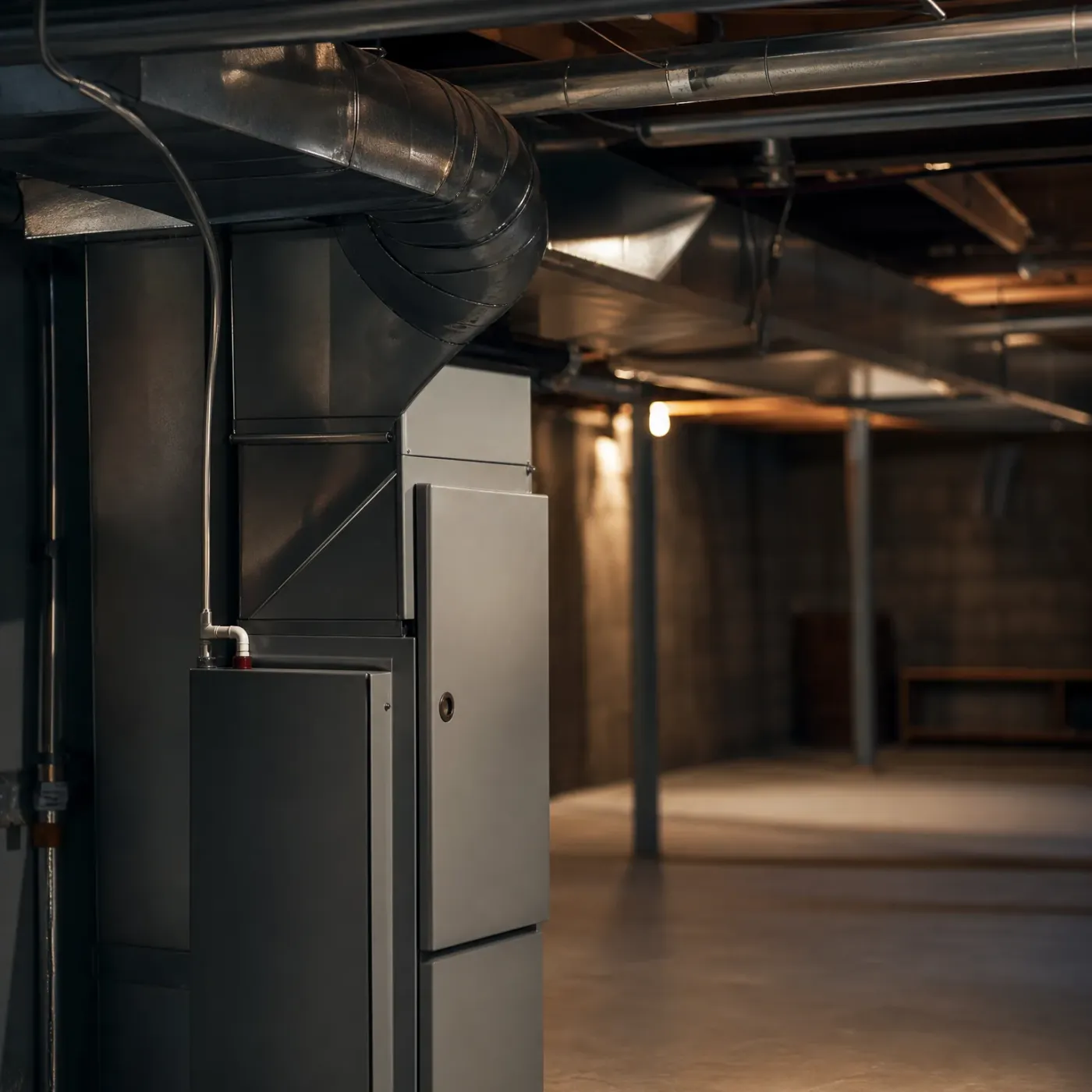
The air handler cools your house by running the evaporator coil cold enough that humidity in the air collects on it as water. That water is supposed to drip into the drain pan below and leave through the drain line. It only takes a partial clog, often algae growing inside that line, for water to start backing up and sitting in the pan instead of draining out. Standing water next to a cold, damp coil is exactly where mold and mildew take hold. The blower doesn't know the difference. It pulls air across that coil on every cycle and pushes it straight into your ducts, picking up the smell on the way. A clogged filter makes this worse because it chokes airflow, so the coil takes longer to dry between cycles and stays wet more of the time. Once spores settle into flex duct or duct lining, they can hang on even after the pan and coil get cleaned, which is why the smell sometimes outlasts the original problem.




That's how long the coil sits wet during a Charlotte cooling run. Moisture that doesn't drain or dry out fast enough is what feeds the smell coming through your vents.
The drain line under the coil is a common spot for algae to build up. Once it backs up, water sits in the pan and the musty smell follows.
Half the homes here were built by 1997
Cooling runs May through September here, five months of condensation sitting on the coil and in the drain pan.
Heat runs October through April
Heat runs October through April, so the system barely gets a dry stretch before summer humidity starts building in the ducts again.
Cooling runs May through September
Half the homes in the county were built in 1997 or earlier, which means older duct runs that have had more years to collect moisture and grow mold.
ACS 2020-2024 · NOAA nClimDiv 1991-2020
A contractor inspects the coil, drain pan and duct interior for mold.
The blower and return ducts get wiped down and vacuumed clean.
Mold-affected sections get treated or sanitized to kill what's growing.
The drain line gets cleared so condensation flows out instead of sitting.
You notice it most when the air kicks on, a damp, earthy smell that fades after a few minutes then comes back the next day. Maybe one room smells worse than the rest of the house. Maybe you've seen a little dark staining around a vent cover or felt the air coming out feeling heavier than it should. None of that is just in your head. Left alone, mold in the ductwork keeps growing as long as the moisture that feeds it is still there, and it can start affecting air quality throughout the house, not just near the one vent you noticed it first.


You already know the smell, and now you know roughly where it's coming from. What you don't have is a way into the duct system to check the coil, the drain pan and the lines yourself. That takes a contractor with a camera and the right tools, and finding one in Charlotte means the usual slog: searching, calling two or three companies, explaining the same musty-vent story each time, then sitting with quotes trying to guess who actually knows ductwork and who just wants the job. Send the request above and that part is done. One contractor who works on Charlotte duct systems gets your information and reaches out, and you go from wondering what's growing behind your vents to having someone who can actually look.
The air kicks on and that damp, earthy smell comes with it. It might fade after a few minutes, then show up again the next time the system runs. You keep the windows cracked when you can, or run a candle in the room that smells worst. You've maybe already pulled the filter and found it clean, which means the smell is coming from deeper in the system than anything you can reach. The mold or mildew is still growing on the coil, in the drain pan, or along the duct walls, and every cooling cycle pushes that air through the house. Guests notice it before you do, because you've been smelling it so long it's just part of the house to you now.
A contractor has been inside the system, not just at the vents. The coil is clean, the drain pan is clear, and the line that carries condensation away is running free instead of backed up. Any mold found along the duct walls has been treated. Air coming through the vents when the system kicks on smells like nothing, the way it did before the smell started. You're not covering it with candles or cracking windows to air the house out. The smell was never going to clear on its own, since the moisture feeding it was still sitting on the coil every time the system ran. Now it isn't.
Clearing a clogged drain line or cleaning a moldy coil doesn't run up your power bill. At 13.33 cents per kilowatt-hour, Mecklenburg County rates are low enough that the fix for this smell is about airflow and moisture, not electricity.
EIA-861 2025

The smell coming through your vents is moisture sitting where it shouldn't, on the coil, in the drain pan, or along the duct walls that never fully dry between Charlotte's long cooling runs. A contractor can check those spots, clean what's grown there, and clear the drain line so the water goes where it's supposed to. That's the fix, and it doesn't change with the season.
Finding that contractor is the part you don't have to do yourself. No searching for someone who handles duct and coil cleaning, no calling three companies and explaining the smell three times, no sitting on hold waiting for a callback, no lining up quotes side by side to figure out who actually knows this work. Send the form once and that search is off your plate.

Explain the job once and skip repeating it on every call.