Is duct cleaning worth it in Raleigh, NC

Skip searching for someone who cleans ducts in Wake County.

Answer a few questions

It depends on why you're asking. If no one in the house has allergies, there's no mold or rodents in the ducts, and the system runs fine, cleaning the ducts won't lower your bill or make the air noticeably cleaner. What duct cleaning actually fixes is a buildup problem: dust, pet hair, and in older homes insulation debris that collects in the runs over years and gets stirred up every time the blower kicks on. Raleigh's long humid summers mean systems here run a lot of hours, which pulls more of that debris through the ducts over a season than in places with milder weather. If you've had recent work done on your attic or crawlspace, smell dust when the air kicks on, or someone in the house has new allergy symptoms, cleaning is worth doing. If none of that applies, you can skip it without losing anything.

Unfinished basement with poured concrete walls, a bare concrete floor, white PVC pipes running down the wall, and exposed sheet-metal HVAC ductwork beneath wood floor joists.

Ducts Running Clean

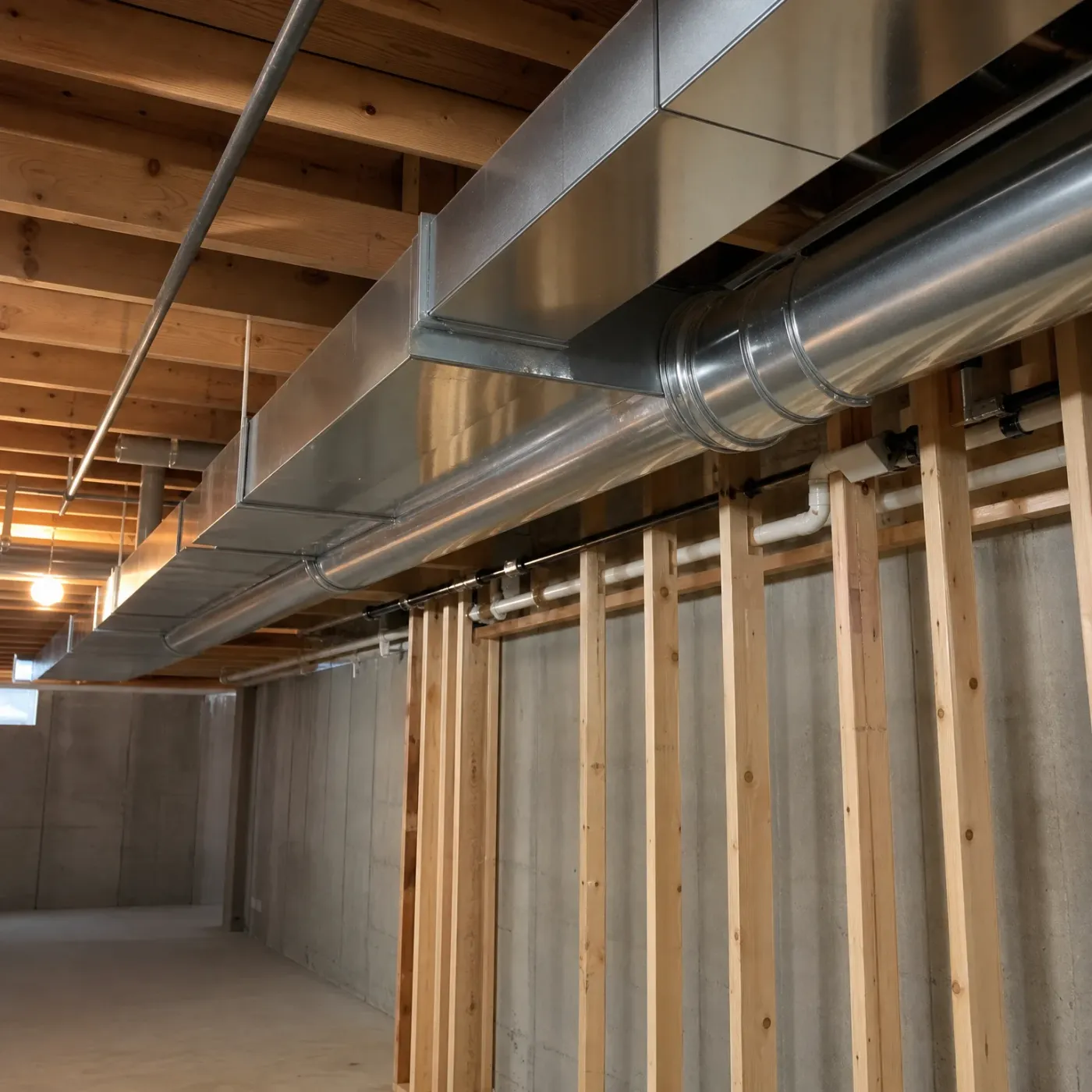
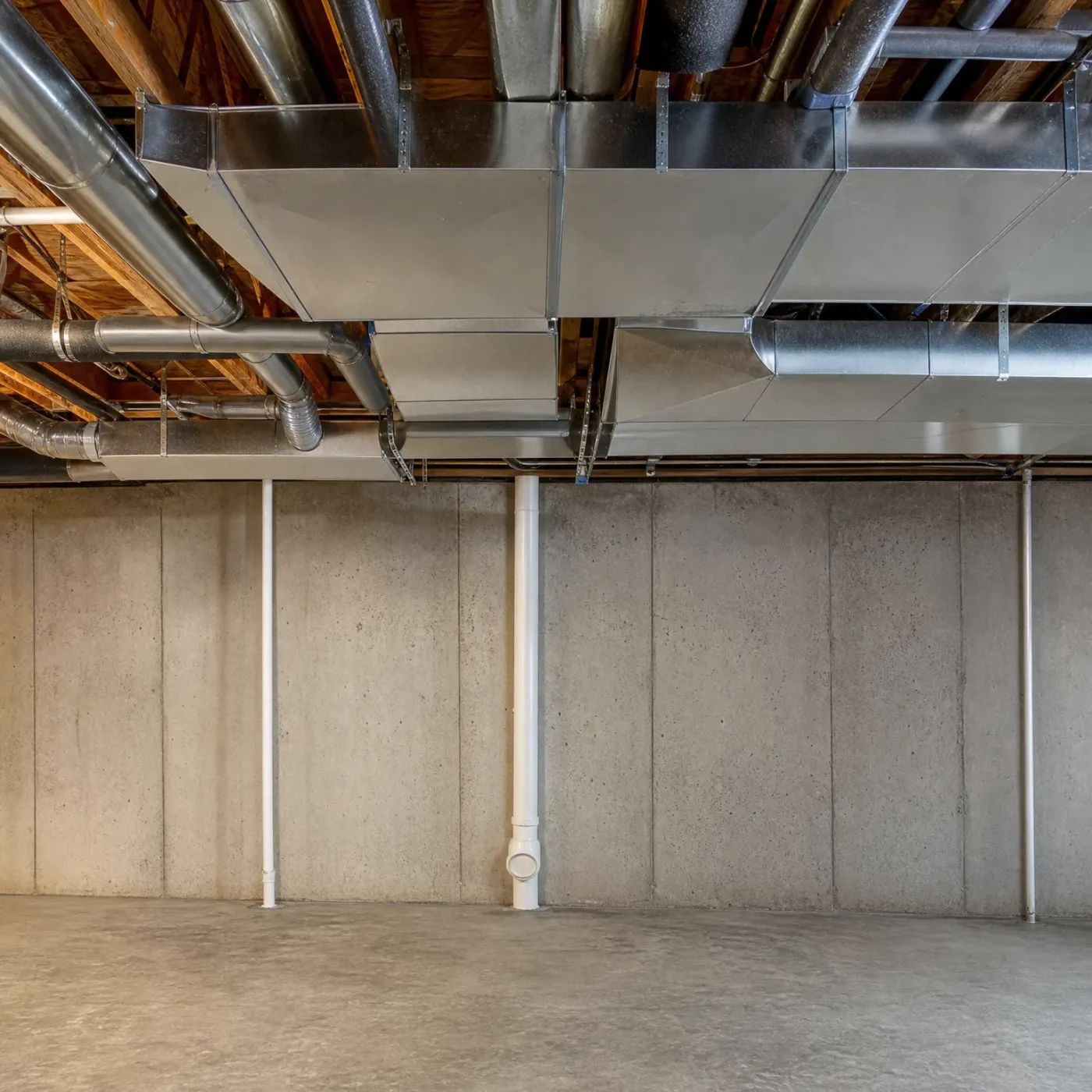
This is what a duct system looks like when there's nothing to find. Air moves through sealed metal runs without resistance. No dust ring at the vents, no musty smell when the furnace kicks on. If this is your basement, cleaning won't change how the house feels.
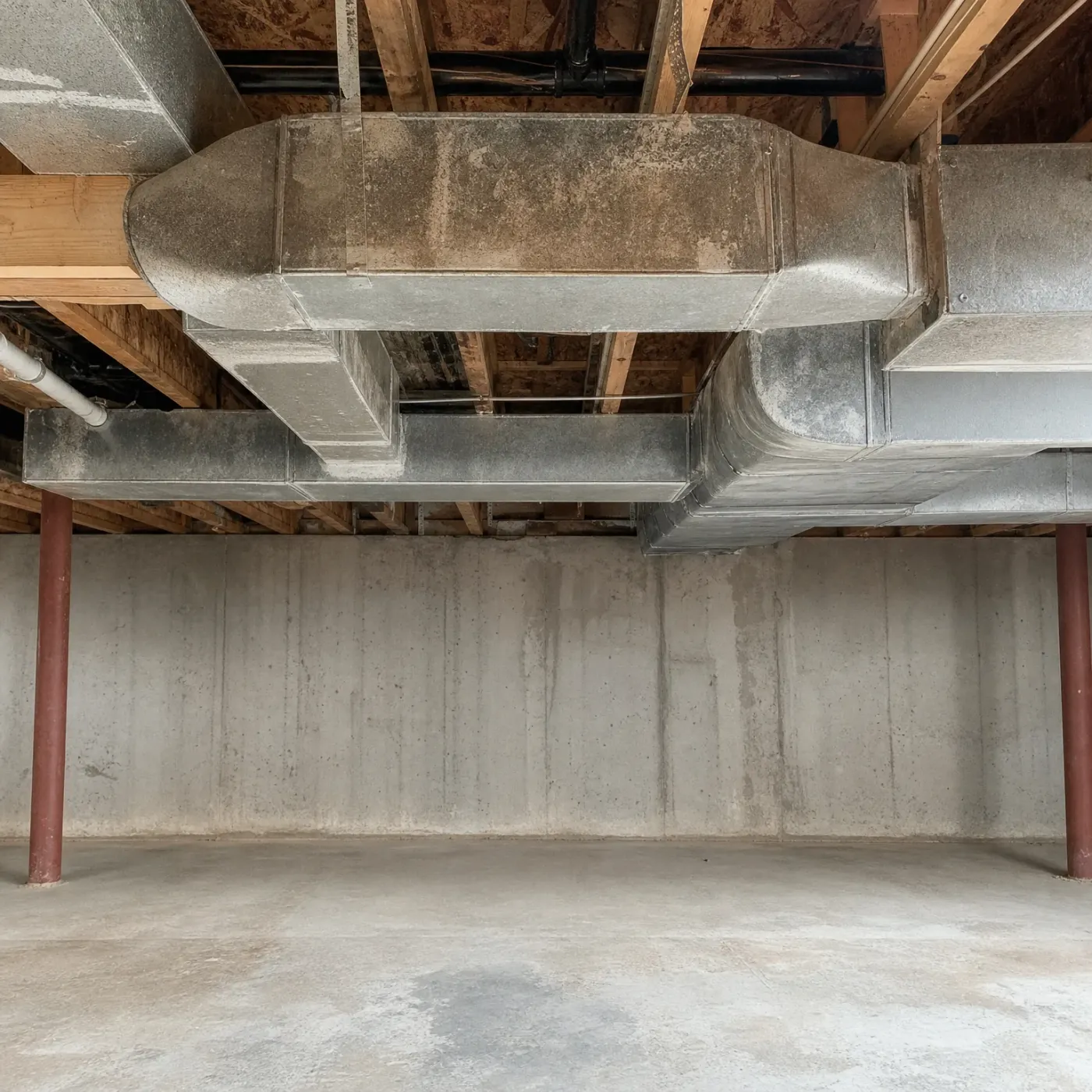
Unfinished basement with bare concrete walls and floor, galvanized sheet-metal HVAC ducts running beneath wooden floor joists, and two red steel support columns.

Ducts In Trouble

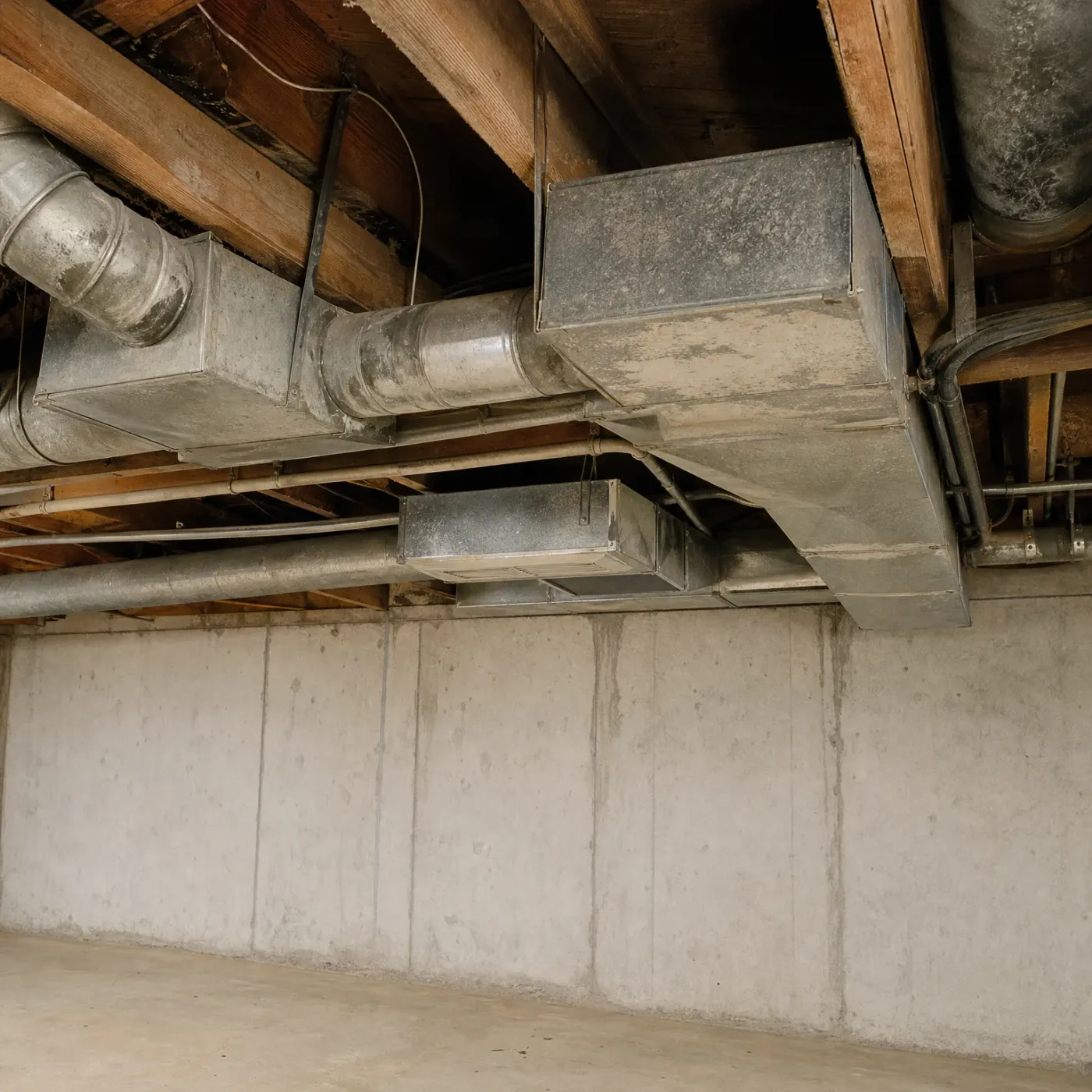
This is what brings a reader to ask the question. Rodents get into runs like these through small gaps, and insulation gets torn loose or damp near the foundation wall. If you can see droppings, matted insulation, or standing water near the ducts, that's a reason to have them cleaned, not the dust alone.

What's making you ask this question

Something sent you looking. Maybe it's the ring of dust around the vent covers, or the smell when the heat kicks on after sitting all summer. Maybe someone in the house has been sneezing more than usual, or you pulled a vent cover off and didn't like what you saw. Maybe the house sat empty a while, or you just moved in and have no idea what the last owners did or didn't do. None of that tells you on its own whether cleaning is the fix. But if there's visible mold around a vent, or you know rodents got into the crawlspace or attic where the ducts run, that's not a comfort issue. That can put what you're breathing at risk, and it's worth having someone look before you decide anything.

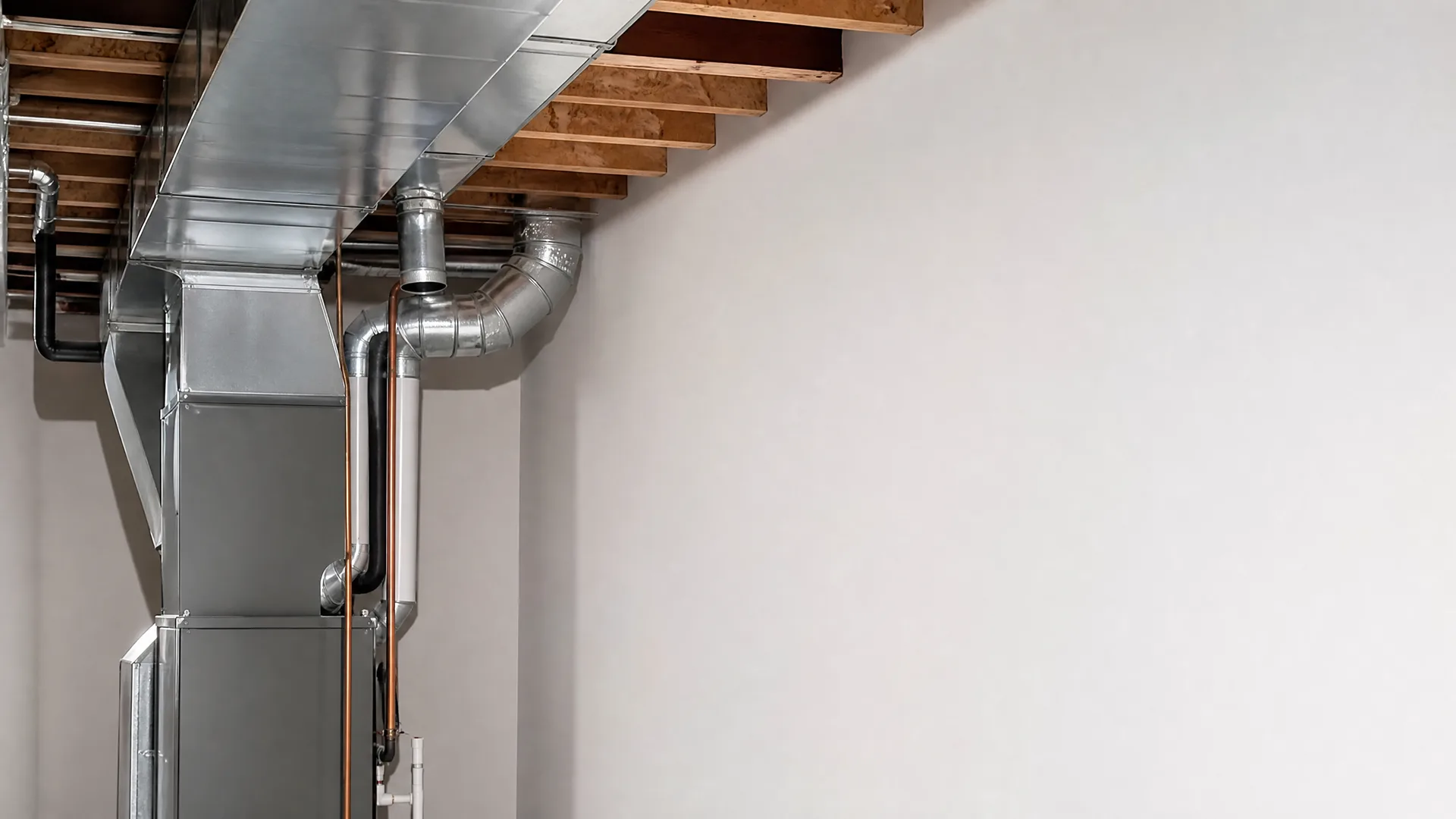
Basement interior showing a furnace with sheet-metal ductwork, a round flue pipe and copper lines running beneath exposed wooden floor joists next to a plain light-colored wall.

What a cleaning actually removes

A duct system holds dust, pet hair, and whatever gets pulled in through return vents or gaps in the runs. Over years that builds into a layer coating the inside of the metal. Cleaning scrapes and vacuums that layer out, run by run, down to bare metal. It doesn't change the ductwork itself or fix a leak or a crushed flex line. It just takes out what collected inside.

Interior corner of a building with a large blank white wall beside an unfinished ceiling showing wood joists, galvanized sheet-metal ductwork, and white and copper pipes.

Why sealed ducts matter more

Wake County summers push humid air against anything cool, and a duct system is no exception. If the runs are sealed tight, that moisture stays outside the metal where it belongs. If there's a gap or a seam that's opened up, humid air gets pulled in and mixes with dust already sitting there, which is how you end up with the musty smell instead of just a dusty one. Cleaning won't seal that gap.

How old are Wake County duct systems, and does that change things?

  • Half the homes here were built by 2000

    Half the homes in Wake County were built in 2000 or earlier. If yours is one of them, the ducts have had more years to collect dust nobody has looked at.

  • Heat runs October through April

    Heat runs here from October through April, about seven months. That's seven months of air pushing through the same runs, carrying whatever settled in them.

  • Cooling runs May through September

    Cooling runs May through September, about five months. Combined with winter, your system moves air through those ducts nearly year-round.

ACS 2020-2024 · NOAA nClimDiv 1991-2020

If you're asking because of a sales pitch, a flyer in the mail, or a number that sounded too good to pass up, that's not a reason. Ducts don't need cleaning on a schedule the way a furnace filter does.

If you're asking because of a reason you can point to, a family member who can't stop sneezing at home, a smell that wasn't there last year, a dust ring you can see with your own eyes, that's worth having someone look.

A smiling woman with long dark hair in a gray sweater sits behind a white countertop holding a glass of red wine, with a dimly lit living room and dark kitchen island in the background.
A woman in a beige knit sweater with her hair up laughs while looking to the side, seated in a dimly lit living area with a sofa, windows and a kitchen counter behind her, a glass of red wine in the lower right foreground.
A woman in a black sweater laughs while seated at a light stone counter with a glass of red wine, in a dimly lit living and dining room with bookshelves, a table lamp and framed artwork behind her.
A smiling woman with long dark hair in a beige sweater sits at a granite counter with a glass of red wine, with a living room, fireplace and dining area behind her.

A real cleaning starts with a vacuum collector set up at the trunk line, pulling negative pressure so nothing loosened by the brush ends up back in the room it came from. From there the crew works each run with a brush or a whip, supply and return handled separately since they collect different things. The furnace or air handler gets opened too. The blower wheel and the coil pick up the same film the ducts do, and skipping them leaves half the job undone. If your runs include flex duct, the insulated tubing you'll find in a lot of crawlspaces and attics around Wake County, it takes a gentler pass than metal trunk line, since a stiff brush can tear the liner inside it. When the work is finished, every vent cover goes back down and gets checked, and the register boots get checked too. A boot that's come loose pulls in crawlspace or attic air all year, cleaning or not. What cleaning won't reach is anything behind the wall or under the slab. A smell that comes back after the vacuum's gone through usually means the source was never in the ductwork to begin with.

How a cleaning actually gets done

  • A duct cleaning crew runs a brush or whip down each run while a vacuum collector holds negative pressure at the trunk line so loosened debris doesn't just blow out the next vent.
  • Supply runs and return runs get cleaned separately, since the return side pulls in household dust and the supply side carries conditioned air straight to a room.
  • The furnace or air handler itself gets opened up too, because the blower wheel and coil collect the same buildup the ducts do and a vent-only cleaning skips them.
  • Flex duct, the insulated tubing common in crawlspaces and attics here, takes more care than sealed metal trunk line because a stiff brush can tear the inner liner.
  • A legitimate job seals every vent cover back down and checks that the register boots are still fastened to the duct, since a loose boot pulls attic or crawlspace air into the system year-round.
  • Cleaning doesn't touch what's inside the walls or under the slab, so a smell that keeps coming back after a cleaning usually points to a source the vacuum and brush can't reach.
Basement ceiling with galvanized sheet metal ductwork, round pipes and rectangular plenums running between wooden joists above a bare concrete foundation wall and floor.
Before you get your ductwork cleaning
Empty basement room with bare concrete walls and floor, and an exposed wood-joist ceiling carrying sheet-metal ductwork, insulated pipes, and recessed lights.
After you get your ductwork cleaning

Power here costs 14.92 cents per kilowatt-hour

At that rate, a blocked return or a duct run full of dust makes the system work harder to move the same air, and that shows up on the bill. Clean ducts don't lower the rate you pay, but they take some of the strain off the system pushing air through them.

EIA-861 2025

A smiling bearded man in a dark sweater sits at a dinner table with lit candles, a glass of red wine, and bowls of food, in a dimly lit room with a lamp and houseplant behind him.
A woman with dark hair in a bun sits on a beige sofa under a knit blanket with her eyes closed and an open book in front of her, with a lit lamp and houseplant in the background.
Unfinished basement with exposed wood joists, galvanized rectangular and round ductwork, piping, stud framing against concrete walls, and a bare hanging light bulb.

No calling every shop in Wake County

The pro who gets in touch is licensed in North Carolina and works in Wake County.

Fill out one short form instead of calling around.

Describe it once

There's no charge for the request.

An empty unfinished basement with concrete floor and walls, exposed wood joists, steel beams and support posts, galvanized ductwork and pipes, and a single bare bulb light.
Metal runs and flex duct overhead, nothing hanging off them but joists and plumbing pipe.
Empty basement with bare concrete walls and floor, with galvanized sheet-metal HVAC ducts, a round duct elbow, and pipes running along the wooden joists of the ceiling.
Staining across the joists and duct surfaces like this usually means moisture got in before the dust did.

Does your situation call for it

Worth it

  • Someone in the house has allergies or asthma that get worse indoors, and no other cause has turned up.
  • You pulled a vent cover and found a mat of dust and pet hair, not just a thin film.
  • There's visible mold on the inside of a duct run or near the coil, not just a musty smell when the system starts.
  • A rodent or bird got into the ductwork at some point, and droppings or a nest are still in there.
  • A home renovation filled the ducts with drywall dust or sawdust that the filter never caught.
  • You're about to replace the furnace or AC and want the new system starting in ducts that match it.

Not worth it

  • The system runs fine, nobody's congested, and you're asking because a flyer or a sales call put the idea in your head.
  • A thin, even layer of dust inside the runs is normal and doesn't change how the system performs.
  • You're hoping it'll lower your power bill. It won't change the rate you pay for electricity.
  • You're hoping it'll noticeably clean the air in the house when nothing's actually built up in the ducts.
  • There's no schedule to keep. Ducts don't need cleaning every few years the way a filter needs changing every few months.
  • You cleaned the ducts within the last few years and nothing's changed since, no new pets, no leaks, no renovation.
Dim room corner with a framed picture on a textured wall above a counter holding a tall ceramic vase and a shallow wooden bowl, with a sheer curtain beside a window and a ceiling air vent overhead.

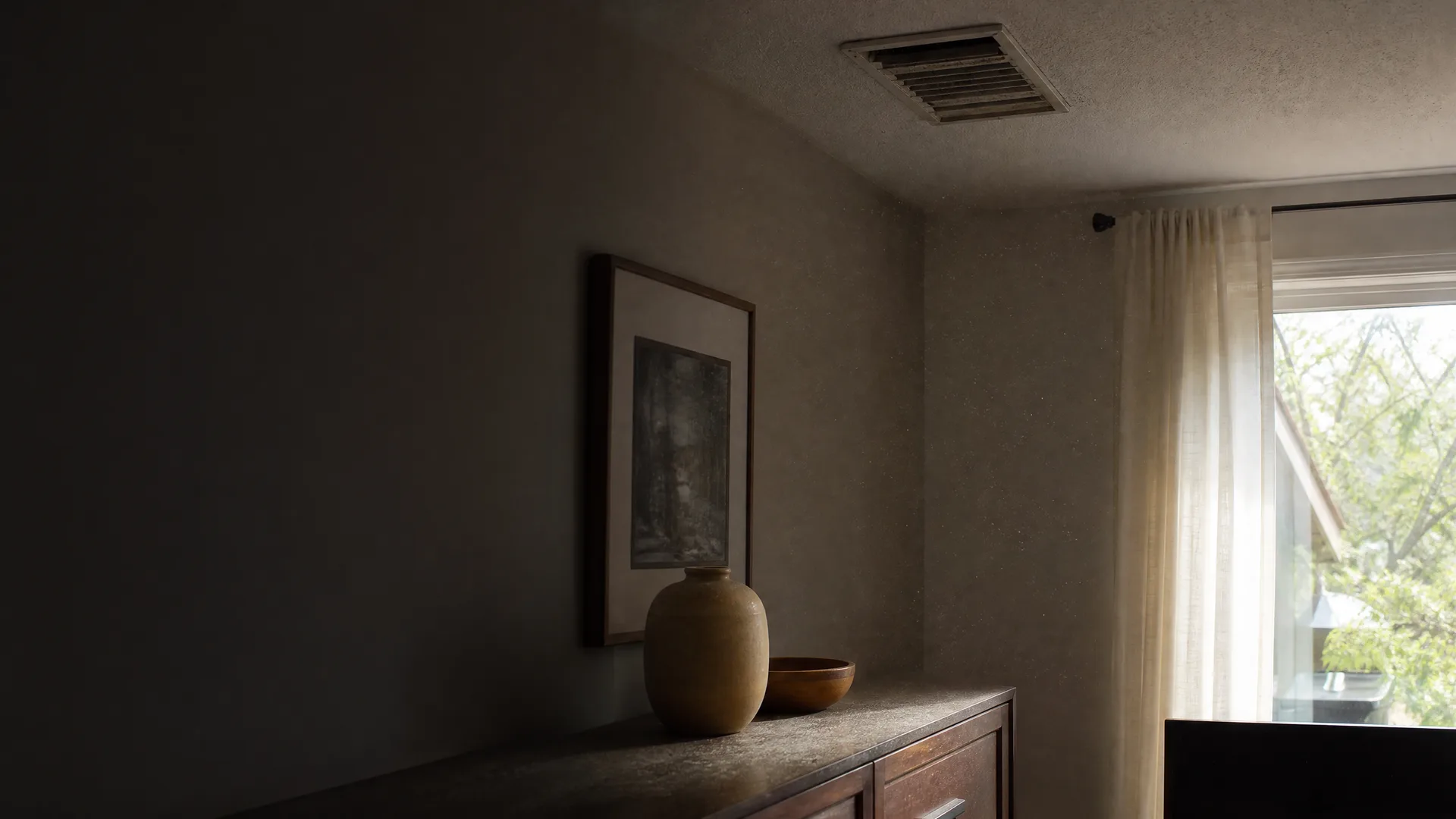
It's late April, one of the first warm enough days to shut the heat off for good. You're running a dust cloth over the living room shelves before anyone's company comes over and you notice the TV stand needs it again already, a fine gray film across the top like it's been weeks instead of days since you last wiped it down. You look up. The ceiling vent grille above the couch has a dark ring around the slats, thick enough to see from across the room. The furnace hasn't run in days. The dust on the furniture under that vent isn't going anywhere on its own.

A closed laptop and a ceramic mug of dark coffee sit on a wooden table, with a blurred kitchen counter, potted plant, wooden utensils and cutting boards, and a large window in the background.

So is it worth it

If you've got a reason, a mat of dust behind the vent cover, mold you can see, allergies that only flare up at home, cleaning is worth doing. If you don't, you're paying to fix something that isn't broken. The ducts themselves will tell you which one it is if you pull a cover and look.

Finding someone to do this right isn't the same as finding someone to fix a leaking faucet. You'd be calling around Wake County asking who even cleans ducts, explaining the same mat of dust or the same musty smell to three different people, then trying to tell apart quotes that don't list the same work. A local contractor who does this every year knows what a dust ring at the vent usually means and what it doesn't, and you'd be dealing with one of them instead of fielding calls from several.

A mug and a small round vase sit on a wooden windowsill beside sheer and heavier curtains, with blurred autumn trees seen through the rain-speckled window and a sofa with cushions and a throw in the foreground.
A dark-clad house with large windows beside a gravel driveway lined with in-ground path lights, ornamental grasses and hydrangeas, with distant hills and an orange sunset sky.

Ductwork Cleaning

Skip the calls to every shop

Duct and vent cleaningDucts or ventsWake County, NC
Step 1 of 2

What ZIP code is the job in?

  • A beige upholstered armchair with a green cushion and a knitted throw sits beside a window with a rain-speckled pane, with a lit table lamp and bookshelf behind and a wooden side table holding a ceramic mug and a book.
    • Get matched with a Wake County pro who cleans ducts.
    • Get matched with a pro who works on ducts in Wake County.
  • A ceramic table lamp with a wide linen shade and a dark wooden bowl sit on a round wood side table beside a beige upholstered sofa with a chunky knit throw, in front of a curtained window.
    • Once you send the form, finding a pro is off your list.
    • After you send the request, you're done searching.
  • A living room with a light gray sectional sofa holding brown and cream textured pillows and a knit fringed throw, a rustic wood coffee table with stacked books and a stone vase of olive branches, built-in shelves with pottery, and a tall olive tree beside a curtained window.
    • Skip searching for a duct system pro and answer a few questions instead.
    • One form replaces the calls you'd make to find a duct system pro.
  • A ceramic urn-shaped table lamp with a mottled gray glaze and beige drum shade sits on a dark wood side table beside a potted green plant, next to a light beige upholstered sofa and a framed artwork on a gray wall.
    • Only one pro gets your request, so you hear from one company.
    • Your request stays with one local pro.