Unfinished basement with concrete floor and walls, exposed wood joists, steel support columns, and two furnace-type units connected to sheet-metal and flexible insulated ducts.

A duct system pro near you

Why your vents smell musty in North Carolina

That musty smell coming through your vents usually means moisture has settled somewhere in the ductwork, and North Carolina summers give it plenty of chances to do that. This page gets into what's likely causing it and what cleaning the ducts can do about it. Answer a few questions and a contractor who handles this will reach out to you directly.

Find my pro

That musty smell is mold or mildew growing somewhere in the duct system, usually where condensation has been sitting on a surface long enough to feed it. In North Carolina, the air itself carries enough moisture most of the summer that any cool surface inside your ducts, around the evaporator coil, or near a poorly sealed joint can collect condensation and stay damp for hours. Dust and skin cells in the duct give mold something to feed on once that moisture is there. If the smell only shows up when the AC kicks on, the dampness is probably tied to the cooling system itself rather than the ducts running through a crawlspace or attic. Either way, the smell is a sign of active growth, not just old dust, and it will keep coming back each time the humidity climbs until whatever is holding the moisture gets cleaned out.

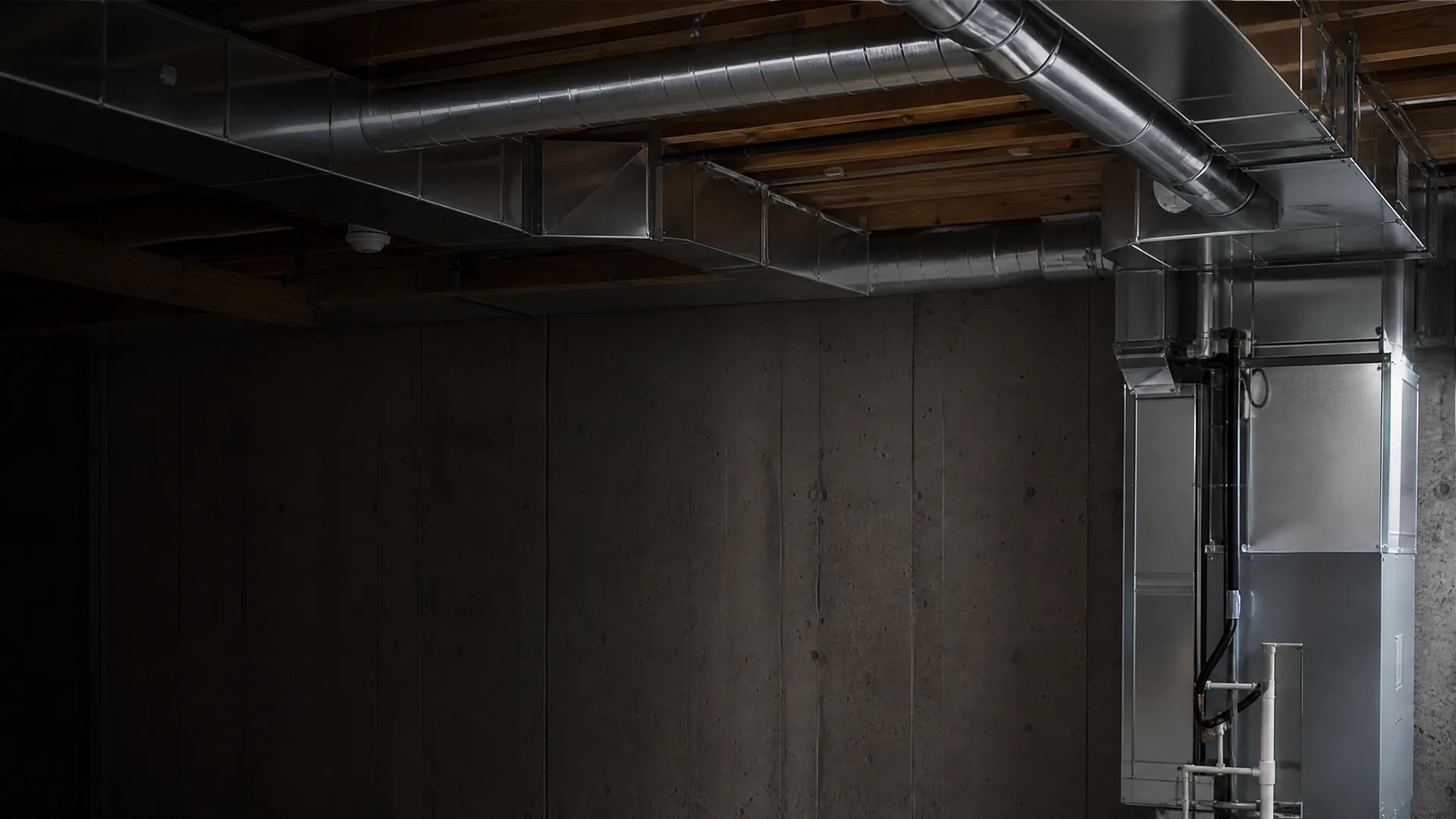
Unfinished basement with bare concrete walls and floor, exposed wood joists, and large sheet-metal HVAC ducts and pipes running along the ceiling.
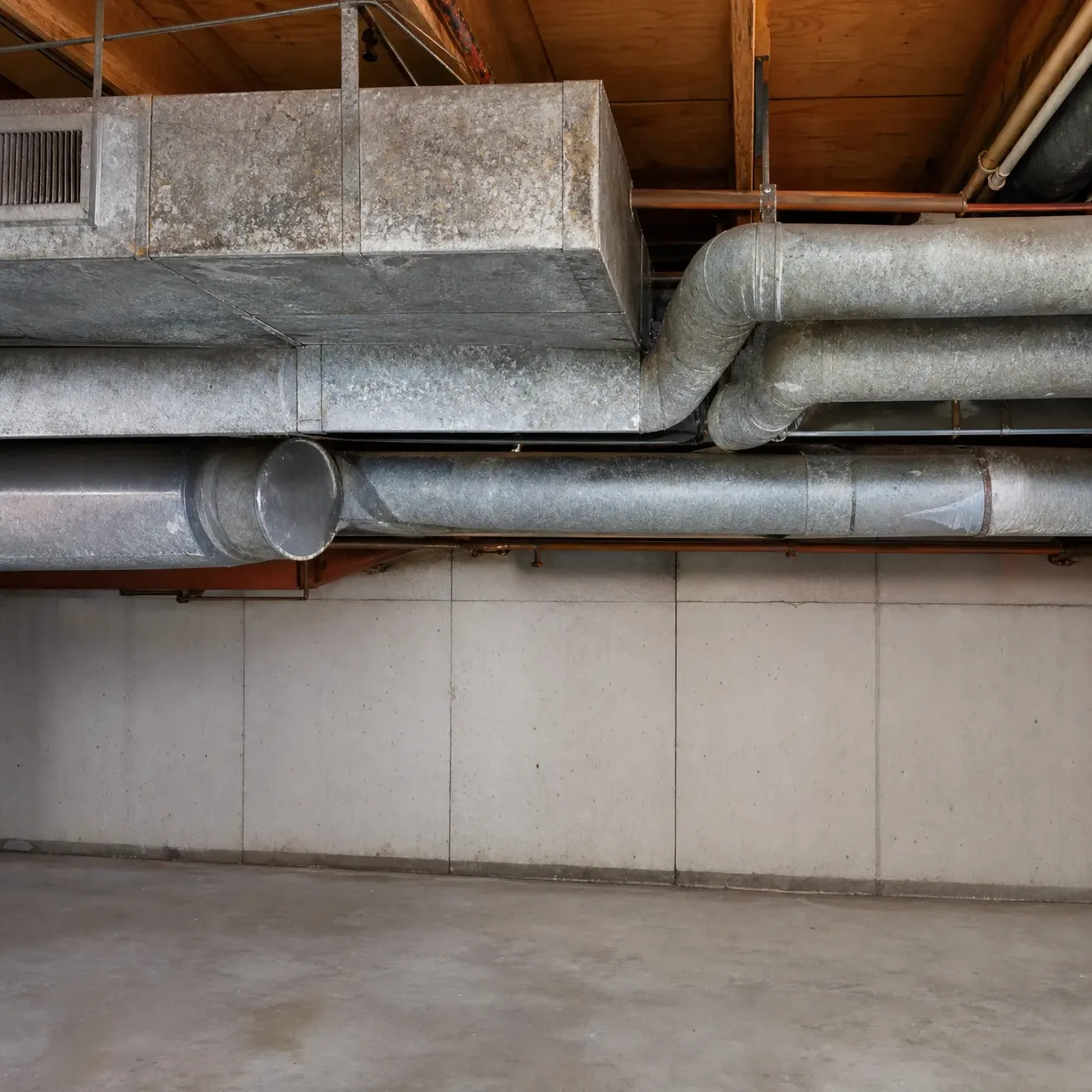
Dry ductwork like this moves air without feeding anything living inside it.
Basement interior with galvanized rectangular and round sheet-metal ductwork and copper piping running below a wood-joist ceiling, above a concrete wall and bare concrete floor.
Moisture sitting on metal duct surfaces gives mold a place to grow and spread.

Your air handler's coil runs cold so it can pull moisture out of the air, and that water is supposed to drain away through a condensate line. When that line clogs, the water backs up near the air handler instead of leaving the system, and mold gets a steady supply instead of an occasional one. A dirty filter makes this worse by slowing the air moving across the coil, which gives condensation more time to collect than it should. Outside the air handler, any supply duct running through a crawlspace or unconditioned attic can sweat on its own when humid air meets the cool metal, and flex duct with a sag holds that water instead of letting it run back out. None of that water needs much to turn into a smell. Dust and skin cells already sitting inside the ducts are enough to feed mold once moisture shows up, which is why a dusty system and a musty one are usually the same problem at two different stages.

Where the moisture actually comes from

  • The evaporator coil runs cold enough to pull moisture out of the air, and that water has to drain somewhere instead of sitting on the coil or the pan beneath it.
  • A clogged condensate drain line backs water up into the duct system near the air handler, giving mold a steady source instead of an occasional one.
  • Supply ducts running through a crawlspace or unconditioned attic pick up condensation on their outer surface when humid outside air meets the cool metal.
  • Dust and skin cells settled inside the ducts give mold something to feed on once moisture is already present, which is why dirty ducts and musty smells tend to show up together.
  • Flex duct with a low spot or a sag holds water instead of letting it drain back toward the air handler, so that section stays wet longer than the rest of the run.
  • A dirty filter slows airflow through the coil, and slower airflow gives the coil more time to collect condensation than it would with air moving properly.
A woman in a cream cowl-neck sweater stands in a lamp-lit room looking out a window at a snow-covered yard with shrubs and bare trees at dusk.
A woman in a gray turtleneck sweater stands near a large window in a lamp-lit living room, looking out at falling snow and snow-covered conifers.
A woman in a chunky knit sweater stands by a large window looking out at snow-covered ground, with a dimly lit living room containing a gray sofa, framed artwork, shelves and table lamps behind her.
A woman in a gray turtleneck sweater stands in a dimly lit living room with a lamp and bookshelves, looking out a multi-pane window at falling snow.

A local pro for your ductwork cleaning

One request and the duct cleaning stops waiting on you.

You only hire the pro if you want to.

Humid air moving through cool duct runs will bead moisture on the inside of the metal the same way a cold glass sweats on a summer porch.

That beading doesn't dry off between cycles in a North Carolina summer, so the same spot stays wet long enough for mold to take hold and keep growing there.

Power costs 14.00 cents per kilowatt-hour statewide

Heating here runs mostly on electricity, and at 14 cents a kilowatt-hour, running the blower longer than it needs to costs something. Ducts holding onto moisture make the system work harder to move air, so cleaning them out isn't just about the smell.

EIA-861 2025 statewide residential average

What That Smell Means for Your House

  • A musty smell that's stronger in some rooms than others points to a return or supply run near that part of the house.
  • Mold spores moving through the ducts can irritate anyone in the house with allergies or asthma, especially kids.
  • A damp, sour smell that lingers after the AC shuts off usually means moisture is sitting in the ducts, not just passing through.
  • Letting it go lets mold spread further into the duct runs, which makes cleaning a bigger job later.
  • Musty air circulating through the house can settle into carpets, curtains, and furniture near the vents.
  • A smell that shows up every summer and fades in winter tracks with when the coil is running and condensation is forming.

Walk through the house and the smell probably isn't even. It's stronger by one vent, maybe in a bedroom or a hallway, because that's the run closest to where the moisture is sitting. That's worth noting before anyone comes to look at it. The air coming through those vents is carrying mold spores into the rooms you spend the most time in, and if anyone in the house has allergies or asthma, that's the air they're breathing all day. Kids especially feel it first. If the smell is still there after the AC shuts off, that's not just humid air passing through, that's moisture that has settled in and is staying put. Left alone, it doesn't stay contained to one spot. Mold spreads along duct runs the same way it spreads anywhere else damp, and the longer it sits, the more of the system it reaches, which turns a small cleaning job into a bigger one. It also doesn't stop at the ductwork. Air moving through the house carries that smell into carpets, curtains, and furniture, especially anything near a vent, and that's harder to clear out than the ducts themselves. One thing worth watching: if this shows up every summer and clears out by winter, that pattern lines up with when the coil is running and producing condensation, which says a lot about where to look first.
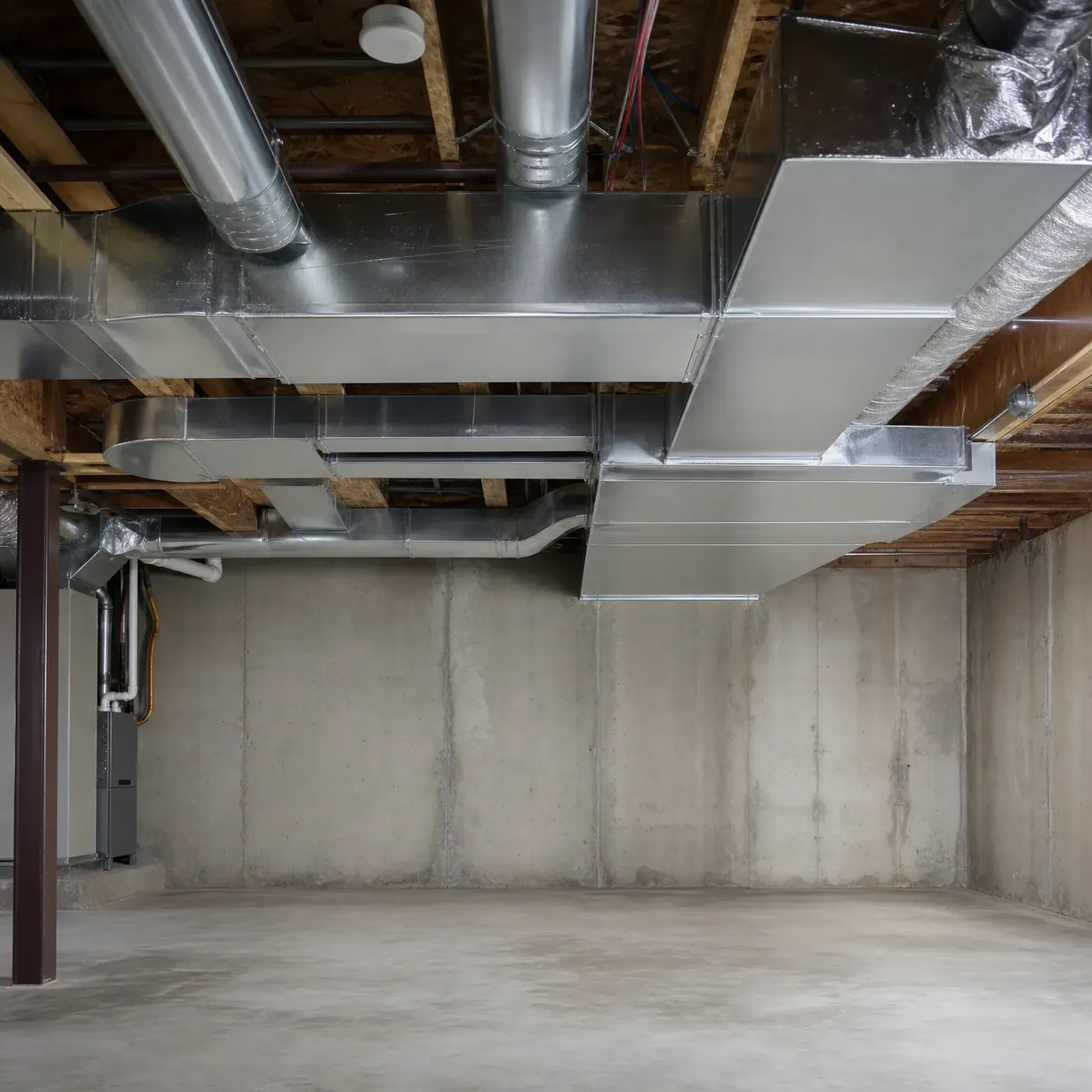
An empty basement room with bare concrete walls and floor, with galvanized sheet-metal HVAC ductwork and a vent grille running along the wooden joist ceiling.
Before you get your ductwork cleaning
Unfinished basement with bare concrete floor and walls, showing galvanized sheet-metal HVAC ducts, pipes and recessed lights beneath a wood-joist ceiling.
After you get your ductwork cleaning
Unfinished basement with concrete floor and walls, exposed wood joists, galvanized sheet-metal ductwork, a furnace unit, a steel support column, and a small window.

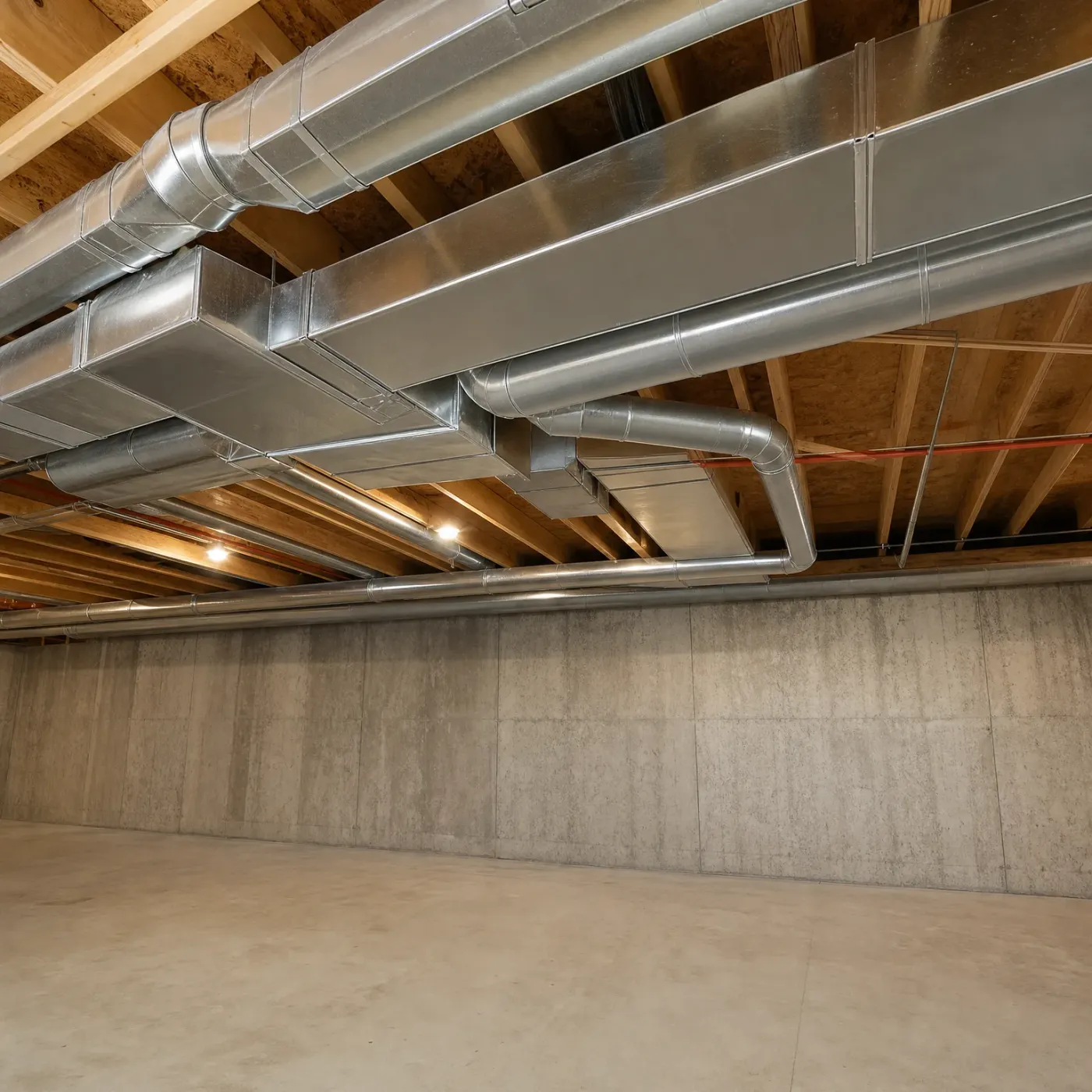
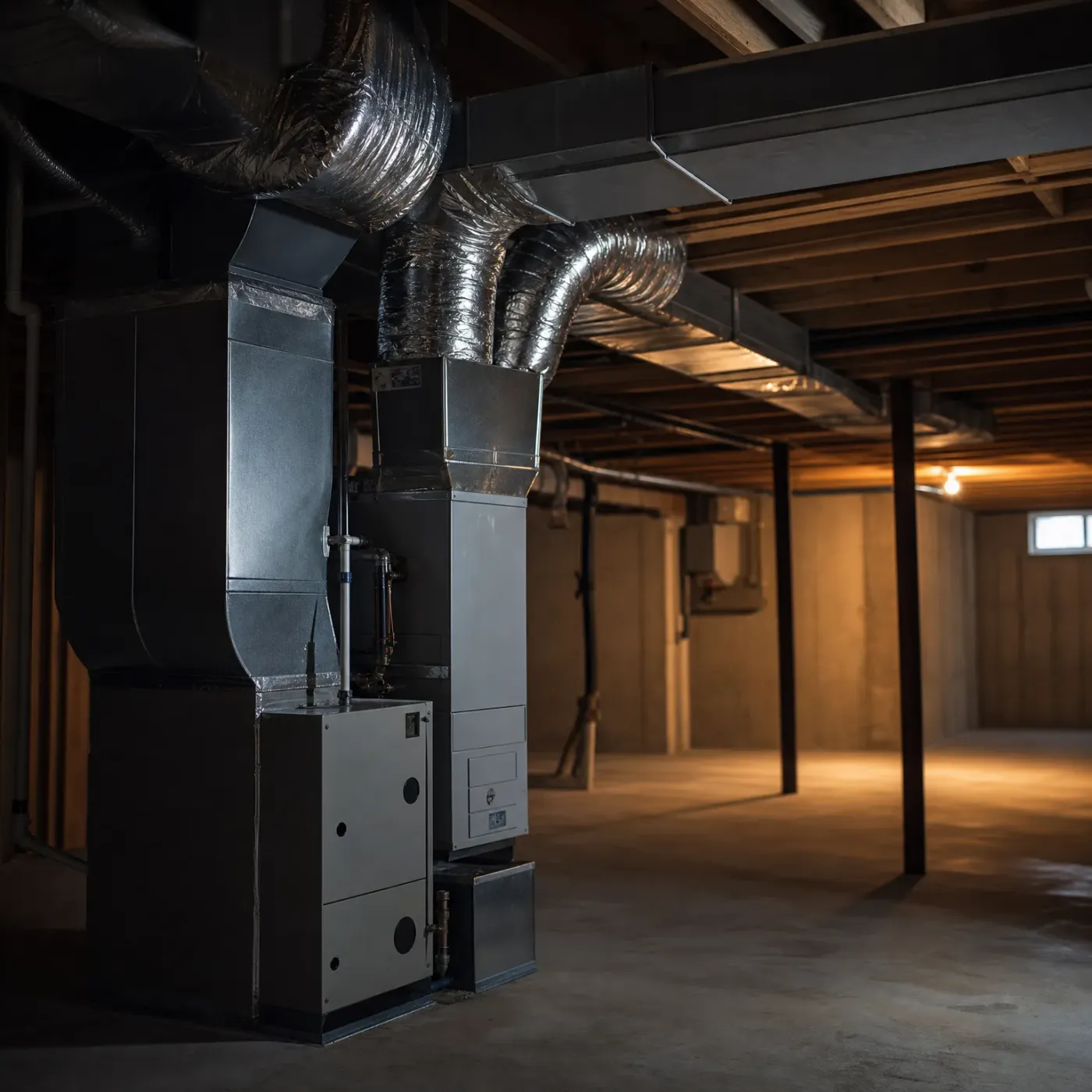
Ductwork doing what it should

Metal and flex duct run dry along the joists, carrying air without holding onto it. No standing moisture means nothing for mold to feed on, even with a North Carolina summer pushing humidity against the outside of that metal all day.

Empty unfinished basement with bare concrete walls and floor, showing exposed wooden joists, galvanized sheet-metal ductwork, pipes, and a white vent grille overhead.

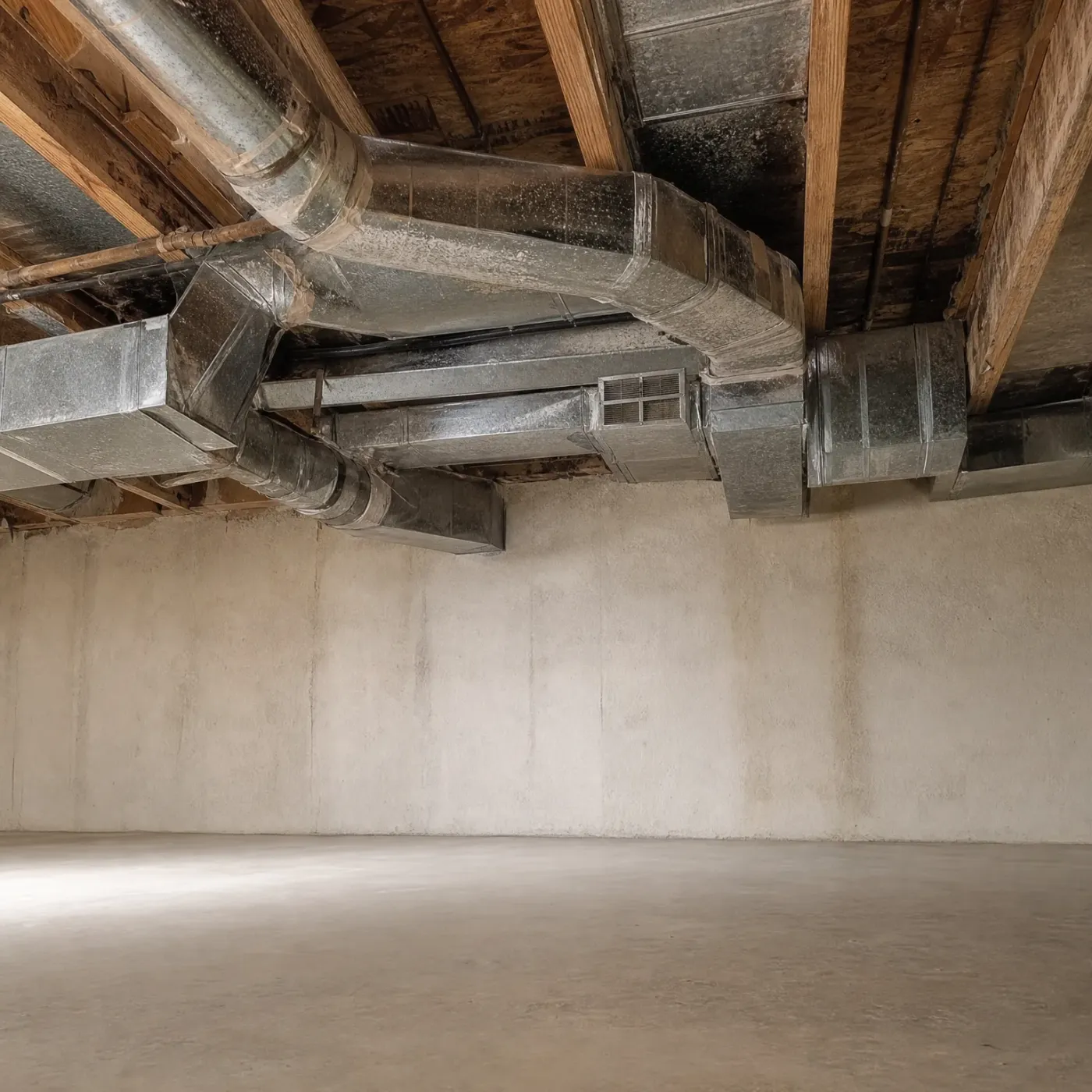
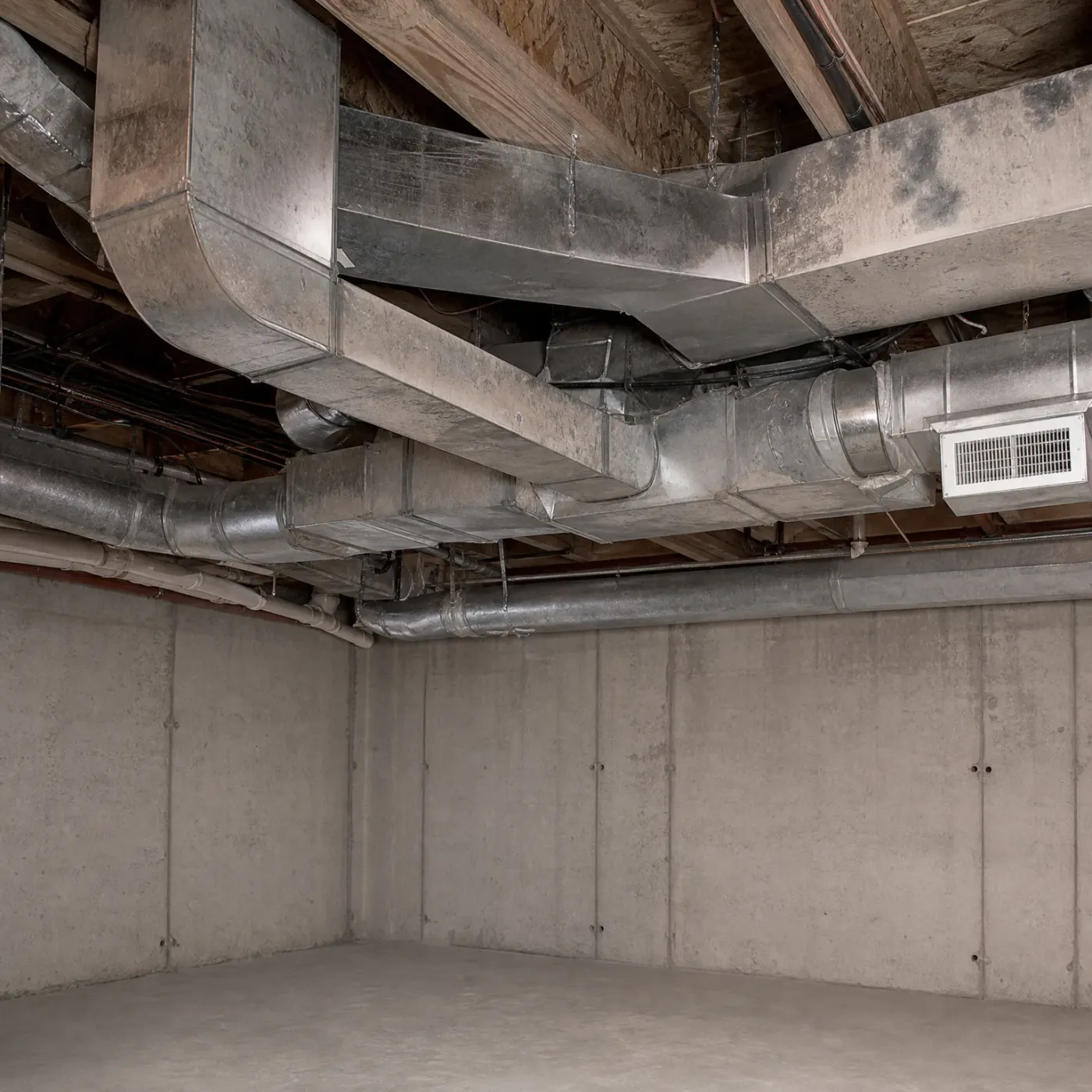
Ductwork past the point of ignoring

This is what a system holds onto when moisture never gets the chance to dry out between cycles. That single supply vent is pushing air through ducts that have had time to grow whatever's causing the smell in the rooms below.

A woman in a gray sweater and jeans stands in an open wood front door of a white stucco house while a man in a dark jacket walks toward her on the entry path.

That smell has a cause, and it can be found

Musty air coming through your vents means moisture settled somewhere in the ducts and something started growing there. A clogged drain line, a sweating duct run, a damp spot that never got the chance to dry out. It's not something you have to live with through another North Carolina summer.

Finding the exact spot and cleaning it out is a job for someone who does this work regularly, not a guess from the outside. Once you send the form, you're matched with a contractor who handles this in homes like yours, and they'll reach out to you directly. You won't be the one tracking down who to call or whether they know what they're doing.

A light-colored ceramic vase holding green leafy branches sits on a round wooden table, with a wooden-framed armchair draped in a cream throw, a tripod floor lamp, and sheer curtains blurred in the background.
Unfinished basement with poured concrete walls, exposed wooden joists, and galvanized sheet-metal supply ducts and round pipes running along the ceiling to a furnace unit at right.

Get the right pro for your ductwork

Once you send the form, finding a pro is off your list.

Duct and vent cleaningDucts or ventsNorth Carolina
Step 1 of 2

What ZIP code is the job in?