




Signs your ducts need cleaning in Greensboro, NC

Find a pro near me

You're searching this because something's off. Maybe it's the dust that settles back on the shelf a day after you clean it, or a musty smell when the air handler kicks on, or someone in the house who's been stuffed up more than usual. Guilford County homes run their systems hard, long summers and cold winters both, and ducts carry whatever's built up inside them straight into the rooms you live in. Dust around a vent cover, weak airflow in a room that used to feel fine, a smell that shows up only when the blower runs. These are the things worth paying attention to. Once you've matched them to what you're seeing, the next step is getting someone out to look at the actual ductwork in your actual house, not a general estimate. Tell us what you're noticing and you'll be connected with a licensed local contractor who handles duct cleaning in this area, one contractor, so you're dealing with a single call back instead of sorting through several.

The clearest sign is dust that comes back fast, settling on furniture and floors within a day or two of cleaning, and air that smells musty or stale when the system first kicks on. You might also notice weaker airflow from certain vents, or more coughing and stuffiness in the house than seems normal. This happens because ducts collect dust, pet hair, and whatever else gets pulled in through return vents, and over months that buildup sits in the ductwork and gets pushed back into the air every time the blower runs. In a house that's kept shut up tight through a long Guilford County summer, with the AC running for months straight, that buildup has more time to circulate before anyone notices. If you're seeing these signs, it means the air moving through your home is carrying more than it should, and the ducts themselves, not just the filter, are the source.

How old is your duct system, and how hard has it been working?

  • Half the homes here were built by 1987

    Half the homes in Guilford County were built in 1987 or earlier, so a lot of ductwork out there has never once been cleaned out.

  • Heat runs October through April

    That duct system runs heat for seven months straight, October through April, pushing air through the same ducts day after day.

  • Cooling runs May through September

    Add cooling from May through September and there's barely a month when the ducts in your house get a rest from moving air.

ACS 2020-2024 · NOAA nClimDiv 1991-2020

How Duct Buildup Shows Itself

  • Air moves through the ducts twice an hour or more, so loose dust and debris inside gets pushed into every room on each cycle.
  • Registers that blow out a puff of dust when the system starts are a sign of buildup sitting right at the vent opening.
  • A return vent with a visibly dirty or gray filter screen often means the duct feeding it hasn't been cleared in years.
  • Rooms that run warmer or cooler than the rest of the house can point to a blockage inside the duct run itself, not just the thermostat.
  • Rodents or insects getting into ductwork through gaps in crawlspace or attic runs leave droppings and nesting material that only a cleaning removes.
  • A burning or musty smell in the first few minutes of a heating or cooling cycle usually comes from what's settled inside the ducts, not the unit itself.

A duct system moves air constantly, often more than twice an hour whenever the furnace or air conditioner runs, and every pass pushes whatever is sitting inside those ducts back out through the registers. That is why the signs show up where you'd least expect to look. A short burst of dust when a vent first opens means debris has collected right at the opening, loose enough to get knocked free by the air pushing past it. A return vent with a filter screen that stays gray or dusty no matter how often you wipe it down usually points to buildup further back in that duct run, not just the filter itself. Uneven temperatures from room to room can mean a duct is partly blocked somewhere along its path, restricting how much air actually reaches that register, separate from anything the thermostat is doing. Crawlspaces and attics give pests a way into ductwork through loose seams or small gaps, and once they're in, what they leave behind gets circulated right along with the air. A smell that shows up only in the first few minutes of a cycle and then fades is almost always something burning off or stirring loose inside the ducts themselves, not a problem with the furnace or the coil. Each of these points to the ductwork specifically, not the equipment attached to it.

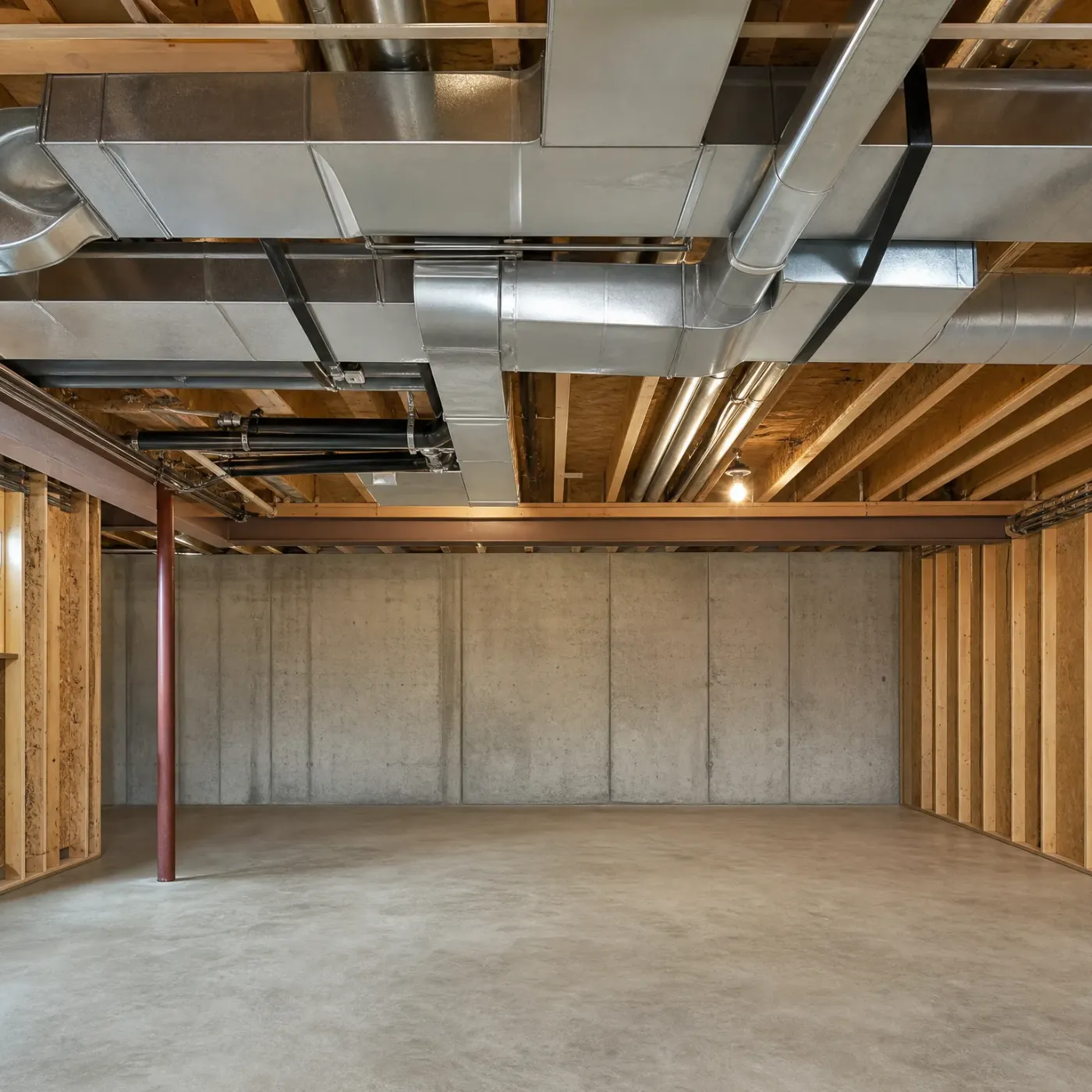
Empty unfinished basement with bare concrete floor and wall, wood-framed stud walls, exposed joists, galvanized HVAC ducts and pipes overhead, a steel beam and red support column, and a single bare bulb light.
Metal ducts like these running clean along the joists move air without adding anything to it.
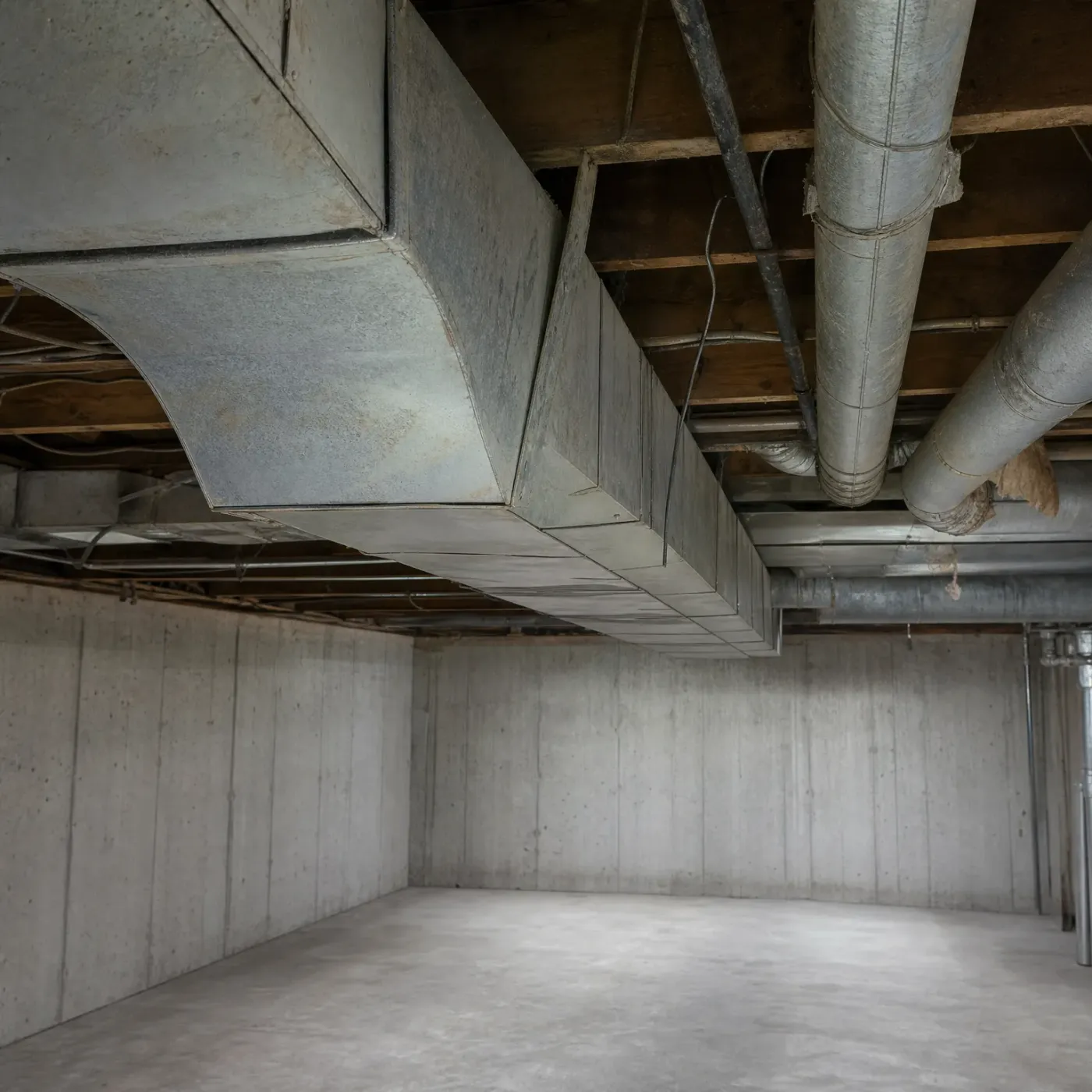
Empty concrete-walled basement with bare floor, showing large galvanized sheet-metal HVAC ducts, insulated pipes, wiring and wooden floor joists overhead.
Ducts carrying years of dust and debris push it into every room each time the system cycles on.
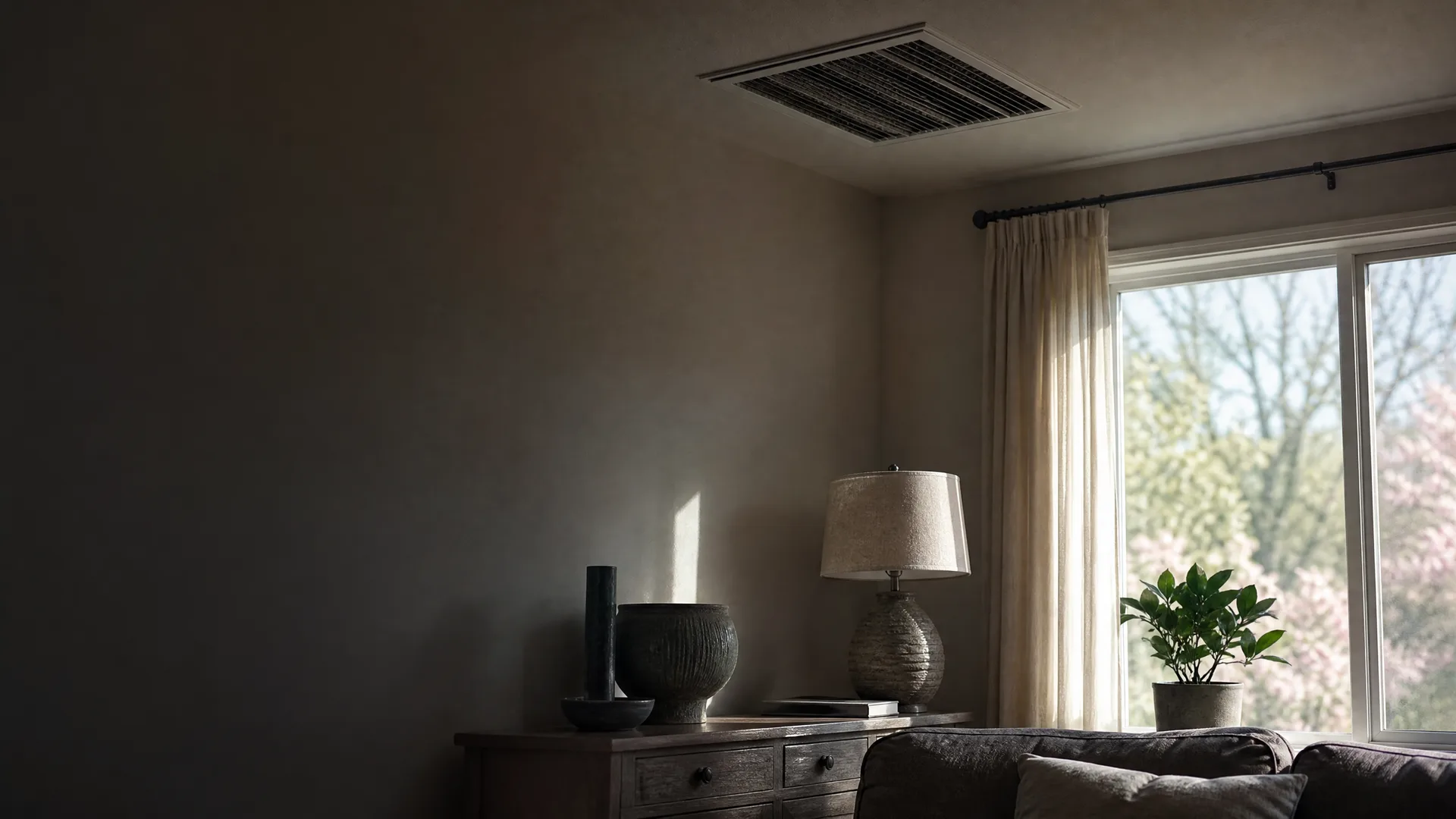
A dim living room corner with a ceiling air vent, a curtained window showing blossoming trees, a table lamp and dark ceramic vessels on a wooden dresser, a potted plant, and a sofa in the foreground.

It's a Saturday afternoon in April, warm enough that the windows are cracked for the first time since winter. Sun comes in low across the living room. On the ceiling, the vent grille has a gray line of dust along its slats, thick enough to see from the couch. Below it, the side table has a fine film over the lamp base and the edge of the picture frame, the kind you'd wipe off expecting it to stay gone. The air handler clicks on for a cooling cycle, and a little more dust sifts down onto the table before it even finishes running.

Does Your Ductwork Need Cleaning

Clean when you clean it

  • Dust stays off the furniture and the shelves for a week or more after you wipe them down.
  • Air coming from the vents doesn't carry any smell, not even faintly, when the system first starts up.
  • Registers blow air without any visible puff of dust or debris at startup.
  • Airflow feels about the same from every room, no weak spots at certain vents.
  • Nobody in the house is dealing with more coughing or stuffiness than usual this time of year.

Needs a look

  • Dust settles back on surfaces within a day or two of cleaning them off.
  • The air smells musty or stale for the first minute or so after the system kicks on.
  • One or two rooms get noticeably less air than the rest of the house.
  • You can see a line of dust built up along the vent grille slats.
  • Someone in the house has been sneezing or coughing more since the system's been running.
  • A puff of dust comes out of the register right when the blower starts.
Galvanized sheet-metal ductwork and round pipes run beneath wooden floor joists in a basement with concrete walls and floor.
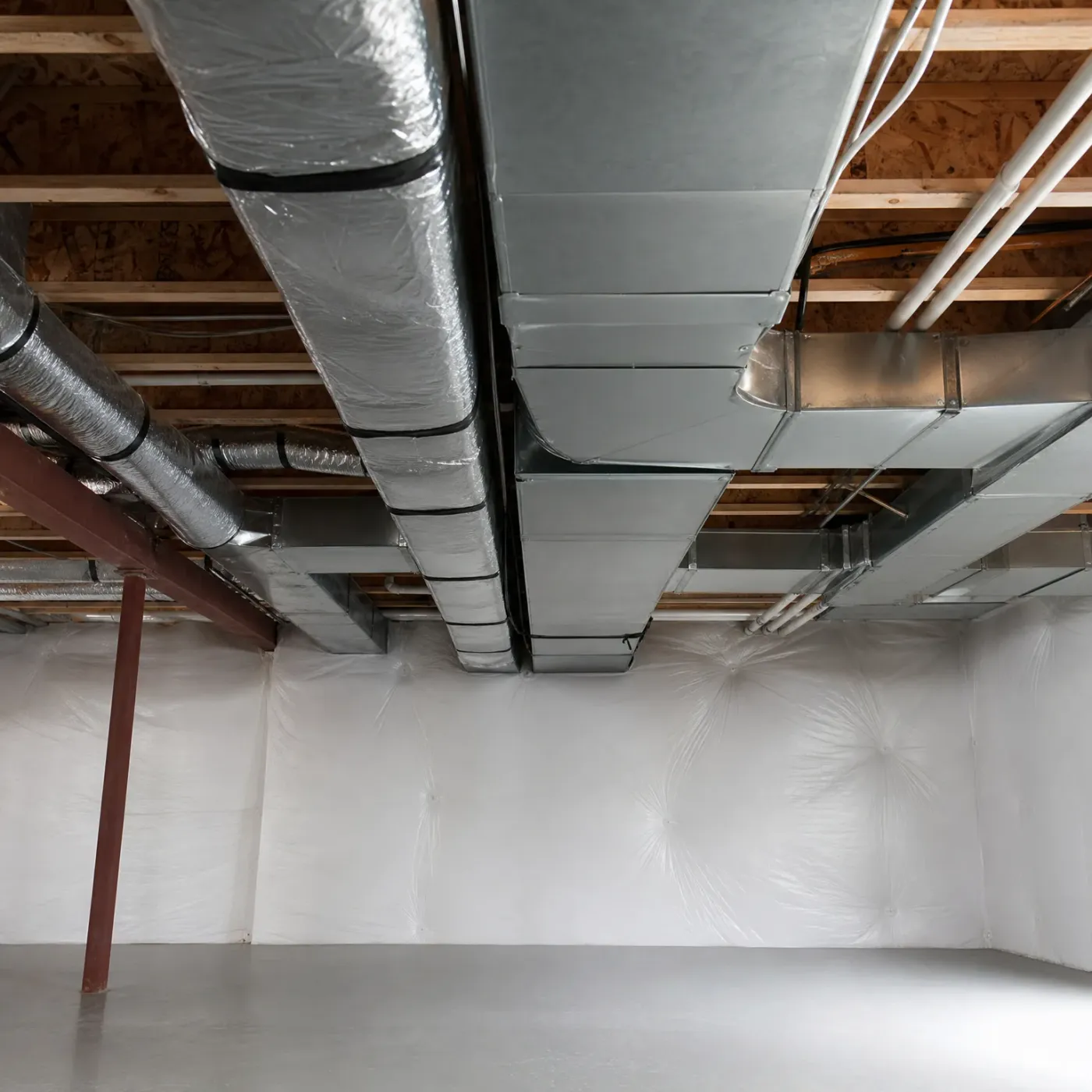
Before you get your ductwork cleaning
Unfinished basement with exposed wood joists, sheet metal and insulated flexible ductwork, white pipes, a steel support post, plastic-covered walls, and a bare concrete floor.
After you get your ductwork cleaning

Get matched with a duct system pro in Guilford County

The pro who gets in touch is licensed in North Carolina and works in Guilford County.

It costs nothing to send, and you don't have to hire anyone.

What the filter can't stop

The filter catches what passes through the return before it hits the blower. It doesn't do anything for the dust that's already sitting inside the supply ducts, settled along the bottom of the metal or built up at a bend where the airflow slows down. That material doesn't move until the system pushes enough air to carry it, and a lot of it just sits there, cycle after cycle, getting added to rather than cleared out. A new filter changes what's coming in. It does nothing for what's already inside the ducts themselves.

Why the smell fades and returns

A musty smell that shows up when the system first kicks on and fades after a few minutes is often moisture sitting in the ductwork reacting with the dust, not a problem with the air handler itself. Once air has moved through for a while, the smell thins out enough that you stop noticing it, even though the ducts haven't actually changed. That's why it tends to show up at the start of a cycle, after the system has sat idle, rather than running the whole time. A contractor who works on duct systems in Guilford County every season can tell you, by what the smell does and when, whether it's coming from inside the ducts or somewhere else in the system.

An older man with gray hair and a beard, wearing a dark coat flecked with snow, stands smiling in a dimly lit home hallway with lamps, a framed picture, and a wooden door.
A gray-haired, bearded man in a dark coat dusted with snow stands just inside an open door of a warmly lit home, looking off to the side.
An older bearded man in a dark snow-dusted coat and gray scarf stands just inside a dimly lit home entry, with a framed picture, lit table lamp, and an adjoining room with a fireplace behind him, and snow visible through the open door.
A gray-haired bearded man in a dark coat and scarf dusted with snow stands smiling in a dimly lit entryway with a white front door, a side table with a lit lamp, an oval mirror, and a patterned rug.
Empty concrete-walled basement room with bare floor and an exposed wood-joist ceiling carrying galvanized rectangular and round sheet-metal ducts, black pipes, and wiring.

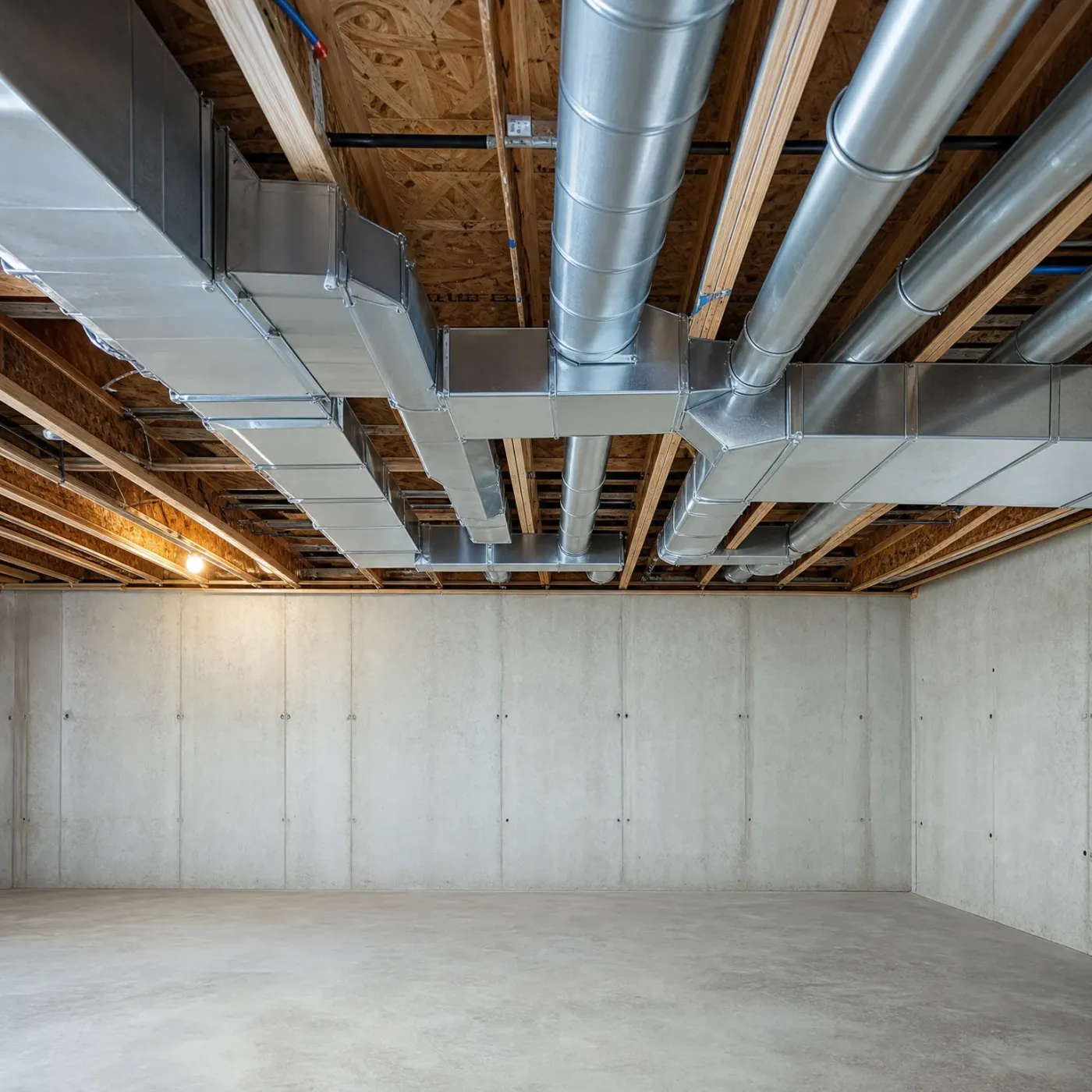
Ductwork running clean

This is metal duct doing its job, carrying air without adding anything to it. No dust clinging to the inside walls, no buildup at the joints. Air moves through seven months of winter and just as long in summer without picking up anything along the way.

Empty concrete-walled basement room with exposed wooden joists and galvanized rectangular and round ductwork plus pipes running across the ceiling.

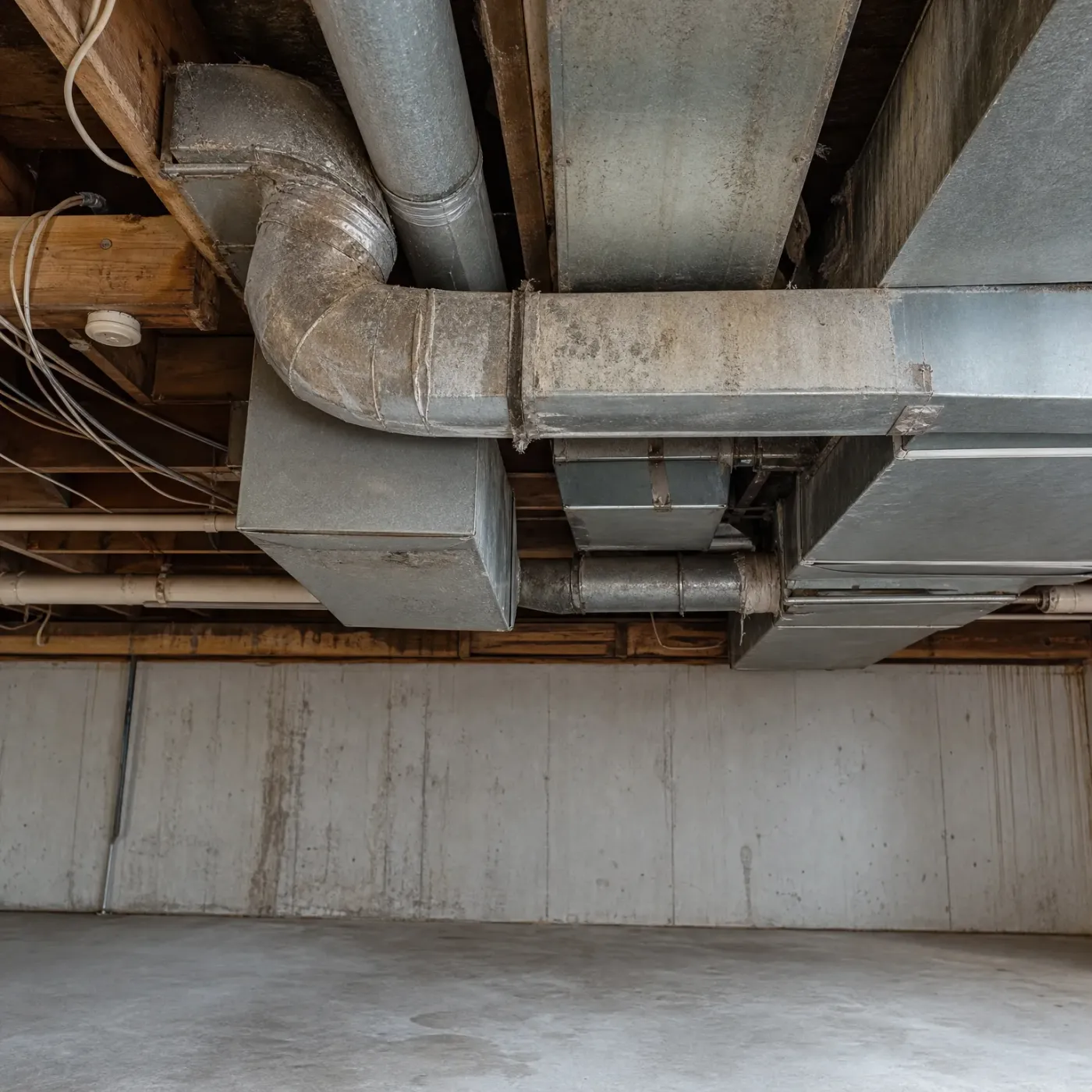
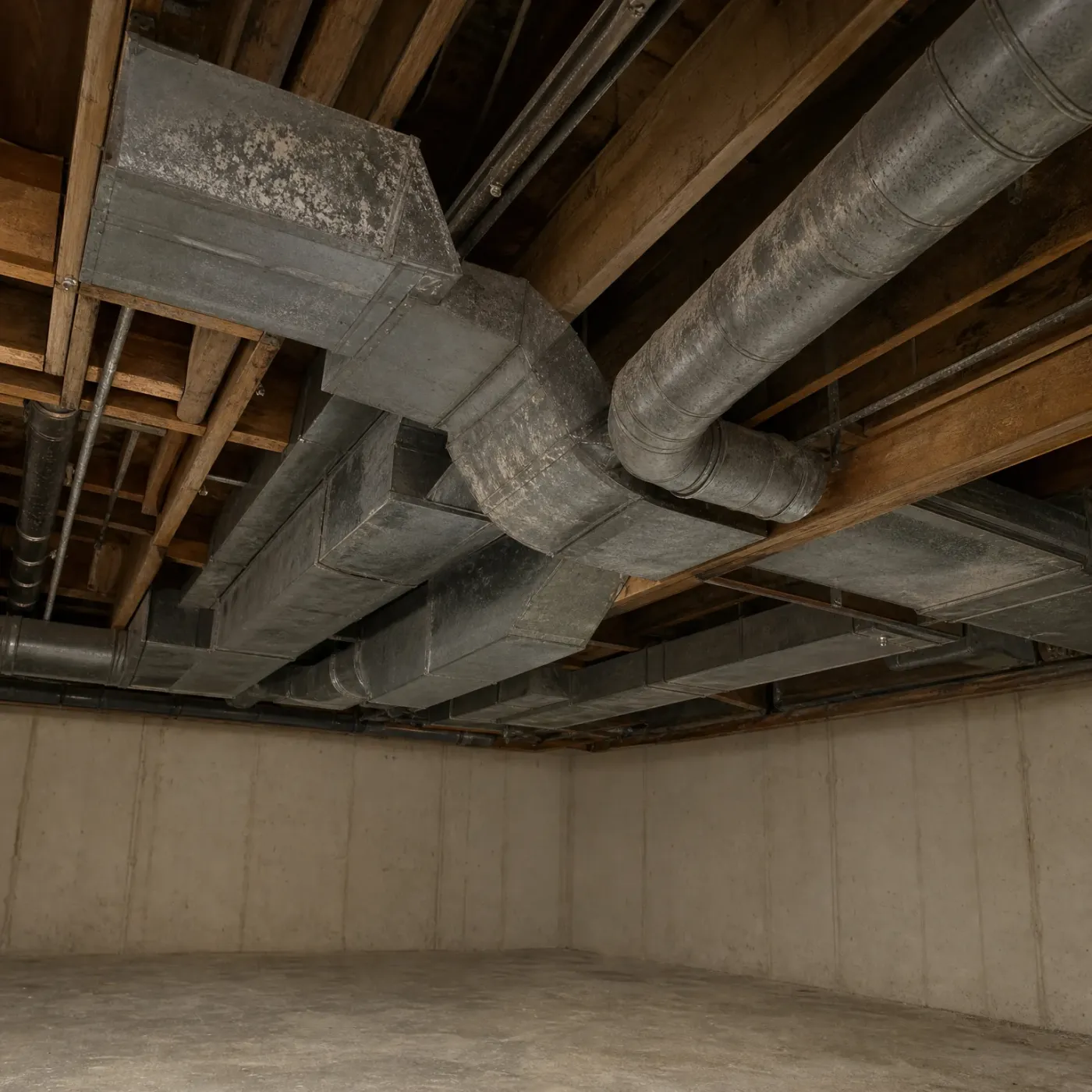
Ductwork overdue for cleaning

Years of dust sit along the bottom of these ducts and cake up at every bend and joint. The oxidation on the metal tells you how long it's been since anyone looked at this system. Every time it cycles on, it's pushing that buildup straight into your rooms.

A woman wrapped in a chunky knit blanket sits in an armchair with an open book on her lap, beside a lit table lamp and a window with frost and snow outside.
An older woman with grey-blonde hair in an updo and a beige turtleneck sweater smiles while looking to the side in a warmly lit kitchen, with a round loaf of bread on the counter in front of her and a dark window showing snow outside.
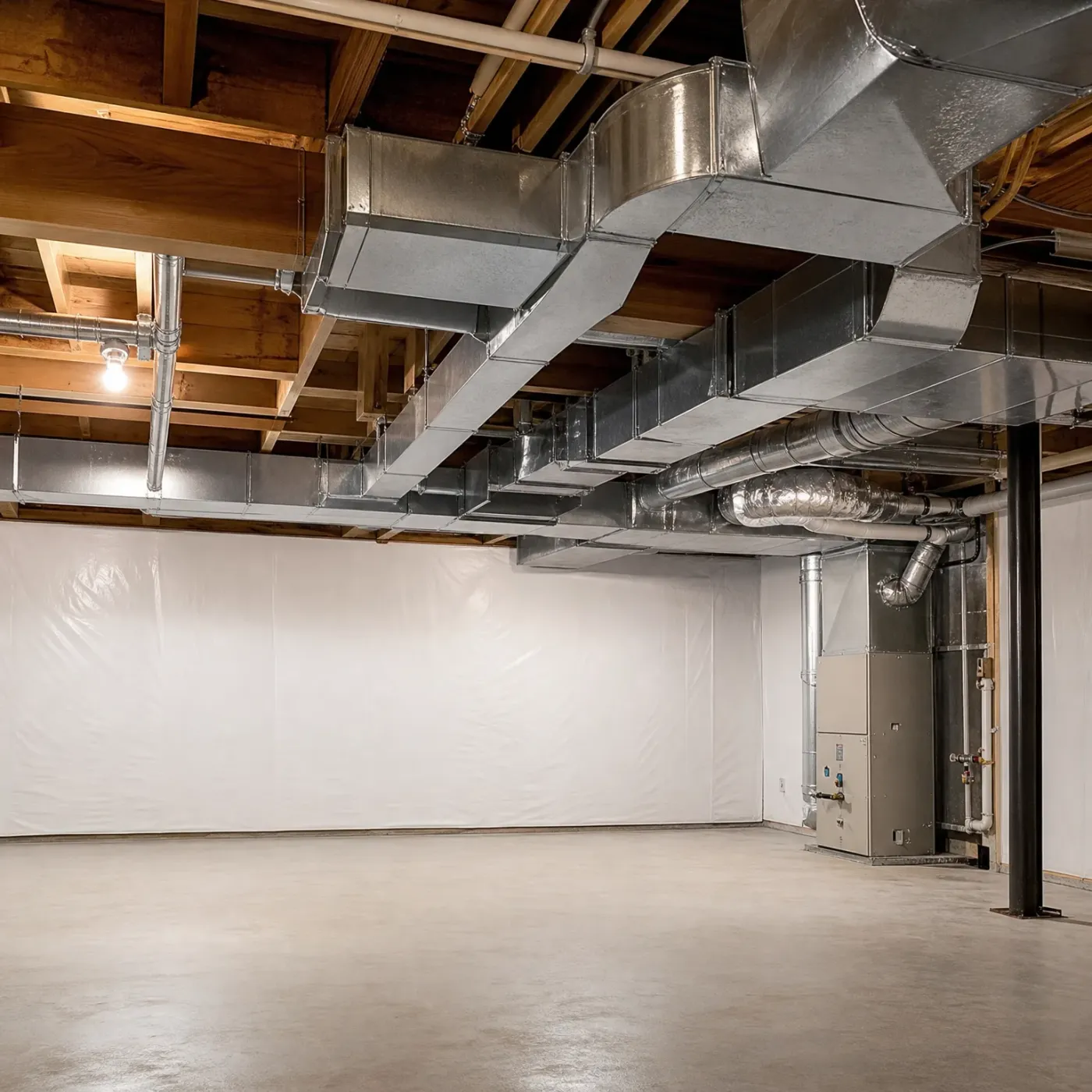
Empty basement with bare concrete floor, white plastic sheeting over one wall, exposed wood joists, galvanized sheet-metal ductwork and pipes overhead, and a furnace unit with a steel support column at right.

Ductwork doing its job

This is what galvanized duct looks like when it's clean, running along the joists above a concrete floor. Air passes through without picking anything up along the way. The metal stays bare inside, no film on the walls, no buildup collecting in the corners where a branch turns.

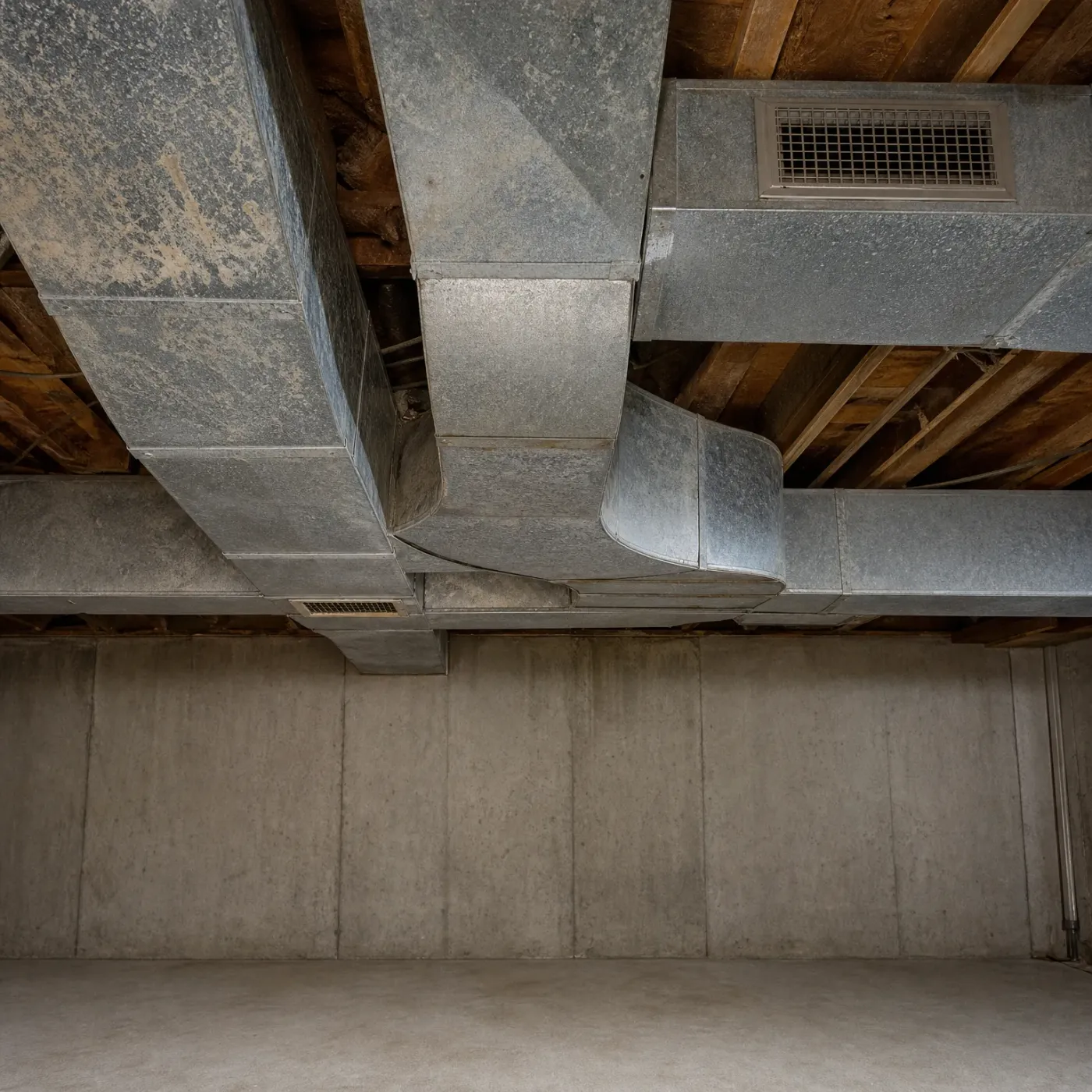
Galvanized sheet metal HVAC ducts with vent grilles run along a wooden floor joist ceiling above bare concrete walls and floor in an unfinished basement.

Ductwork carrying a problem

Same layout, same unfinished basement, but these ducts have been feeding dust into the rooms above for a while. At the branches and turns, debris settles on the metal instead of moving through. Every time the system cycles, some of what's sitting in there gets pushed out the registers.

Power here costs 13.20 cents per kilowatt-hour

Electricity here runs 13.20 cents a kilowatt-hour, cheap next to a lot of the country, so running the blower longer than it needs to isn't what hits your bill. Dirty ducts cost you in airflow, not power, pushing the system to work harder to push air through the same buildup.

EIA-861 2025

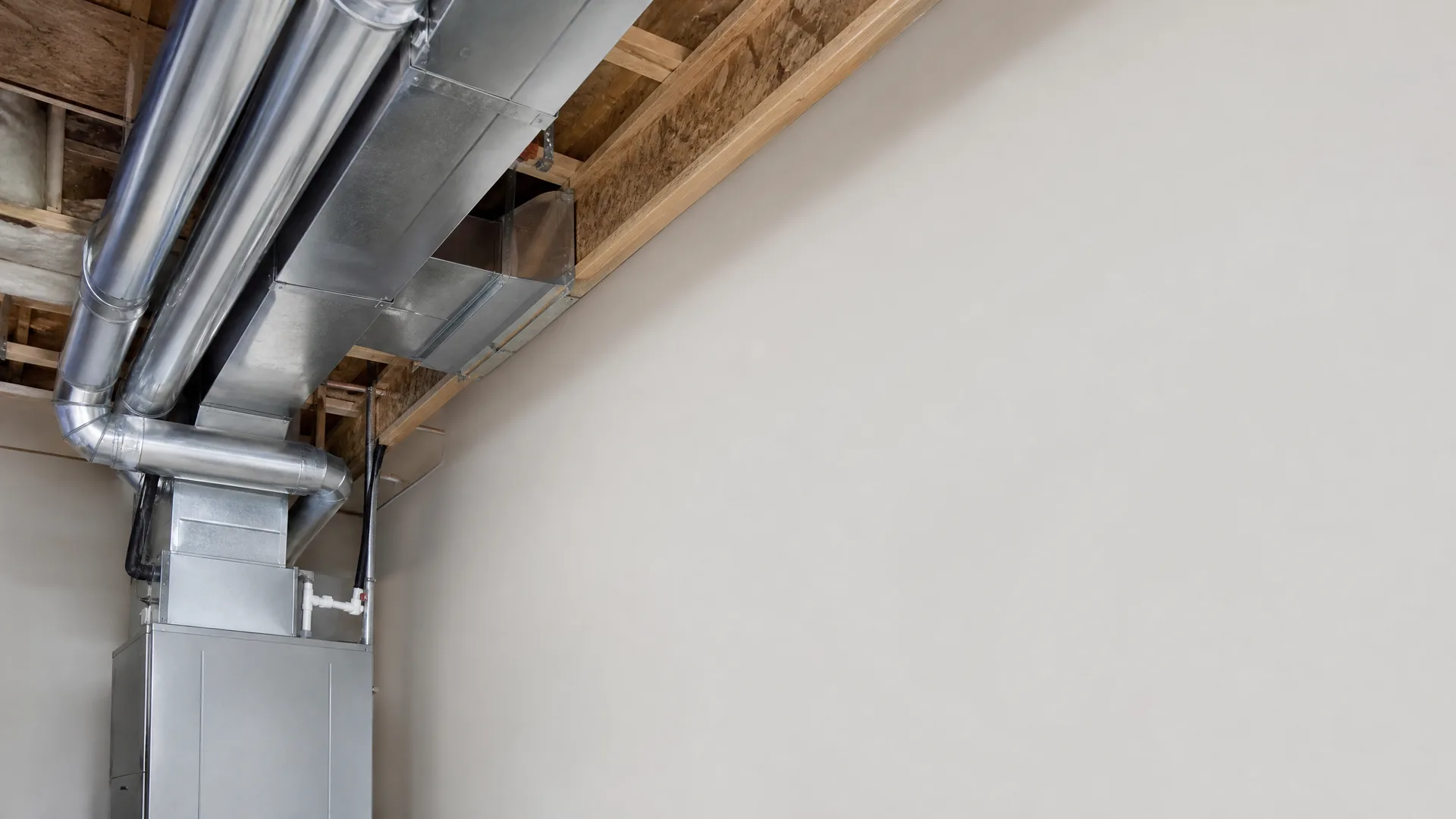
Galvanized sheet-metal ductwork and round pipes running along an exposed wood-joist ceiling with insulation, above a furnace unit beside a blank painted wall.

A system nobody's opened

A lot of Guilford County homes still have the original ductwork, never opened up since the house was built. Dust and debris build up slowly over years of the system cycling on and off, and nothing about that process announces itself. You don't get a warning light or a noise that tells you it's time. The only clues are the ones showing up in the house itself, the dust, the smell, the weak vent in the back bedroom.

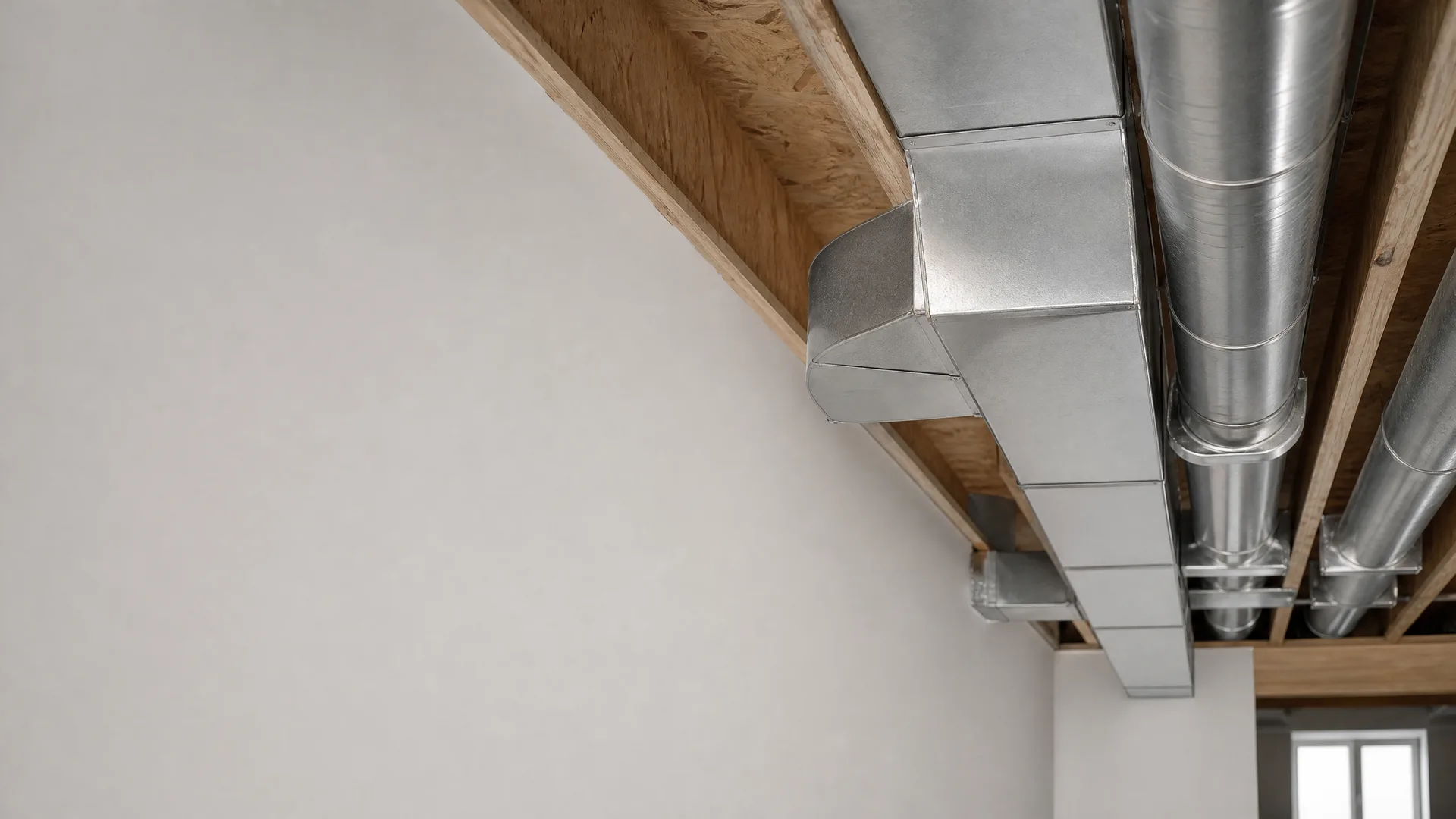
Galvanized rectangular and round sheet-metal ductwork mounted beneath an exposed wooden joist and OSB ceiling, next to a plain white wall and a window at lower right.

What a cleaning actually changes

Once the ducts are cleared out, the dust that used to settle back within a day takes a lot longer to show up again. Air coming off the vents doesn't carry that musty smell when the system first kicks on. Registers blow clean instead of puffing out a cloud of dust at startup. None of this shows up on the thermostat or the power bill. It shows up in the house, on the shelves and in the air you're breathing all winter and all summer.

A man with a duffel bag walks up a concrete path toward a white board-and-batten house where a woman stands in the open wooden front door, flanked by potted plants and black lanterns.

Dust that comes back fast is the sign to trust

You came here with a feeling that something was off, and now you know what to check for. Dust settling back within a day or two, a musty smell at startup, weak airflow from one or two rooms, more coughing than usual in the house. If you're seeing two or three of those, the ducts are worth a look.

A local contractor who handles duct systems all over Guilford County can tell you a lot just from what you describe, and more once they're standing in front of your vents. You'll be matched with one contractor, not a handful calling at once, someone who works on this equipment every season and knows what tends to build up in homes like yours after years of running seven months of heat and just as long of air conditioning.

A shallow dark wooden bowl and a stack of books rest on a wooden table in front of a beige sofa with linen and green cushions, with a tall ceramic vase of thin branches beside a window in the background.
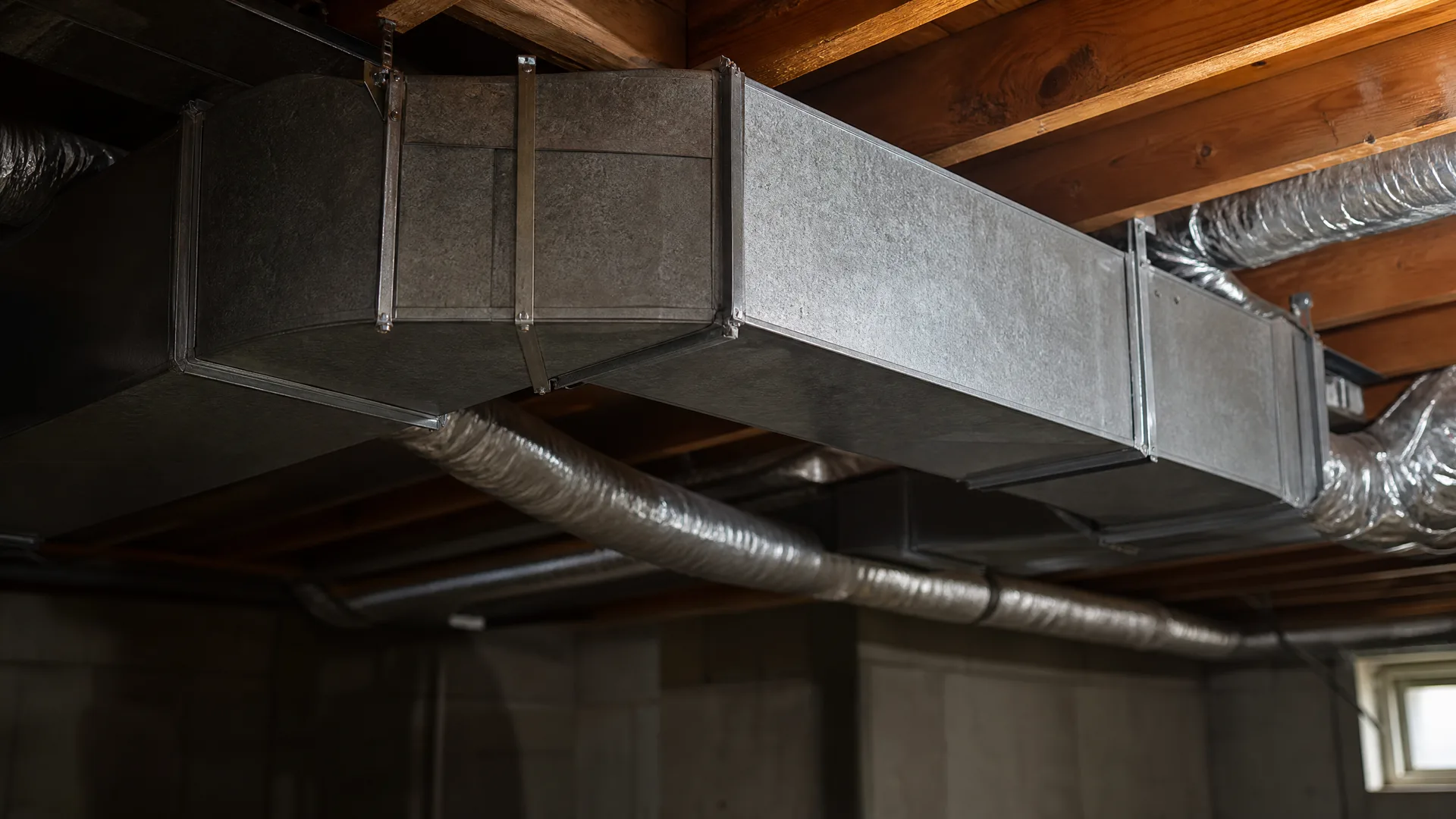
Rectangular sheet-metal HVAC trunk ducting and insulated flexible ducts running along wooden floor joists in an unfinished basement ceiling above concrete block walls.

Find a duct system cleaning pro in Guilford County

Duct and vent cleaningDucts or ventsGuilford County, NC
Step 1 of 2

What ZIP code is the job in?