


Is duct cleaning worth it in North Carolina

After this form, you can stop searching for a duct system pro.

Duct and vent cleaningDucts or ventsNorth Carolina
Step 1 of 2

What ZIP code is the job in?

For most homes in North Carolina, duct cleaning is not something you need on a schedule. It helps in specific cases: if you can see mold in the ducts, if there's been a rodent or insect problem, or if the air coming out of your vents is noticeably dusty after you've already checked the filter. Humid summers here mean moisture can sit in ductwork longer than it would somewhere dry, and that's what lets mold take hold in the first place. If none of that applies to you, cleaning the ducts themselves won't change your air much, since the filter is what catches dust and the ducts just carry air through the house. What matters more day to day is whether your filter is the right size and changed on time, and whether the ducts are sealed well enough that they aren't pulling in attic or crawlspace air. A contractor who looks at the actual system can tell you which of these, if any, applies to your house.

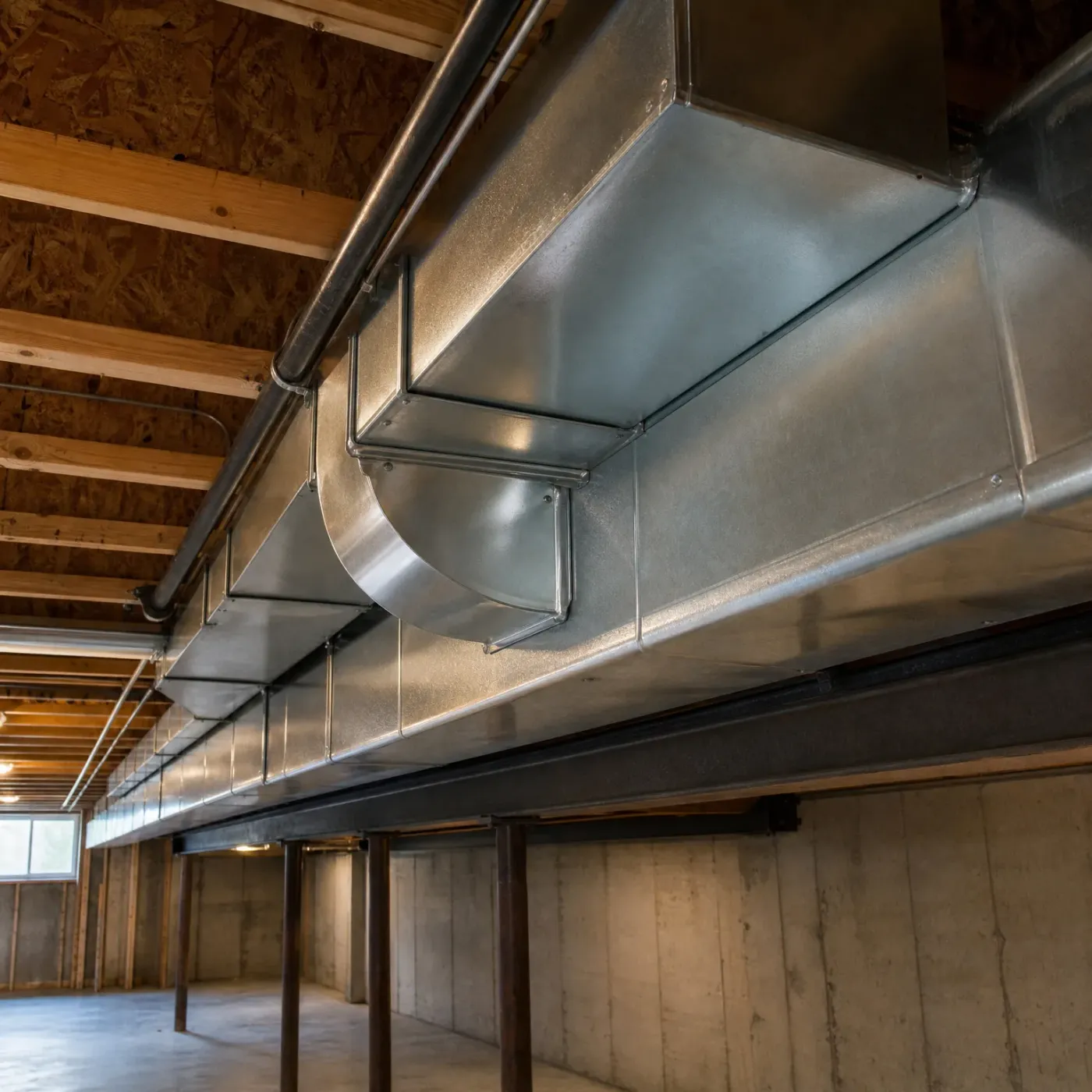
Unfinished basement interior with exposed wooden floor joists, galvanized rectangular and round sheet-metal ducts, a gray furnace unit at left, and a large blank light-colored wall at right.

What humidity does to ducts

North Carolina summers run humid for months at a stretch, and that moisture works its way into duct systems through small gaps and condensation on the lines. Damp conditions inside the ductwork give mold something to grow on, especially where insulation stays wet. If you've had standing moisture or a leak near the system, check the ducts near that spot before deciding cleaning isn't needed.

Galvanized sheet metal ductwork with elbows and a vent grille running beneath an exposed wood joist and OSB ceiling, next to a blank white wall.

Electric heat and duct dust

Most homes in North Carolina heat with electric systems, which push air through the same ducts all year without a gas flame to burn off settled dust. That means whatever collects in the ducts over summer stays put through winter unless it gets disturbed. A thin layer of dust is normal and harmless, but a thick buildup near the vents is worth a look if your electric bill or airflow has changed.

Does Your Ductwork Need Cleaning

Skip it

  • No one in the house has new or worsening allergy or breathing symptoms since you moved in or since the last service.
  • You haven't seen dust building up faster than normal around the vent covers or on nearby furniture.
  • There's no history of rodents, insects, or water getting into the ductwork that you know of.
  • The ducts have never been opened up for a look, and nothing's telling you there's a reason to start now.
  • Your electric bills have stayed in line with past summers, which means the system isn't fighting something stuck in the lines.

Get it checked

  • You can see mold growing inside the ducts, on the vent covers, or around the supply registers.
  • A rodent or insect problem got into the ductwork at some point, even if it was dealt with already.
  • Air coming out of the vents leaves a layer of dust on surfaces within days of a cleaning or filter change.
  • The ducts were opened for repair or renovation work and left exposed to dust or debris for a while.
  • Someone in the house has started coughing, sneezing, or having trouble breathing indoors that eases up when they leave.
  • You're about to move into a house where you don't know the history of the ductwork or who last serviced it.
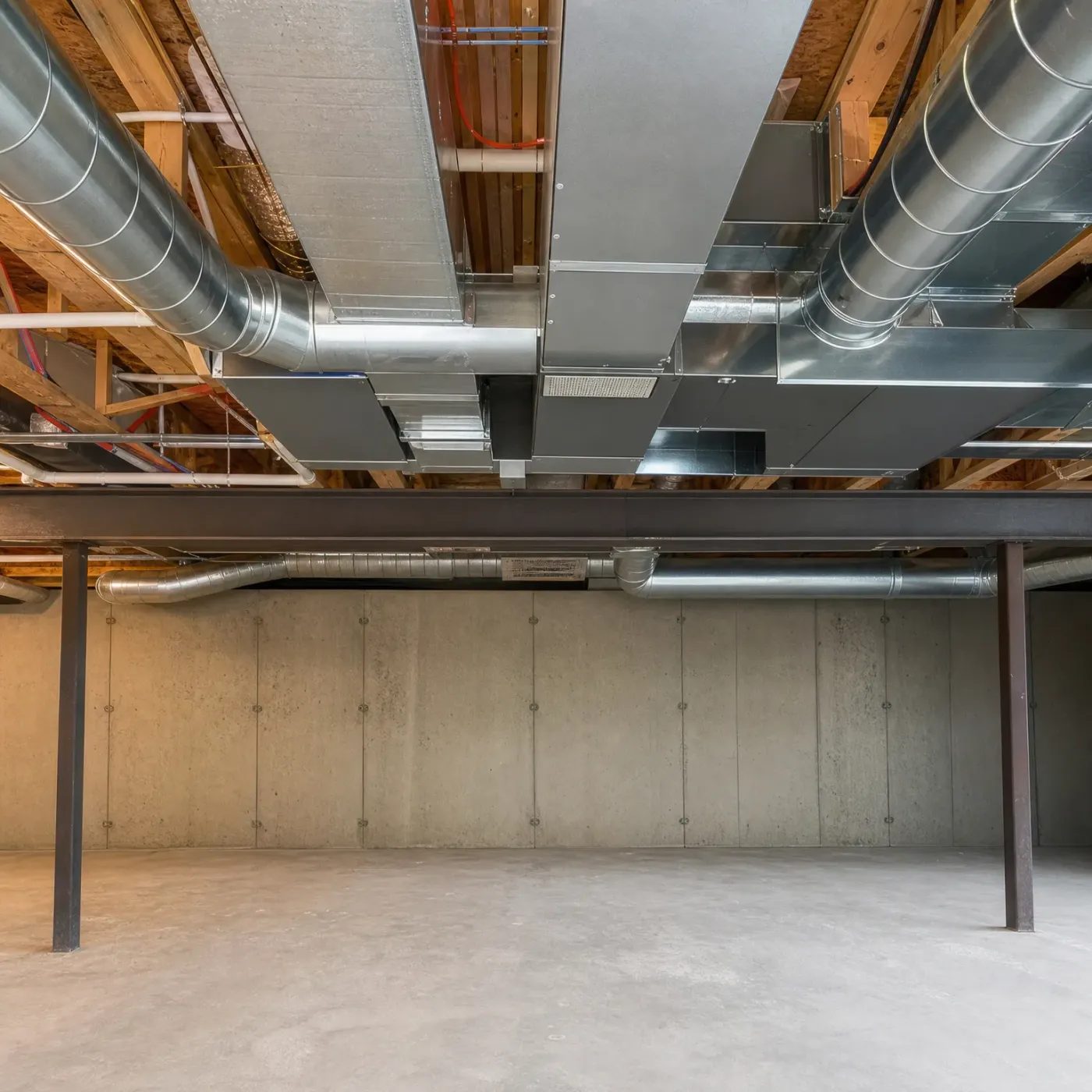
Empty unfinished basement with bare concrete walls and floor, showing galvanized sheet metal ductwork, insulated flexible duct, and pipes running along the wood-framed ceiling, with a small window at left.

Ducts that are doing fine

This is what a normal basement duct run looks like. Metal supply trunks and round pipes crossing the joists, no staining, no sagging, nothing hanging loose. Air moves through metal like this for decades without needing a cleaning.


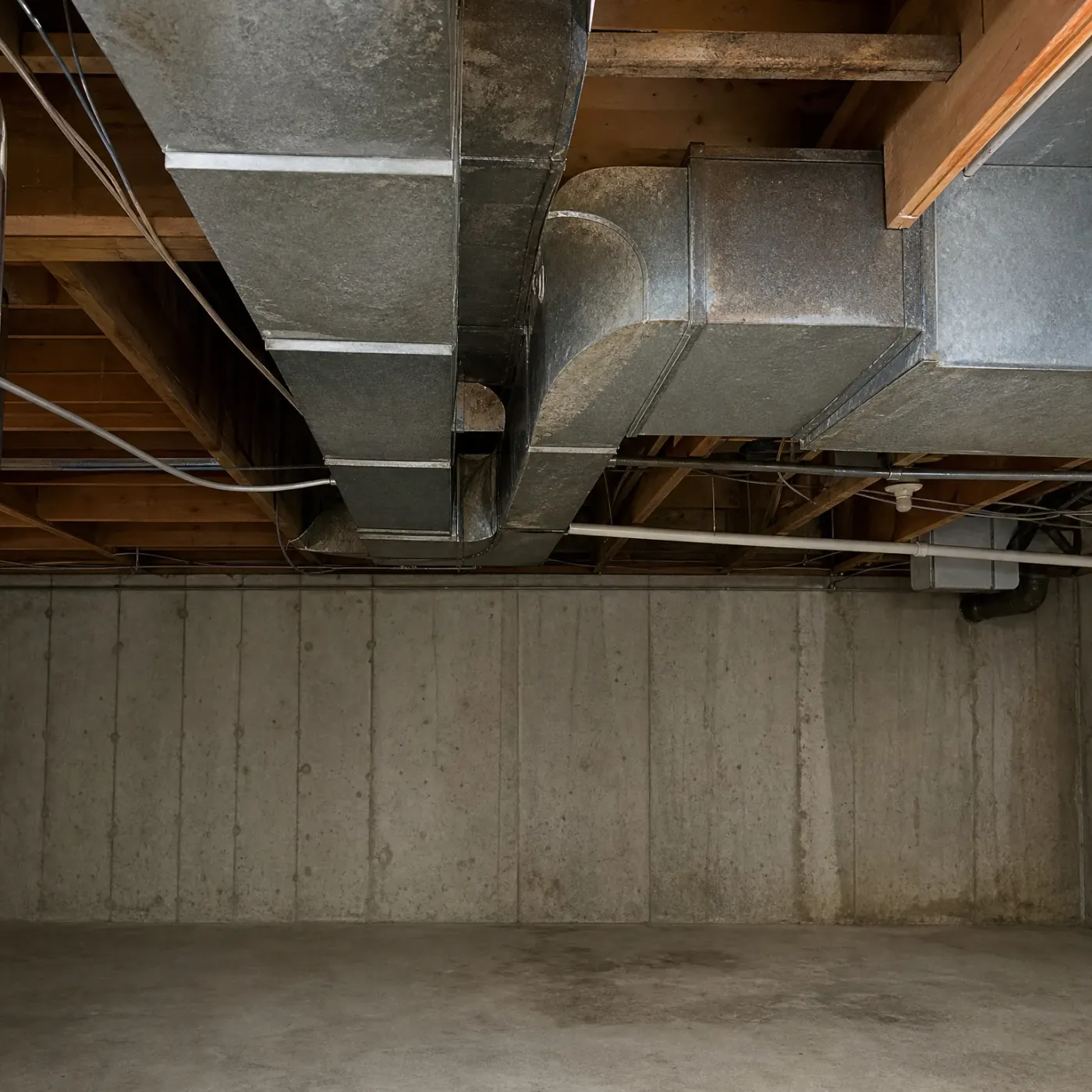
Empty basement room with bare concrete walls and floor, with exposed wooden joists, sheet-metal HVAC ducts, an insulated flexible duct, and pipes running across the ceiling.

Ducts worth a second look

Flex duct sitting close to wiring and bare concrete is where moisture tends to collect in a North Carolina summer. If you see rust on the metal sections, insulation falling away from the flex, or dust pulling at the seams, that's worth having someone look at.

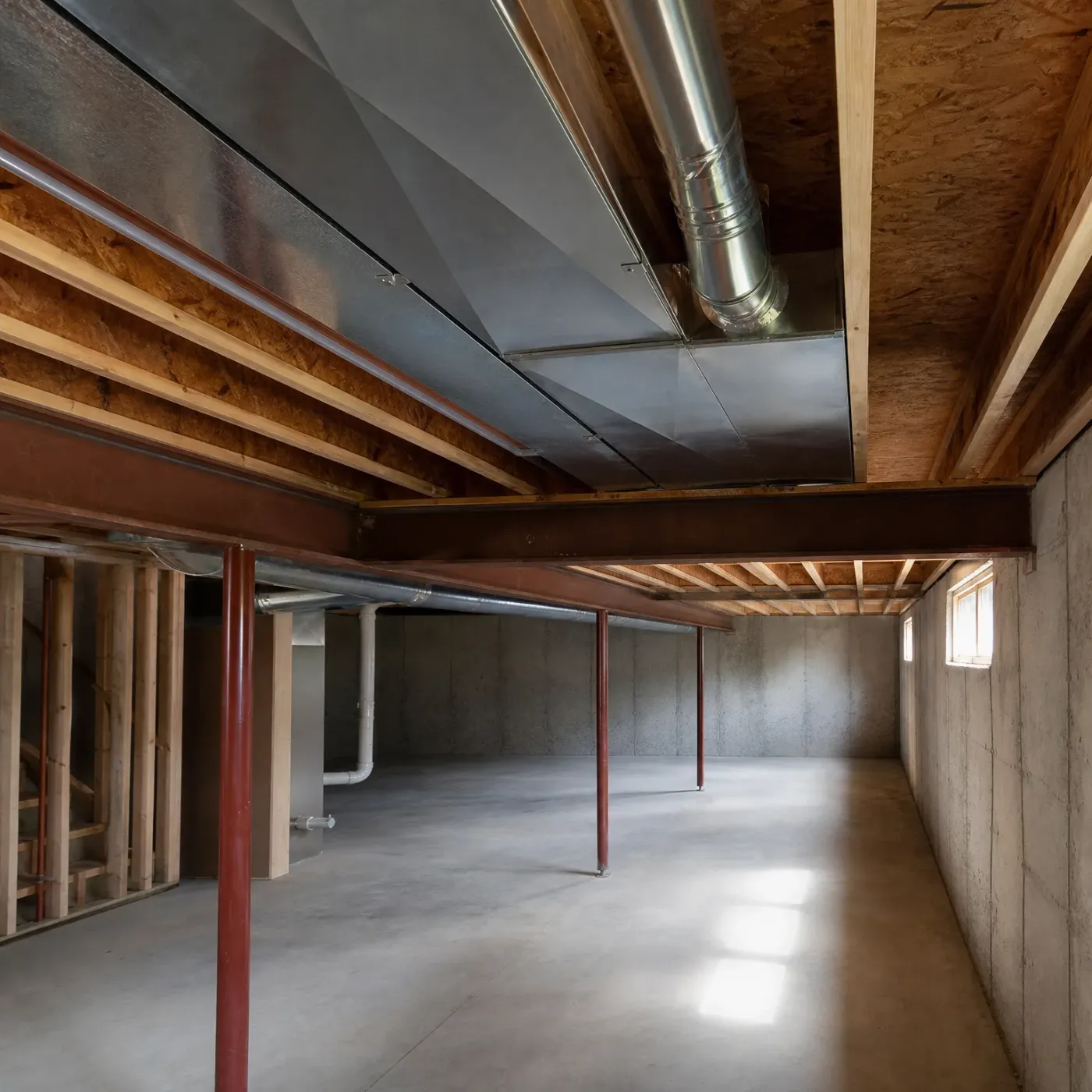
Empty basement room with bare concrete walls and floor, and an exposed ceiling of wooden joists with large galvanized sheet-metal ductwork and pipes.
Before you get your ductwork cleaning
Unfinished basement with exposed wood joists, galvanized sheet-metal ductwork, insulated flex ducts, piping, a small window, and a furnace or air handler against a gray wall.
After you get your ductwork cleaning
Galvanized sheet metal HVAC trunk ducts and branch takeoffs running below a wood-joist ceiling in an unfinished basement with concrete walls, steel support columns and a concrete floor.

It's off your list after this

Your request stays with one local pro.

One request and the search for a pro is handled.

Get one local pro

It costs nothing to send, and you don't have to hire anyone.

Why does your house feel dustier than it should?

You dust the shelves on a Sunday and by Thursday there's a film on them again. You notice it on the TV screen, on the ceiling fan blades, around the vent covers themselves. Sometimes it comes with a musty smell when the AC first kicks on, the kind that fades after a few minutes but comes back the next day. If anyone in the house has started sneezing more at home than anywhere else, or a cough that eases up when they're gone for a few days, that's worth paying attention to. None of this means your ducts are the cause. But when the dust keeps coming back faster than it should and nothing else in the house explains it, the ducts are a reasonable place to look.

A smiling bearded man in a dark green henley shirt sits on a blue-gray couch in a living room, with a bowl of popcorn in the foreground and a houseplant and window behind him.
A smiling man in a dark sweatshirt reclines on a gray sofa in a living room, with a wooden bowl of popcorn on a table in the foreground and a dining area, shelving, and pendant lamp behind him.
A smiling man in a navy long-sleeve shirt reclines on a sofa in a living room, with a bowl of popcorn on a wooden coffee table and framed pictures on the wall behind him.
A smiling man in a dark green long-sleeved shirt sits on a gray sofa in a living room, with a bowl of popcorn in the foreground and windows and a potted plant behind him.
Unfinished basement with concrete walls and floor, a steel beam on posts, and exposed wooden joists with sheet-metal ductwork and piping overhead.
Metal supply trunks and round ducts crossing the joists, dry and sitting flush against the floor above, nothing sagging or stained.
Unfinished basement with bare concrete walls and floor, and galvanized sheet-metal HVAC ducts, pipes and wiring running along the wood-joist ceiling.
Same kind of basement run, but this is where you'd spot rust streaks, loose connections, or a line sweating in July.
  1. A tech inspects every supply and return run with a camera.

  2. Vents and trunk lines get sealed off from the rest of the house.

  3. A negative-pressure vacuum connects to the main trunk line.

  4. A brush or air whip knocks debris loose inside each duct.

A woman in a cream knit sweater reclines on a beige couch with eyes closed and a slight smile, a gray hardcover book resting open on a textured blanket over her lap, with a lit table lamp and a leafy plant in the dim background.
A smiling middle-aged man in a dark green sweater sits at a candlelit table with a glass of red wine and a bowl of salad in the foreground.

Find a duct cleaning contractor

A local contractor who works on duct systems in North Carolina homes all summer, and knows which problems actually show up here.

Find a licensed pro

Keep watching for the signs

If nothing on this page matches your ducts right now, there's no reason to act. Check back if dust, smell, or symptoms change.

Find a licensed pro

Power costs 14.00 cents per kilowatt-hour statewide

Most homes here heat with electric systems, so every cubic foot of air moving through your ducts has already cost you something to warm or cool. At 14 cents a kilowatt-hour, air leaking out through gaps before it reaches a vent is money going nowhere, which is a leak and insulation question first, not a cleaning one.

EIA-861 2025 statewide residential average

What this comes down to

  • Mold, rodent damage, or dust that keeps coming back after cleaning the vents are reasons to get ducts cleaned, not a calendar date.
  • If your ducts look like the normal basement run with no staining or sagging, cleaning them now won't change anything about your air.
  • A local contractor who works on North Carolina duct systems all summer has seen which problems are common here and which aren't.
  • Sending one request means one contractor looks at your ducts, not a handful of companies calling about the same job.
  • Humidity and whatever's actually inside your ductwork decide this, not how long it's been since the last cleaning.

So the answer is the same one you started with. Duct cleaning in North Carolina is worth it when something specific is wrong, mold you can see, a rodent problem, dust that won't quit after you've already cleaned the vents themselves. It isn't worth it on a timer. Humidity here does real work on ductwork over a summer, and that's exactly why the condition of your ducts matters more than the calendar. A duct run with no staining, no sagging, no smell, doesn't get better from being cleaned. A run with mold growing in the damp spots or debris from a rodent nest doesn't get better from being left alone.

If you've gone through the signs above and something matched, the next step is getting someone to look at it directly, not guess from a vent cover. A local contractor who handles ducts in North Carolina homes all summer has already seen what humidity does to a duct system here and what doesn't hold up. That's different from a general reading of your situation. Sending a request through this page puts it in front of one contractor, so you're dealing with one call back about your ducts, not several companies working the same lead. Your house either shows the signs or it doesn't. If it does, someone qualified should be the one deciding what's next, not another few weeks of watching the vents.

Unfinished basement with bare concrete walls and floor, exposed wood floor joists and steel beams, red support columns, and galvanized metal ductwork and pipes overhead, with a small window on the right.

Send one request and you're done looking

Find a local pro

Your request goes to one pro, not a list of companies.

There's no charge for the request.