Mini Split Installation in Salisbury, NC
A new system here will heat from October through April and cool from May through September every year. Tell us about the house, and a licensed contractor who covers Rowan County will get in touch.
Tell us about the job
It takes about a minute.
Salisbury asks a mini-split to run nearly all year
Heat or cooling is running in Rowan County most months of the year, seven for heat and five for cooling. On winter nights that average 31°F a mini-split is doing real heating, not just taking the edge off, and on summer afternoons that hit 87°F it's doing real cooling too. That kind of run time means the compressor and the outdoor coil earn their keep in this county.
Most households here heat with electricity, so the heat pump side of a mini-split matters as much as the cooling side. Any unit installed new has to meet the federal minimum of 14.3 SEER2 for cooling and 7.5 HSPF2 for heating, and in a climate that leans on both sides of that rating, the sizing and the installation matter as much as the equipment itself.
- 7 months
- October through April, your system heats
- 5 months
- May through September, it cools
- 31°F
- the average winter night it heats against
- 87°F
- the average summer afternoon it cools against
NOAA nClimDiv, 1991–2020 normals
North Carolina requires HVAC contractors to hold a state license.
The state board tests contractors before they get a license, and it keeps a record of who holds one. That license belongs to the contractor, not to any single job, so the same license that qualifies them to install a furnace or an air conditioner also qualifies them for a mini-split.
For this installation, the license means the person doing the work has been through that testing, but the job itself still gets a second check. In most cities and counties in North Carolina, installing a mini-split needs a permit from the local building office, and the completed work gets an inspection before it is signed off.
Sources: North Carolina General Assembly · North Carolina State Board of Examiners of Plumbing, Heating and Fire Sprinkler Contractors
- Is a mini split worth it?
- For most homes here, yes, especially in a room that never gets ductwork or a house heated with electric baseboard. Salisbury needs heat from October through April and cooling from May through September, so a mini split is working most months of the year. It heats and cools with one outdoor unit, and it can handle a room that a furnace or central air never reached. A contractor can look at the space and tell you whether it fits what you need.
- How many rooms can a mini split cover?
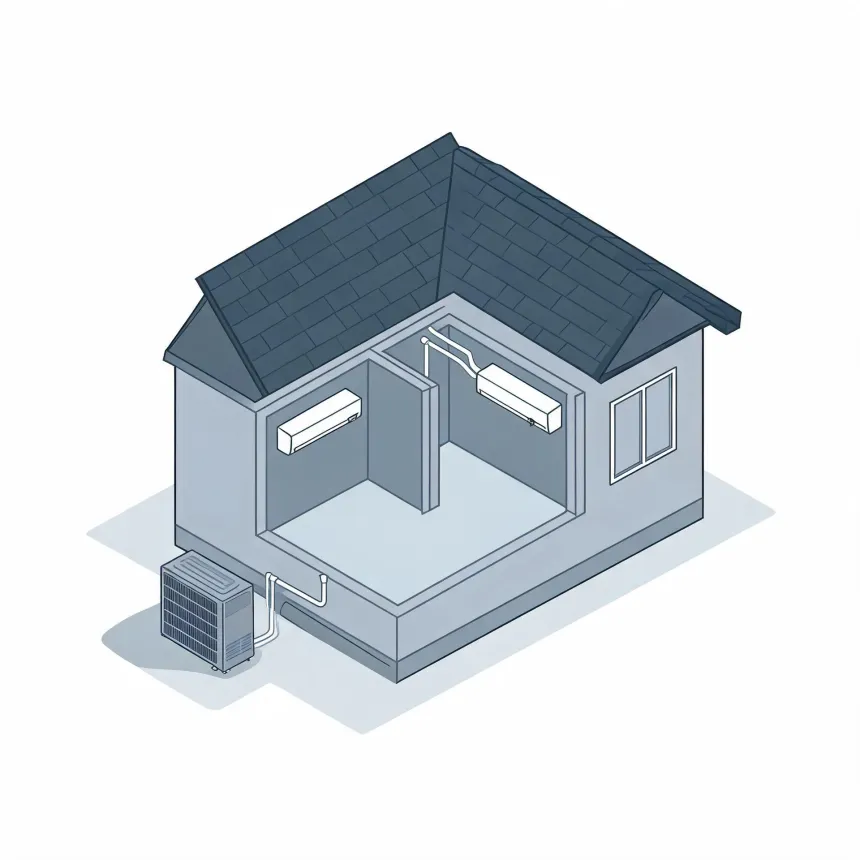
- A single indoor unit is sized for one room or an open area. A multi-zone system runs several indoor heads off one outdoor condenser, and each zone gets its own thermostat, so a bedroom and a living room can run at different temperatures at the same time. How many rooms a house can actually cover depends on where the outdoor unit can go and how the line sets can run, so that part is worth having a contractor walk through in person.
- Can a mini split heat a whole house?
- A multi-zone mini split can heat a whole house if enough indoor units are placed to cover every room, and it needs to be sized for winter nights that average 31°F here. Heat pumps lose some capacity as the temperature drops, so the system has to be matched to what this area actually sees in December and January. A contractor can size the system room by room and tell you whether it covers the whole house or works better paired with existing heat in the coldest rooms.