Mini Split Installation in Mooresville, NC
A new system here will heat from October through April and cool from May through September every year. Tell us about the house, and a licensed contractor who covers Iredell County will get in touch.
Tell us about the job
It takes about a minute.
Mooresville asks a mini-split to run most of the year
Your mini-split will run from October through April to keep the house warm, then May through September to keep it cool. That is 12 months of work, with barely a break between one season and the next. Winter nights average 30°F here, and summer afternoons reach 86°F, so the system swings from heating load to cooling load and back without much rest in between.
A new mini-split installed today has to meet 14.3 SEER2 for cooling and 7.5 HSPF2 for heating, the federal minimum for split-system heat pumps. With more than a quarter of North Carolina households losing power for a day or more in 2024, and this area seeing 9 winter storms and 105 damaging wind events over the past ten years, it is worth asking your contractor how the unit you choose holds up when the power drops and the temperature does not wait for it to come back.
- 7 months
- October through April, your system heats
- 5 months
- May through September, it cools
- 30°F
- the average winter night it heats against
- 86°F
- the average summer afternoon it cools against
NOAA nClimDiv, 1991–2020 normals
North Carolina requires HVAC contractors to hold a state license.
That license comes from the State Board of Examiners of Plumbing, Heating and Fire Sprinkler Contractors. It covers the contractor, not each job, so the same license that covers a mini-split install also covers whatever else that contractor does next.
For this job, that license is what stands behind the work. In most cities and counties here, a mini-split installation also needs a permit from the local building office, with an inspection once the work is done, so the job gets checked separately from the license itself.
Sources: North Carolina General Assembly · North Carolina State Board of Examiners of Plumbing, Heating and Fire Sprinkler Contractors
- Is a mini split worth it?
- For most homes here, yes. Mooresville needs heat or cooling every month of the year, seven months of heat and five months of cooling, so a system built to handle both jobs earns its keep. A mini split runs on electricity and most homes here already heat that way, so it fits how the area is set up. It also gives you a heat pump's efficiency without ductwork, which matters if the room you're adding to doesn't have any.
- How many rooms can a mini split cover?
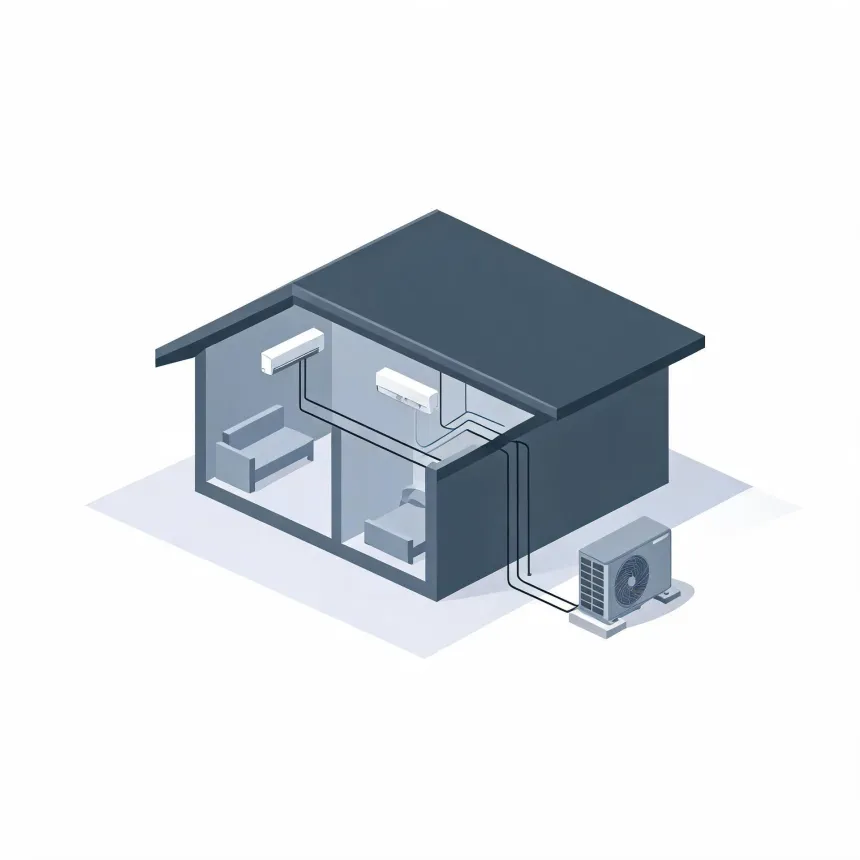
- That depends on how many indoor units you install, not on the outdoor unit alone. A single-zone system heats and cools one room. A multi-zone system runs several indoor heads off one outdoor condenser, so each room gets its own unit and its own thermostat. A contractor will size the system to the rooms you want covered and the heat loss of each one.
- Can a mini split heat a whole house?
- It can, if you install enough indoor units to reach every room and size the system for the coldest nights. Winter lows here average 30°F, so the system needs enough capacity to keep up when it's coldest, not just on a mild day. Homes with open floor plans or a small number of rooms are the easiest fit. A contractor can walk the house and tell you whether a multi-zone mini split covers it or whether some rooms need another approach.