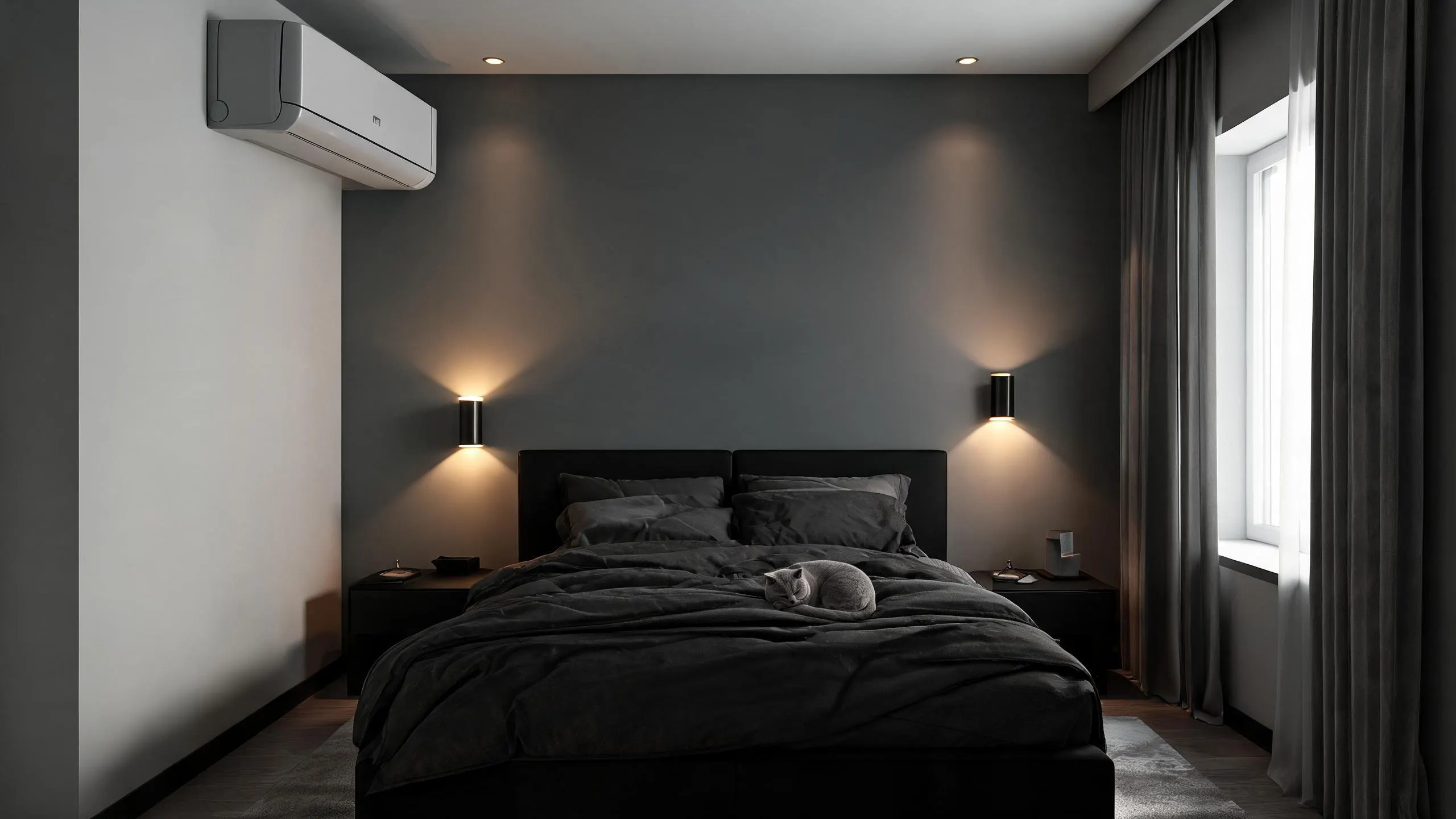
Mini Split Installation in Hendersonville, NC
A new system here will heat from October through April and cool from June through August every year. Tell us about the house, and a licensed contractor who covers Henderson County will get in touch.
Tell us about the job
It takes about a minute.

What a mini-split in Hendersonville has to handle
Ten months out of the year, your mini-split is doing something. Heat from October through April, cooling in June through August. That is most of the calendar, not a season here and there.
Winter nights average 30°F, so the heat pump side is working most nights it runs, not just during a rare cold snap. Summer afternoons average 81°F, milder than a lot of the country, so the cooling side isn't pushed as hard. A unit installed here needs to hold up under long, steady runtime more than extreme swings. Any mini-split manufactured now has to meet 14.3 SEER2 for cooling and 7.5 HSPF2 for heating, the same federal minimum set for any split-system heat pump. That's the floor, not a feature to look for.
Most homes in this area heat with electricity, so when the power goes out, heat goes with it. Over the last ten years the area has recorded 11 winter storms and 42 damaging wind events, and a quarter of North Carolina households went at least 24 hours without power at some point in 2024. Worth asking how a new system comes back on once power is restored.
- 7 months
- October through April, your system heats
- 3 months
- June through August, it cools
- 30°F
- the average winter night it heats against
- 81°F
- the average summer afternoon it cools against
NOAA nClimDiv, 1991–2020 normals
North Carolina requires HVAC contractors to hold a state license.
The State Board of Examiners of Plumbing, Heating and Fire Sprinkler Contractors tests HVAC contractors before they can hold a North Carolina license, and it keeps a record of who holds one. That license belongs to the contractor, not to any one job, so the same license that qualifies someone to install a furnace qualifies them to install your mini-split.
In most cities and counties, installing a mini-split needs a permit from the local building office and an inspection once the work is done. That inspection is separate from the state license the contractor already holds.
Sources: North Carolina General Assembly · North Carolina State Board of Examiners of Plumbing, Heating and Fire Sprinkler Contractors
- Is a mini split worth it?
- For the right house, yes. A mini split heats and cools without ductwork, so it works well in a room addition, a garage conversion, or a house that never had central air. Homes here need heat or cooling ten months of the year, so a system that handles both jobs earns its keep. Winter lows average 30°F, and a mini split is a heat pump, so it needs to be sized for that cold rather than just for summer.
- How many rooms can a mini split cover?
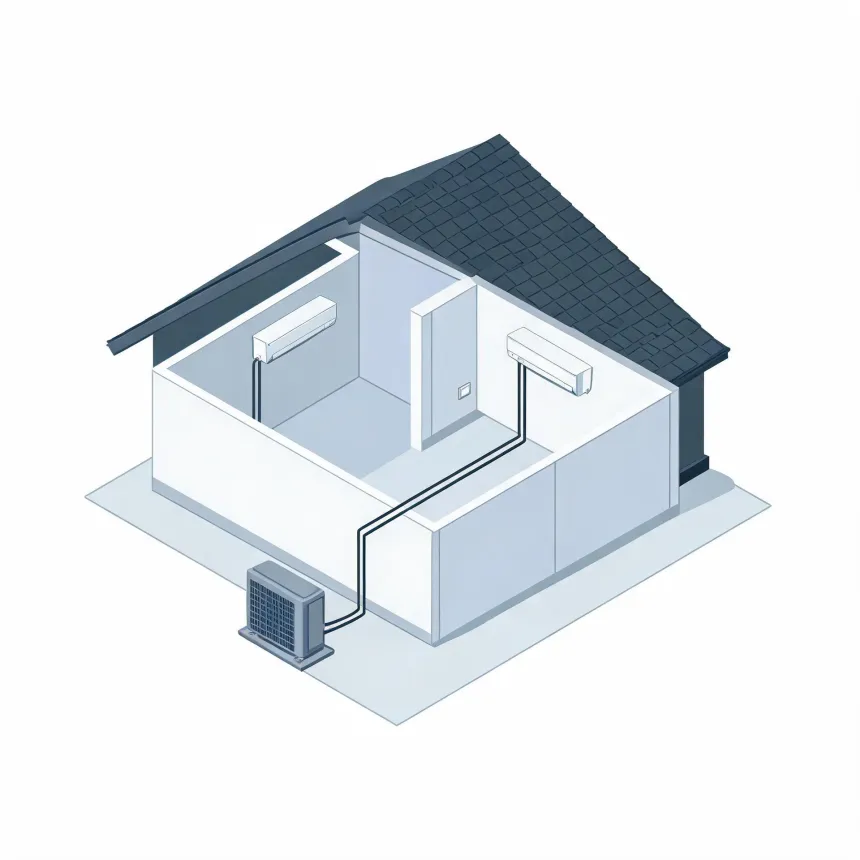
- A single indoor unit is built for one room or one open space. If you need to cover several rooms, a multi-zone system runs more than one indoor unit off a single outdoor unit, and each indoor unit gets its own thermostat. A contractor sizes the system to the rooms you want covered and how they connect, since a wall between two rooms changes how well one unit can reach both.
- Can a mini split heat a whole house?
- It can, if the system is sized and placed for the whole house rather than one room. That usually means a multi-zone system with an indoor unit in each main area, since a single unit only heats the space it's mounted in. With winter nights here averaging 30°F, whichever mini split heats the house needs to be rated for that kind of cold, not just for mild weather. A contractor can work out how many zones your house needs and where they go.