Mini Split Installation in Asheville, NC
A new system here will heat from October through April and cool from June through August every year. Tell us about the house, and a licensed contractor who covers Buncombe County will get in touch.
Tell us about the job
It takes about a minute.
What a mini-split here has to handle
Buncombe County asks for heat most of the year. Winter nights average 28°F from December through February, and homes here need heat October through April, seven months straight. Summer only asks for three months of cooling, with afternoons averaging around 80°F. A new mini-split has to be sized for that long heating stretch, not just the short cooling season.
Any unit installed now has to meet the federal minimum for split-system heat pumps. That floor is 14.3 SEER2 for cooling and 7.5 HSPF2 for heating, and it applies to ductless systems the same as any other. Most homes here heat with electricity, and the county has had its share of winter storms and wind events over the past ten years. A mini-split that keeps running through those outages matters as much as one that runs efficiently on an ordinary night.
- 7 months
- October through April, your system heats
- 3 months
- June through August, it cools
- 28°F
- the average winter night it heats against
- 80°F
- the average summer afternoon it cools against
NOAA nClimDiv, 1991–2020 normals
North Carolina requires HVAC contractors to hold a state license.
The license is held by the contractor, not issued per job, so it covers the business doing the work rather than this specific installation. The State Board of Examiners of Plumbing, Heating and Fire Sprinkler Contractors keeps a record of who has met that standard, which means there is a name on file if something goes wrong.
For a mini-split installation, that license is only part of what stands behind the work. In most cities and counties, this kind of installation needs a permit from the local building office, along with an inspection once the work is done. That inspection is what checks the finished job against code, separate from whatever the contractor's license already tells you about who they are.
Sources: North Carolina General Assembly · North Carolina State Board of Examiners of Plumbing, Heating and Fire Sprinkler Contractors
- Is a mini split worth it?
- For the right house, yes. A mini split heats and cools without ductwork, so it works well in additions, converted garages, or older homes that never had ducts run to every room. Asheville homes need heat from October through April and cooling from June through August, so a system doing both jobs well matters here. Winter nights average 28°F, and a mini split heat pump is built to handle that kind of cold, not just take the edge off it.
- How many rooms can a mini split cover?
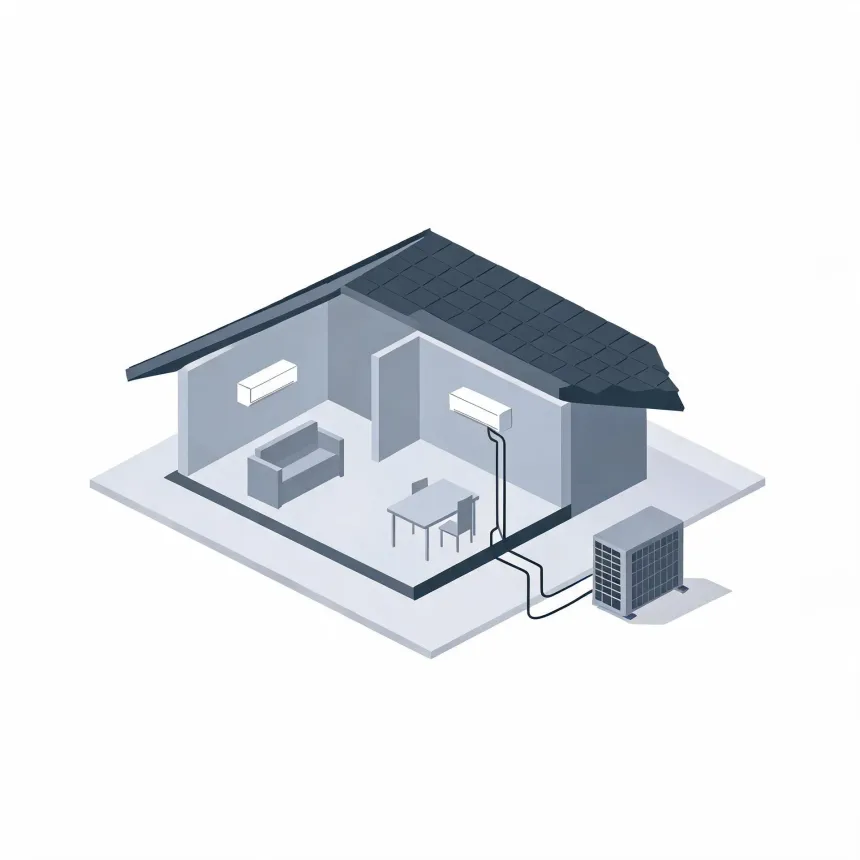
- That depends on whether it's a single-zone or multi-zone system. A single-zone mini split heats and cools one room or open area. A multi-zone system runs several indoor units off one outdoor unit, so it can cover several separate rooms, each with its own thermostat. A contractor sizes the system to the square footage and layout of the specific house.
- Can a mini split heat a whole house?
- It can, if enough indoor units are installed to reach every room that needs heat. A multi-zone system with units placed room by room can replace a central furnace, especially in a house without existing ductwork. What it can't do is heat rooms with no unit in them, since each zone only conditions the space it's mounted in. With winter lows here averaging 28°F, whole-house coverage means sizing each zone for that cold, not just for a mild day.