
The vent clear
The hood sits flush against the siding and the louvers hang open and loose. Air pushes them out when the dryer runs and they fall shut when it stops. Nothing holds them halfway open, and there's no dust ringing the edges.
One request and the dryer vent cleaning stops waiting on you.
Send my requestYou run the dryer a few times a week and never think about the vent running from the back of it to the outside wall. Lint builds up inside that duct even when the lint trap looks clean, because the trap never catches all of it. You want a number: how many loads, how many months, before it is worth having someone clear it out.
A dryer vent needs clearing about once a year for an average household. Lint collects along the duct wall with every load, and it narrows the path air needs to escape. A dryer that runs daily for a big family fills that duct faster than one used twice a week, so once a year is a starting point, not a fixed rule. Wake County summers run long and muggy, and the extra humidity makes lint stick to the inside of the duct instead of blowing through. If your dryer takes longer than it used to to finish a load, or the top of it feels hot to the touch, the vent is telling you it needs attention sooner than the one year mark.




2.51 people per household on average
Wake County households run 2.51 people on average, and more people usually means more loads of laundry, so more lint moving through the same duct each week.
Half the homes here were built by 2000
Half the homes in Wake County were built in 2000 or earlier. An older vent run is more likely to have long duct, extra turns, or a style that traps lint instead of pushing it outside.
Power here costs 14.92 cents per kilowatt-hour
Power here runs 14.92 cents per kilowatt-hour. A dryer fighting a clogged vent takes longer to dry a load, and every extra cycle costs you at that rate.
ACS 2020-2024 · EIA-861 2025
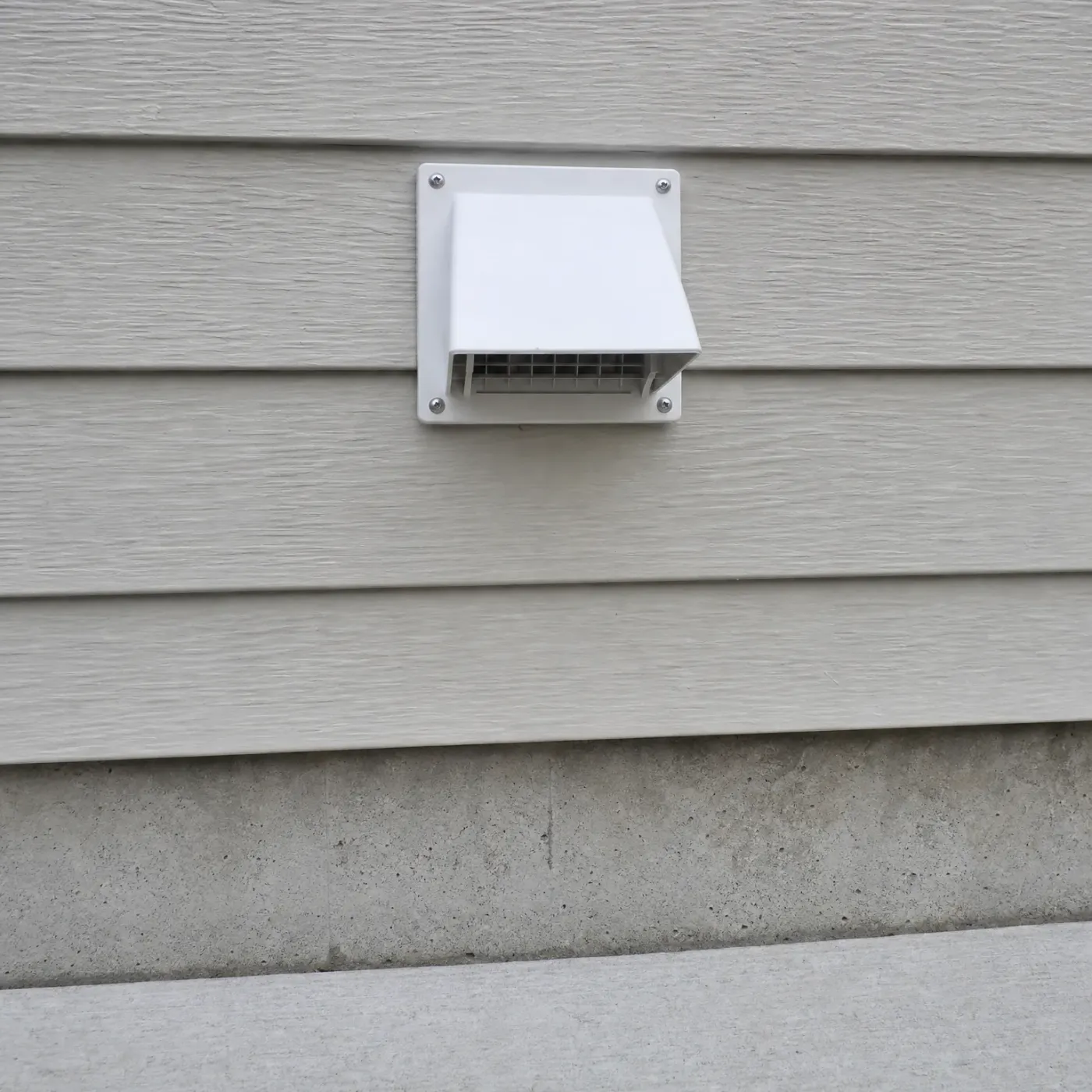
The hood sits flush against the siding and the louvers hang open and loose. Air pushes them out when the dryer runs and they fall shut when it stops. Nothing holds them halfway open, and there's no dust ringing the edges.
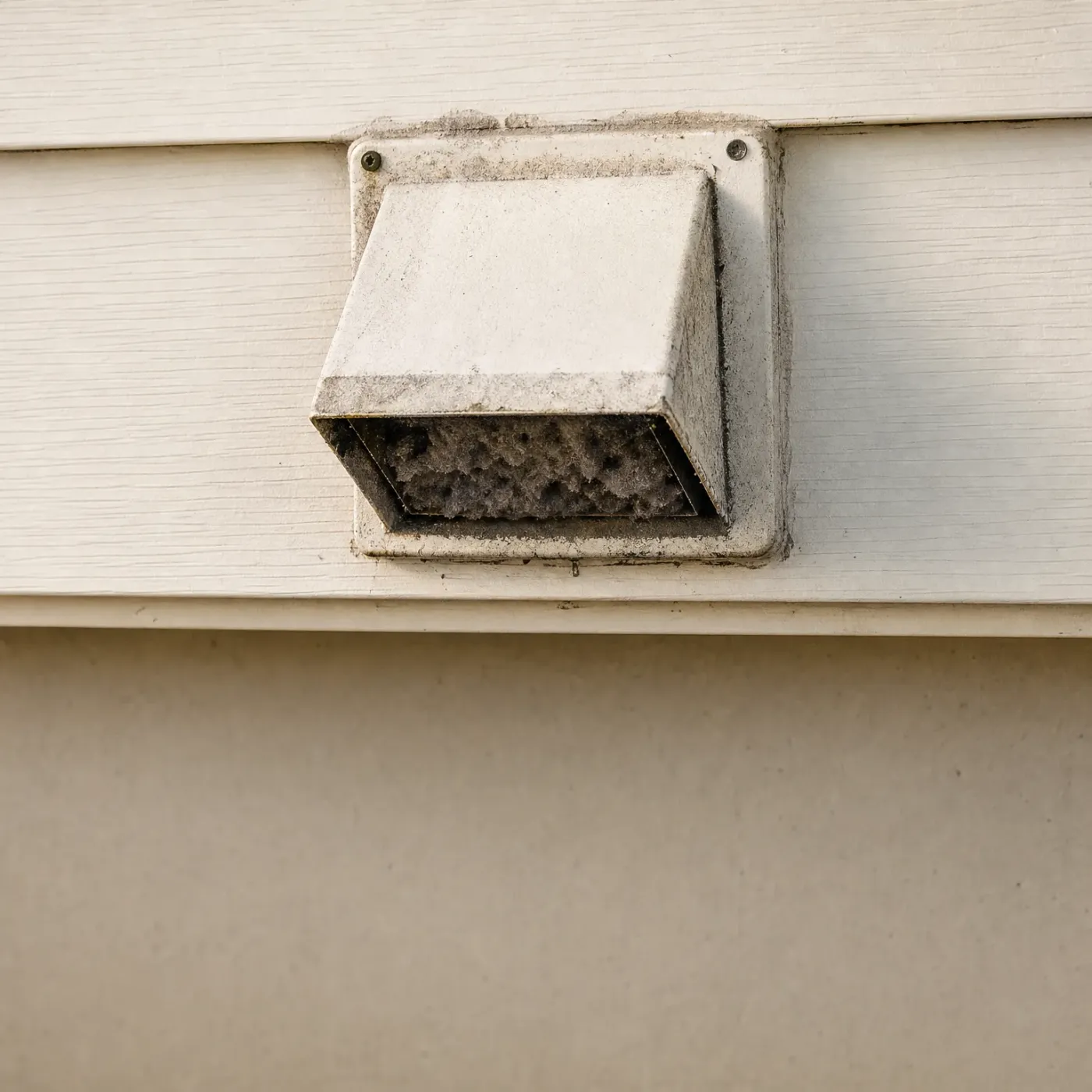
Lint has packed the opening until the louvers can't close all the way. Dust and grime cover the cap and the siding around it, built up load after load. Air from the dryer has nowhere to go but back the way it came.
A load that used to take forty minutes now takes two cycles, and the clothes come out warm instead of dry. The top of the dryer feels hot to the touch. The laundry room picks up a faint burnt smell partway through the cycle, and you can see lint gathering around the lint trap housing or behind the machine where you don't normally look. Outside, the vent hood louvers barely move even on high heat, or they don't move at all. Any one of these means air isn't moving down that duct the way it should. Lint is a fuel, and a dryer that's working to push air through a blocked vent is running hotter than it was built to run.
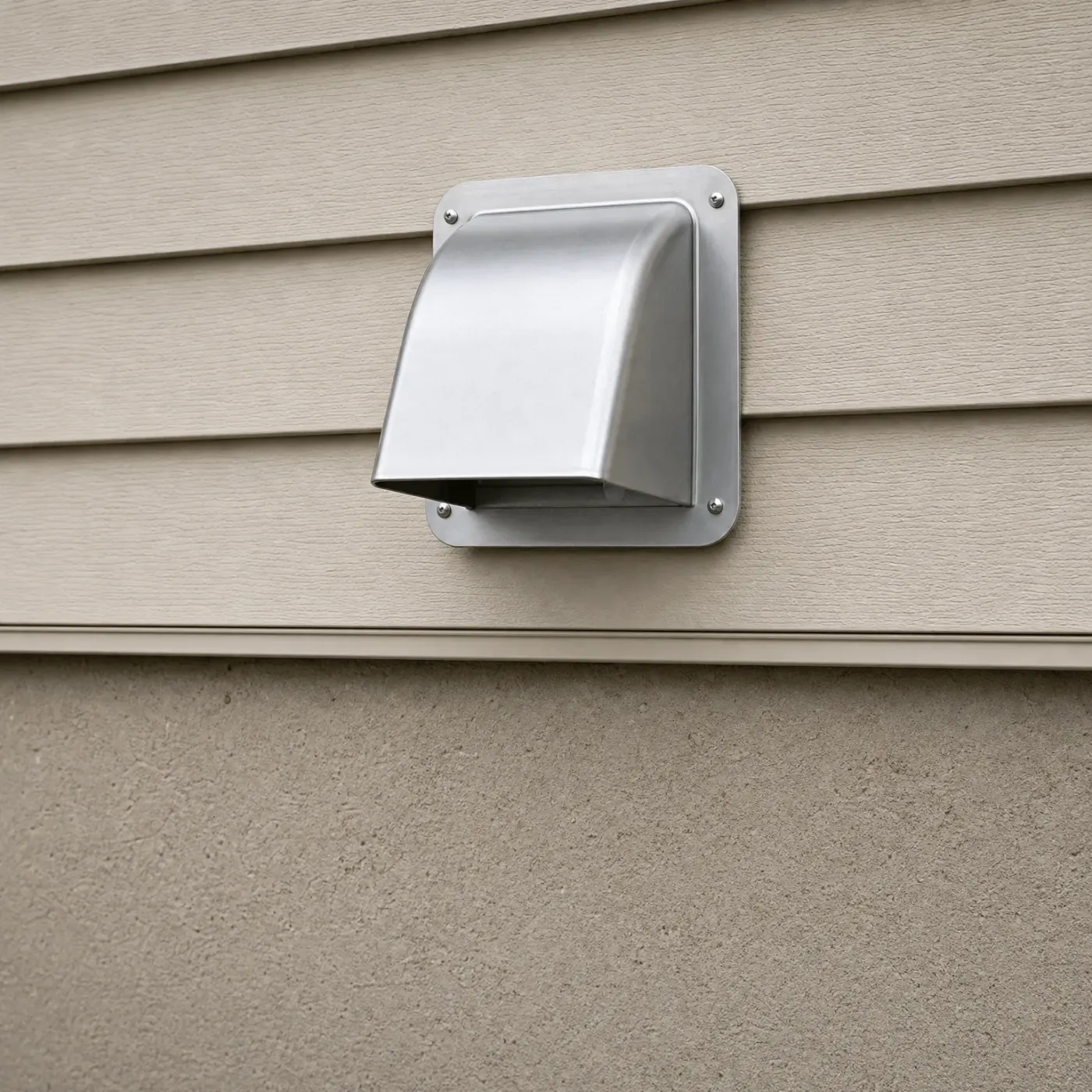
The hood sits tight to the siding and the screws at each corner are snug. Air finds its way out with no resistance, and the duct behind it carries lint outside instead of leaving it to collect. A dryer tied to a vent like this runs its full cycle without working twice as hard.
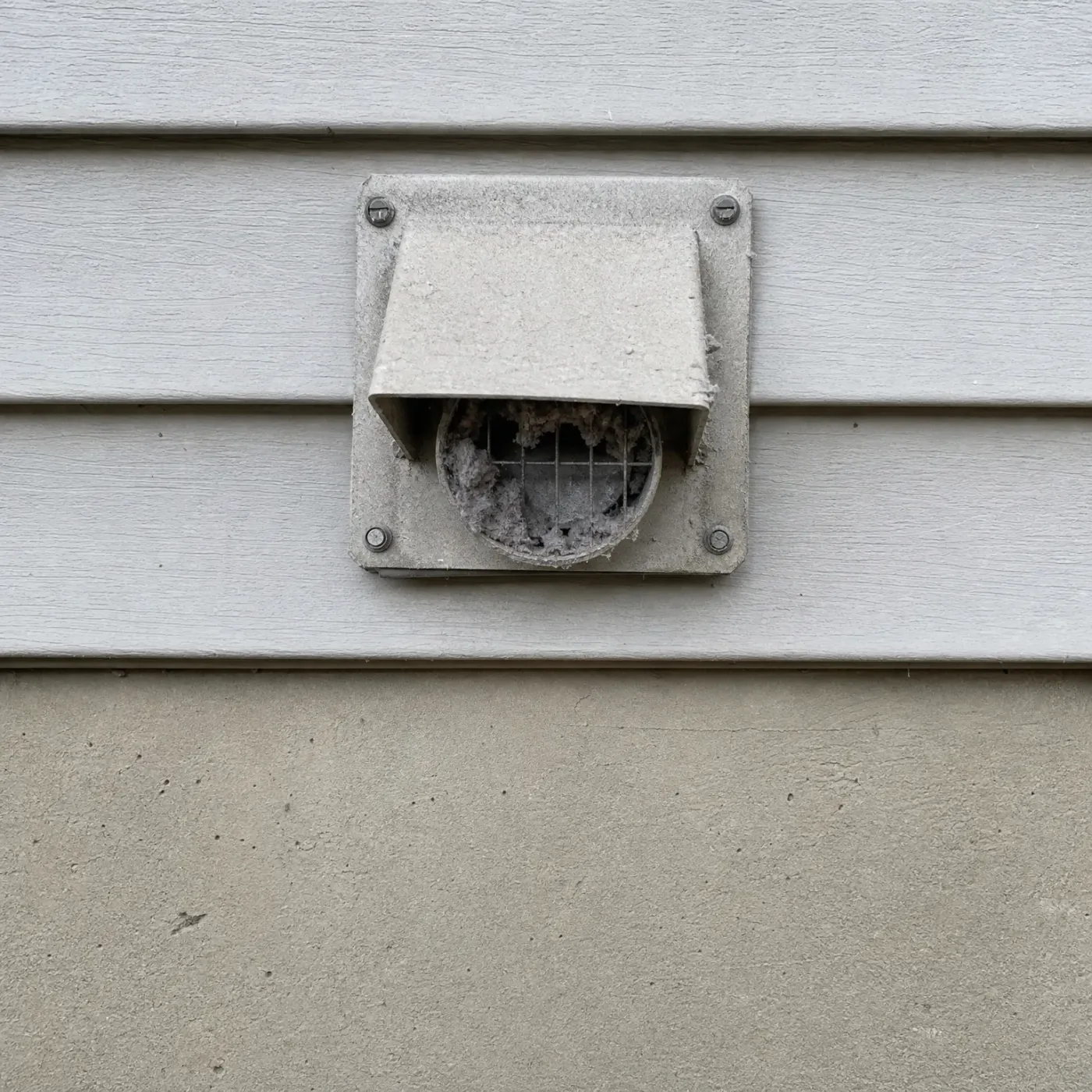
Lint has packed itself into the mesh screen until the opening is nearly sealed. Air that should be pushing outside is instead backing up through the duct and into the dryer. That screen wasn't part of the vent when it was installed, and it's doing more to trap lint than let it out.




You've read what your dryer's been telling you. Checking the vent yourself means getting behind the dryer, pulling it from the wall, and figuring out if the duct run has bends a brush can't reach, then still not knowing for sure if the line is clear all the way to the hood. Calling around adds its own hours: finding someone who works on vents instead of just dryers, explaining the same thing to three different people, waiting on quotes that come back at different prices for what sounds like the same job. Send the form instead and that search stops being yours to do. Wake County summers put the dryer to heavy use drying towels and sheets for months on end, and winter does the same with electric heat running and laundry piling up from everyone home more. A packed duct doesn't clear itself between now and whichever season wears on it next.
A clogged dryer vent rarely fails in one spot. Lint builds along the whole run, from the collar behind the dryer to the hood on the outside wall, and clearing only one end leaves the rest packed. A technician working this job starts at the dryer, feeding a rod or cable down the duct, and finishes at the hood outside, checking that air comes through strong enough to push the louvers open. That two-end approach is how a straight run gets confirmed clear in a way a one-sided brush job can't match. The duct itself decides how the work goes. A short, rigid metal duct with no turns can sometimes be cleared in a single pass. Add a couple of elbows, which most homes have where the duct drops down from the dryer or turns to reach the wall, and the job needs a flexible rod that can bend through each turn without getting stuck. The outside hood gets its own attention too. Lint cakes on the screen or louvers out there just as it does inside the duct, so the cover comes apart and gets cleared, not just wiped down. The job isn't done until the louvers swing open freely when the dryer runs and drop shut on their own when it stops. That movement is the sign the line is open end to end, not just clean where a brush happened to reach.
At 2.51 people, most houses here are running a load most days, not once a week. That's steady lint moving through the duct year round, which is why the run can clog between cleanings even in a smaller household.
ACS 2020-2024
Once a year, maybe twice if the household runs more loads than most, is the answer for a Raleigh house. The signs matter more than the calendar: a load that takes two cycles to dry, a dryer that's hot on top, louvers at the hood that won't open all the way. Any one of those means the duct needs attention now, not on schedule. What's harder to pin down on your own is whether a cleaning actually reached the whole run or just the few feet a brush could get to from either end. Instead of pulling the dryer from the wall yourself, guessing at what's clogged, calling around to find someone who'll come out, and explaining the same problem to every one of them, you can send one form and let a contractor who does this work sort out what your vent needs. You already know the schedule. What's left is getting someone out to the house who can tell you, for certain, that the line is clear from the dryer to the outside wall.

Send one request and you're done looking