
Furnace Installation in Greensboro, NC
A new furnace here will run from October through April every year. Tell us about the house, and a licensed contractor who covers Guilford County will get in touch.
Tell us about the job
It takes about a minute.

Seven months of heat, and winters that can knock the power out
Guilford County homes need heat from October through April. That is seven months of the furnace cycling on, with winter nights averaging 31°F. A new furnace has to hold up to that stretch of use, year after year.
More than half of homes here heat with electricity, and the power does not always stay on. The area has logged 12 winter storms and 166 damaging wind events over the past ten years, and a quarter of North Carolina households lost power for at least 24 hours in 2024. That is worth asking about when you choose a furnace and how it starts back up. Any non-weatherized gas furnace built after November 19, 2015 has to reach at least 80 percent AFUE, so that is the floor to expect on a new install.
- 7 months
- October through April, your furnace is on duty
- 31°F
- the average winter night it heats against
- 80% AFUE
- the federal minimum any new unit must meet
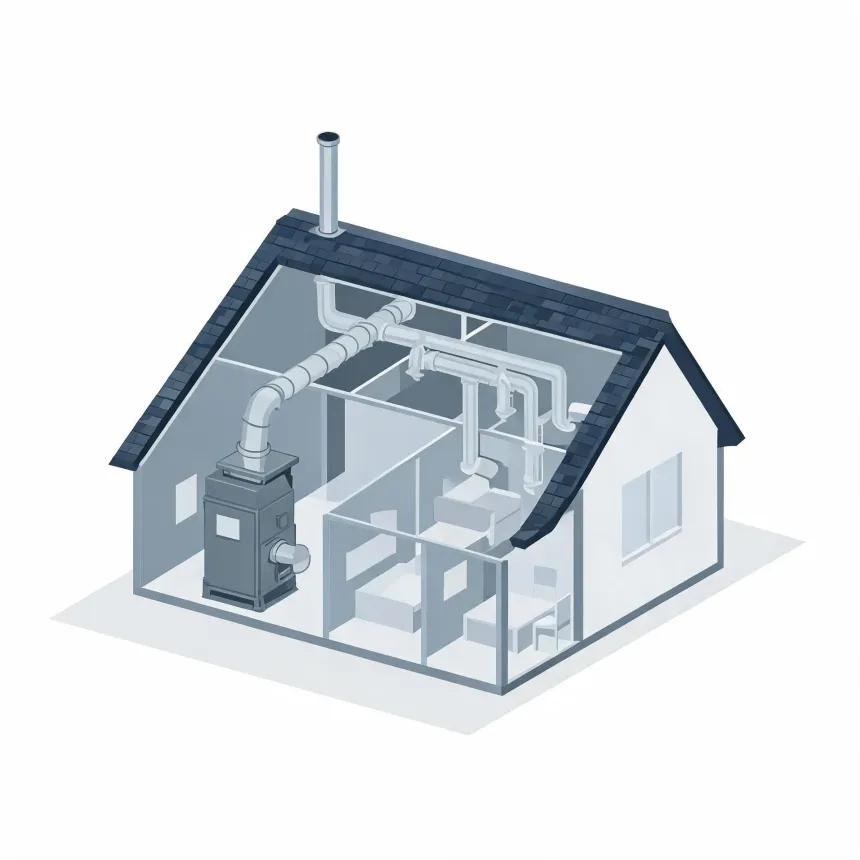
NOAA nClimDiv, 1991–2020 normals
North Carolina requires HVAC contractors to hold a state license.
The State Board of Examiners of Plumbing, Heating and Fire Sprinkler Contractors tests HVAC contractors before they can hold a license, and it keeps the record of who holds one. That license belongs to the contractor, not to any single job, so the same license that covers this installation also covered whatever they worked on last month.
A license tells you the state tested this contractor. It does not stand in for what happens after they show up. In most cities and counties, including here, putting in a new furnace needs a permit from the local building office, and the finished work gets an inspection before it is signed off. That inspection is what catches a bad gas connection or a flue that was not run right, the part of a furnace install that can actually hurt someone.
Sources: North Carolina General Assembly · North Carolina State Board of Examiners of Plumbing, Heating and Fire Sprinkler Contractors
- What size furnace does my house need?
- There is no single number that fits every house. The right size depends on the square footage you are heating, how well the house holds heat, the windows, and the insulation. A furnace that is too big will short cycle and wear out faster. One that is too small will run constantly and still leave rooms cold. A contractor sizes this with a load calculation, not a guess based on the old furnace or the square footage alone.
- How do I know it's time to replace my furnace?
- If it is struggling to keep the house warm, cycling on and off more than it used to, or needing a repair call every winter, it is telling you something. Age matters too, and a furnace that has been repaired more than once in a season is worth weighing against a replacement. Homes here need heat from October through April, seven months a year, so a furnace that cannot keep up is not a small problem. If yours is already falling behind, the coldest nights will only make that worse.
- Is a high-efficiency furnace worth it?
- It depends on how long the house needs heat and how it is used. Here, that is seven months a year, with winter nights averaging 31°F, so a furnace gets real work every heating season. Furnaces made since November 2015 already have to reach at least 80 percent AFUE, and high-efficiency models go higher than that, meaning less fuel burned for the same heat. Whether the higher upfront cost pays off for your house is something a contractor can walk through with actual numbers for the equipment and the home.