Mini Split Installation in Greensboro, NC
A new system here will heat from October through April and cool from May through September every year. Tell us about the house, and a licensed contractor who covers Guilford County will get in touch.
Tell us about the job
It takes about a minute.

What Guilford County asks of a mini-split
A mini-split here runs nearly year round. Winters average 31°F and homes need heat from October through April, then cooling picks up from May through September when afternoons average 87°F. That is 12 months of work, with barely a break between the heating season and the next cooling season.
Any new unit sold today has to clear the federal minimum for split-system heat pumps, 14.3 SEER2 for cooling and 7.5 HSPF2 for heating. Over half the homes in this area heat with electricity, so the heat pump side of that rating matters as much as the cooling side. Power outages are common here too, with a quarter of North Carolina households losing power for at least a day in 2024, so it is worth asking how a mini-split and its outdoor unit come back on once power returns.
- 7 months
- October through April, your system heats
- 5 months
- May through September, it cools
- 31°F
- the average winter night it heats against
- 87°F
- the average summer afternoon it cools against
NOAA nClimDiv, 1991–2020 normals
North Carolina requires HVAC contractors to hold a state license.
The Board tests contractors before they get that license and keeps a record of who holds one. It covers the contractor as a business, not the specific job at your house, so the license tells you this person met the state's standard, not that this particular install was checked off by anyone at the state.
Most cities and counties require a permit for a mini-split installation, and an inspector checks the work once it is done. The license tells you who is allowed to do the job. The permit and inspection tell you whether this one was done right.
Sources: North Carolina General Assembly · North Carolina State Board of Examiners of Plumbing, Heating and Fire Sprinkler Contractors
- Is a mini split worth it?
- For most homes, yes, especially rooms that never had ductwork to begin with. A mini split gives you heat and cooling in one unit, and it holds up in cold weather better than older heat pumps did. Homes here need heat October through April and cooling May through September, so the system runs nearly all year, which is where the efficiency pays off. A contractor can look at the space and tell you what size and how many units the job needs.
- How many rooms can a mini split cover?
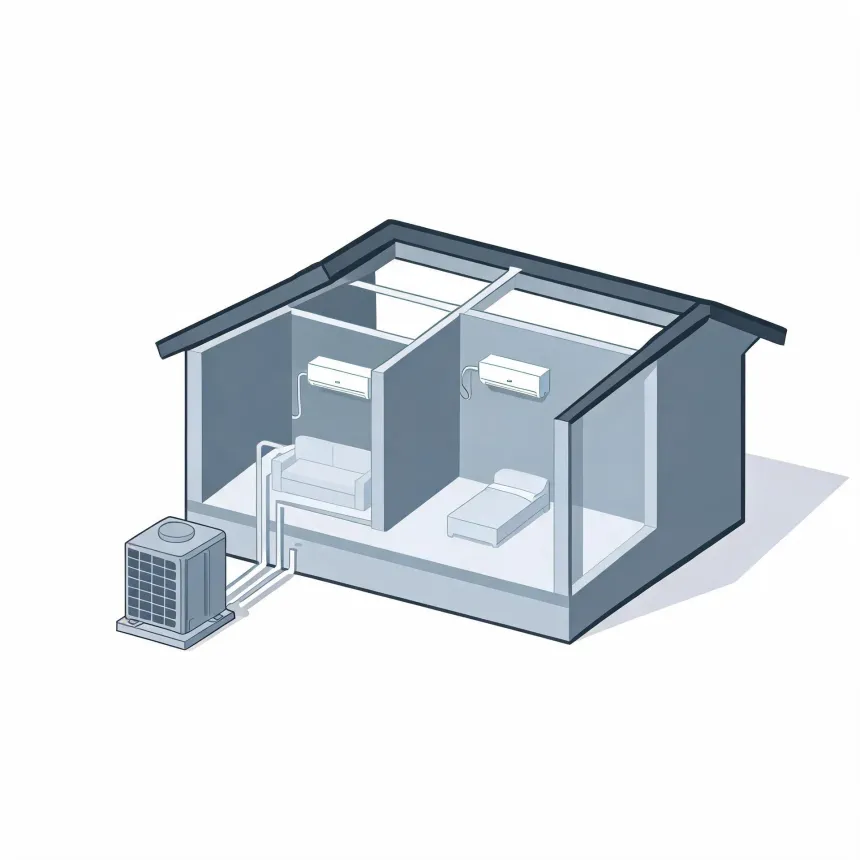
- A single outdoor unit can run one indoor head or several, depending on the system. Single-zone systems cover one room. Multi-zone systems run several indoor heads off one outdoor unit, each set to its own temperature. How many rooms fit on one system depends on the size of the rooms and how the house is laid out, so a contractor sizing the job will tell you what works for your house.
- Can a mini split heat a whole house?
- It can, if it's sized and placed for that. A multi-zone system with an indoor head in each room or living area can heat a whole house the same way a furnace or central heat pump does, just without ducts. Winter nights here average 31°F, so the system has to be sized for that low, not just for a mild day. A contractor can work out how many zones your house needs and whether heating it that way makes sense compared to heating room by room.