Does a heat pump handle humidity in North Carolina

New system or replacementHeat PumpNorth Carolina
Step 1 of 2

What ZIP code is the job in?

Will a heat pump keep up with humidity in North Carolina summers?

North Carolina summers get sticky, and you're wondering if a heat pump can actually pull that moisture out of the air or if you'll end up with a house that's cool but still damp. It's a fair question before you commit to one for next summer. The answer depends on how the system is set up, not just whether it's a heat pump.

Yes, a properly sized heat pump handles humidity well

A heat pump cools the same way a central air conditioner does. It pulls warm, humid air across a cold coil, and the moisture condenses out and drains away. The part that matters is sizing. A unit that's too big for your house cools the air fast and shuts off before it has run long enough to wring out the humidity. That leaves the thermostat satisfied while the air still feels damp. A correctly sized heat pump runs longer, steadier cycles, and those longer cycles are what pull the moisture down along with the temperature. In North Carolina, where summer humidity is part of daily life, getting that sizing right at installation matters more than the brand or the price tag.

A gray outdoor condenser unit on a concrete pad beside a house with horizontal lap siding, a conduit and disconnect box on the wall, a shrub with white flowers at right and evergreen foliage at left.

Running clean and steady

A heat pump that's sized right and set to a steady temperature pulls moisture out as it runs. Long, slow cycles give the coil time to work on humidity, not just heat. The outdoor unit stays clear, the lines stay solid, and the air inside feels dry even when it's hot.


A gray outdoor air conditioning condenser unit on a concrete pad beside a house with light vinyl siding, with a gray electrical disconnect box and conduit on the wall to the right.

Short cycling, staying damp

A unit that's oversized cools the air fast and shuts off before it's pulled out much moisture. You get a house that feels cool but clammy. Dirt and grime on the outdoor fins, like in a neglected unit, make this worse by cutting how well it sheds heat in the first place.

An older woman with gray hair in a gray knit sweater sits on a sofa under a knitted blanket beside a large window, looking out toward yellow autumn foliage, with a living room, fireplace and patterned rug behind her.
An older woman with gray hair in a cowl-neck sweater sits on a sofa under a blanket, looking out a large window toward trees with yellow autumn foliage.
A gray-haired woman in a light knit sweater sits in an armchair by a window, looking out at trees with yellow autumn leaves, with a dark ceramic mug on the sill and a plant in the foreground.
A gray-haired woman in a cream knit sweater sits in a chair by a large window, looking out at rolling hills covered in autumn-colored trees.

Two-stage and variable-speed models run longer, lower cycles

Instead of blasting cold air and shutting off, these systems run low and slow for longer stretches, giving the coil more time to wring moisture out of the air.

Find a licensed pro

Oversized equipment cycles on and off fast

A heat pump that's too big for your house cools the air quickly then shuts off, before the coil has time to pull humidity out. Sizing it right matters.

Find a licensed pro
A woman stands in the open doorway of a white stucco house holding the dark door, facing a man in a black cap and shirt seen from behind in the blurred foreground, with a potted flowering plant beside the entry.

What a damp house costs you

You'll feel it before you see it. A house that's cool but still sticky means the thermostat looks fine while you're uncomfortable, so the instinct is to drop the temperature a few more degrees. That runs the system harder without fixing the actual problem, which is moisture, not heat. Over a summer that adds up on the power bill without ever solving what's bothering you.

The other cost shows up on wood trim, in closets, on anything that sits against an outside wall. Damp air finds those spots first. If the unit in your house is sized or set up wrong for North Carolina summers, that's worth having someone look at before it becomes a bigger job. A contractor local to your area who installs and sets up heat pumps for homes like yours will know what sizing and settings actually hold up here, and matching with one who already works this climate means you're talking to someone who gets it, not explaining your house from scratch.

Interior corner of a living room with a beige upholstered sofa and dark cushion in the foreground, a ceramic vase of leafy branches on a dark side table by a curtained window, a framed picture on the wall, and a wood-surround fireplace at right.
A gray outdoor air conditioner condenser unit on a concrete pad beside a house with horizontal siding and an electrical disconnect box, surrounded by grass.

A single-stage heat pump sized right

A single-stage heat pump still works for humidity if it's matched to your house. The sizing has to be close, not just big enough to cool fast. Too much capacity and it shuts off before it's run long enough to pull moisture out, leaving the air cool but clammy. A contractor who sizes it correctly, using a load calculation instead of a guess, sets you up for drier air even without the variable-speed features.

A white outdoor heat pump unit on a concrete pad beside a house with horizontal lap siding, with a plain light wall and grass lawn to the left.

Where a bigger unit falls short

An oversized heat pump cools the room fast and shuts off, which feels like it's working but leaves the humidity behind. Short cycles don't give the coil time to do anything but drop the temperature. You end up reaching for the thermostat again an hour later, not because the system is weak, but because it never ran long enough to matter. This is a sizing problem, not a brand problem.

Does your house feel cool but still sticky?

You've got the thermostat where you want it, but the air still feels heavy. Sheets feel damp at night. Windows fog up in the morning. Wood doors stick in their frames, and anything leather or canvas in a closet starts to smell musty by August. That's moisture sitting in the air and settling on surfaces because the system is shutting off before it's run long enough to pull it out. Left alone through a full summer, that dampness works into places you can't see, drywall, closet shelves, the underside of furniture, and gives mold a place to start. It also means you're paying to cool air that still doesn't feel right.

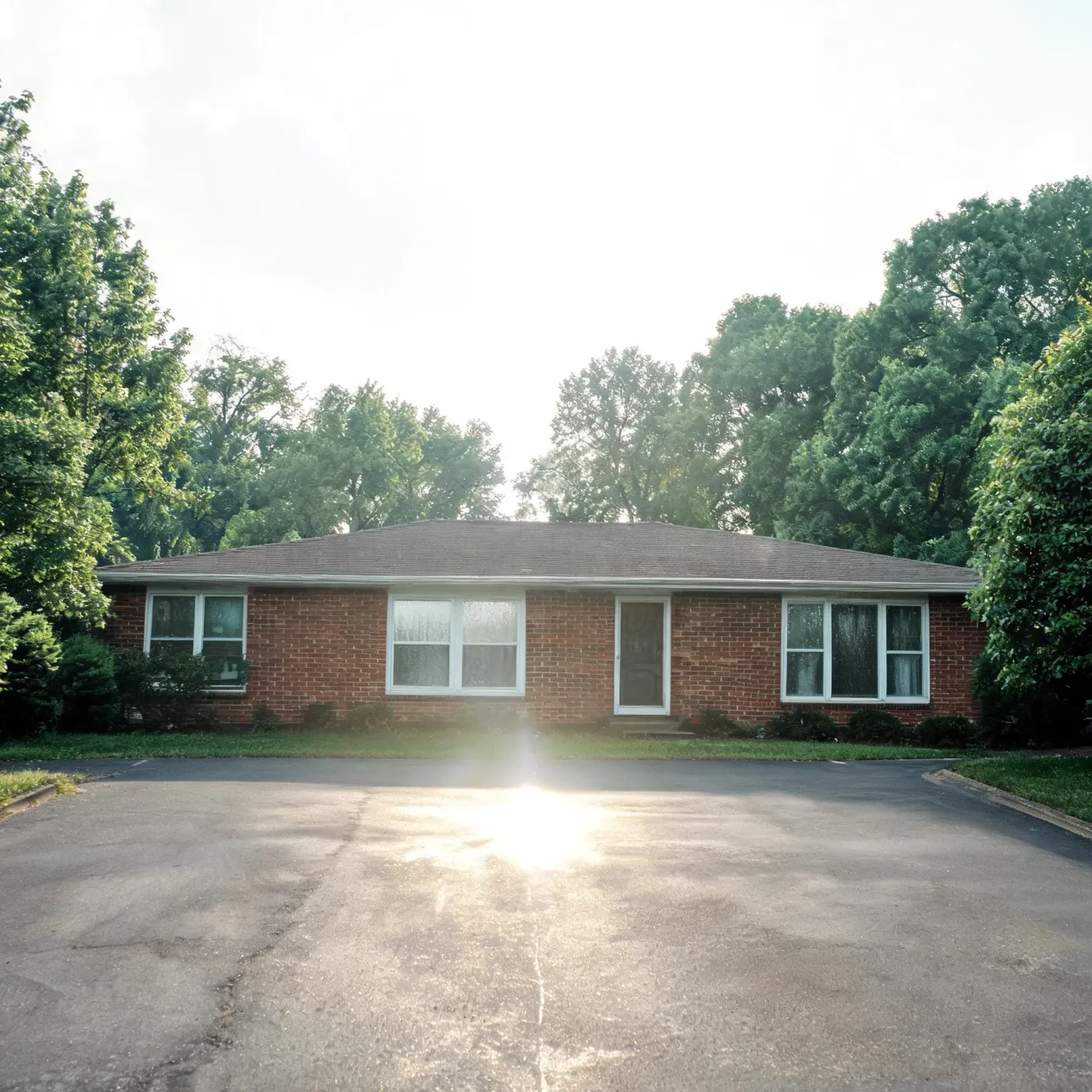
A single-story red brick ranch house with a low shingled roof, white-framed windows and a central door, fronted by a large asphalt parking area with sun glare, surrounded by leafy green trees.

Averaged across June, July and August, the dew point in North Carolina sits around 67°F, according to NOAA climate data. That's the sticky range where air feels heavy even in a cool room. For your heat pump, it means the coil needs real runtime to catch up, not just a quick blast of cold air. A unit that's sized and set up for that keeps humidity down without you noticing it working. One that isn't will leave the house feeling damp no matter where you set the thermostat. If yours has been struggling with this, a local contractor who installs and sets up heat pumps for this exact climate, not a dispatcher juggling calls for five companies, is going to know faster what's off and what it'll take to fix it.

NASA POWER T2MDEW county cells weighted by homes

Get your heat pump to the right pro

If your heat pump is sized wrong or set up to cycle hard and fast instead of long and slow, no amount of thermostat adjusting fixes the stickiness. That's a sizing and setup problem, not a settings problem, and it takes someone on-site with a manual J calculation to get right, not a guess based on square footage. A contractor who works on heat pumps in North Carolina all summer has seen this exact complaint before, the cool-but-clammy house, and knows what to check first: stage count, fan speed settings, whether the equipment matches the house or just matches the old unit it replaced. Getting matched with one licensed local contractor means someone who actually installs and sizes this equipment for homes like yours looks at your situation specifically, instead of your number going out to a handful of companies guessing over the phone. Your house doesn't need a bigger system. It needs the right one, set up to run the way your summers actually demand.

A heat pump cools your house by moving heat out through refrigerant, and the same cycle that lowers the temperature also pulls water out of the air at the indoor coil. Air passes over that coil, drops below its dew point, and the moisture in it turns to liquid water and drips into a condensate pan, then down a drain line. That only happens while air is moving across a cold coil. The longer the system runs in one stretch, the more water collects there. A thermostat set a couple of degrees lower doesn't change this much, because the coil is still only as cold as the refrigerant charge and airflow allow, and a unit that satisfies the thermostat in a few minutes shuts off before the coil ever gets wet enough to drain real water away. Some systems also run the indoor blower at low speed after the compressor stops, squeezing extra moisture off the coil before it dries out again. That's a setup choice, not something every heat pump does on its own.

Power costs 14.00 cents per kilowatt-hour statewide

North Carolina homes paid 14 cents per kilowatt-hour in 2025, and most houses here heat with electricity too. A heat pump that's sized and set up right earns that cost back by running long, moisture-pulling cycles instead of short blasts that leave the air cool but damp.

EIA-861 2025 statewide residential average

The Answer, Plainly

  • A heat pump pulls humidity out of your house when it's sized to match your home and set to run long, steady cycles.
  • Oversized equipment cools the air fast, shuts off early, and leaves the coil without enough runtime to wring out moisture.
  • A single-stage, two-stage, or variable-speed heat pump can all handle a North Carolina summer if the sizing and setup are right for your house.
  • A dew point near 67°F all summer means the coil has real work to do, not just a thermostat number to hit.
  • A house that feels cool but sticky points to a sizing or setup problem, not something you can fix by changing the thermostat.
  • Getting this right the first time means a local contractor doing a manual J calculation before anything gets installed.

Yes, a heat pump can handle North Carolina humidity. The question was never whether the equipment can do it. It's whether yours is sized and set up to actually do it in your house. The refrigerant cycle that cools your air pulls moisture out of it at the same time, every time, on any heat pump built in the last couple decades. What decides whether that moisture actually leaves your house is runtime. A unit that's too big for the space cools the air fast and shuts off before the coil has done its real work, so you get a thermostat that reads 72 and a house that still feels like a wet towel. A unit that's matched to your home runs longer, lower cycles that give the coil time to catch up with a dew point that's sitting near 67°F for most of the summer. That's true whether you've got a single-stage system, a two-stage, or a variable-speed one. None of those are automatically right or wrong for your house. What matters is whether someone sat down with your square footage, your windows, your insulation, and ran the numbers before the installation happened. If your house feels cool but sticky right now, that's not a thermostat setting you missed. It's a sizing problem, and it gets fixed on the install, not after. A local contractor who does manual J calculations for a living and installs heat pumps in houses like yours all summer long is the one who gets this right the first time.

A woman in a cream knit sweater sits in an armchair with her eyes closed near a window showing yellow autumn foliage, with a mug on a round wooden side table beside her.
A gray-haired man with a beard in a blue button-placket shirt reclines on a couch with his eyes closed, beside a sunlit window with a green plant.

The right pro for this job

A heat pump handles North Carolina's sticky summers fine when it's sized to your house and installed to run long, steady cycles instead of short blasts. Get that wrong and you end up with a house that's cool but still damp no matter where you set the thermostat. A local licensed contractor who installs these year-round in this climate can run the load calculation, size the equipment to your home, and set it up to actually wring the moisture out. Request a match and one contractor familiar with North Carolina humidity will reach out, so you're not fielding calls from several companies.

Get a licensed local pro

Only one pro gets your request, so you hear from one company.

No fee to send it, and nothing to sign.