
















Why your heat pump is loud in North Carolina summers

RepairHeat PumpNorth Carolina
Step 1 of 2

What ZIP code is the job in?

A loud heat pump in summer is usually the outdoor unit working harder than it should. In North Carolina's humid heat, the system runs long hours to pull moisture and heat out of the air, and that extra runtime is what turns a normal hum into something you notice. A rattling or buzzing sound often points to something loose, like a fan blade out of balance or panel screws that worked free from the vibration. A high-pitched squeal can mean the outdoor fan motor is wearing out. A hissing or screeching sound during the compressor cycle can mean refrigerant pressure is off. None of these get quieter on their own, and running a system through a hot North Carolina summer with one of these problems tends to push it toward a harder failure, usually right when you need the cooling most. The sound is the system telling you something specific is wrong, not just that it's working hard.

  1. The outdoor fan motor spins up first and can start rattling.

  2. Refrigerant pressure rises as the compressor works against summer heat.

  3. The compressor kicks on and strains to keep up with demand.

  4. Loose panels or fan blades start vibrating against the cabinet.

A dark gray outdoor condenser unit on a concrete pad beside a house with beige horizontal siding, with a gray electrical disconnect box and conduit on the wall, mulch beds, a hosta plant, a shrub, and mowed lawn in front.
A clean, clear unit like this runs at a steady, even hum because nothing is blocking the coil or straining the fan.
An outdoor air conditioning condenser unit on a concrete pad beside a house with light horizontal siding and a concrete block foundation, with bare soil and small green plants around it.
Dust and grime packed into the fins make the unit work harder and louder to push the same air through.

What That Noise Costs You

  • A louder heat pump running longer in July and August can push your electric bill higher since most homes here heat and cool with electricity.
  • If the outdoor unit strains through a muggy afternoon, the compressor can wear down faster than it would on a milder day.
  • A rattling fan or a grinding compressor at 2 a.m. is the kind of noise that keeps a light sleeper in the house up.
  • Ignoring the noise through a full summer of heavy use can turn a simple fix into a failed compressor by fall.
  • A unit straining against humidity all season may shut off on its own during the hottest stretch, leaving the house without cooling when it matters most.

A heat pump that's working harder than it should doesn't stay quiet about it, and it doesn't stay cheap either. North Carolina summers push these systems to run long hours against heat and humidity, and a unit that's straining shows it first in sound, then in your electric bill. Since most homes here run on electric heat and cooling both, that extra runtime adds up across a full summer, not just one hot week. The compressor is the part doing the heaviest work, and it's also the most expensive part to replace. Let it strain through July and August without a look, and you're asking it to do a full season of overtime it wasn't built for. That kind of strain doesn't always end gradually. Some units cut off entirely during the hottest stretch of the day, right when the house needs them most. And before any of that happens, there's the noise itself. A grinding compressor or a rattling fan doesn't care what time it is, and if someone in the house is a light sleeper, a 2 a.m. cycle can mean a lost night of sleep over something that started as a minor rattle. None of this means the unit is finished. It means it's telling you something now, while it's still a fan motor or a loose panel, before the summer turns it into a bigger repair or a system that won't come back on at all.

A woman with long wavy brown hair in a grey ribbed sweater sits on a couch indoors, looking toward a window, with a potted palm-like plant and fireplace behind her.
A woman with long brown hair wearing a green V-neck top and beige cardigan sits on a light sofa, looking off to the side, with a dining table, lamp and framed picture in the background.
A woman with long dark hair in a cream knit sweater sits on a beige sofa indoors, looking toward a bright window with a houseplant and framed picture in the background.
A woman with long dark hair in a green knit sweater sits on a couch indoors, smiling and looking toward a window with a blurred room behind her.

A run capacitor that's going bad will let the compressor or fan motor labor and hum before it eventually won't start at all. Refrigerant lines tick or pop as pressure climbs through a hot afternoon, expanding against the cabinet they're mounted in. A fan blade thrown out of balance stops spinning smooth and starts thumping once per turn, a sound you can usually time with your ear. Compressor mounts wear out too, and once they do, the compressor shakes against the chassis instead of sitting isolated from it the way it's built to. A reversing valve that's stuck between positions will buzz or chatter as the system tries to settle into cooling mode and can't quite get there. And if the charge is low, the compressor has to run at higher pressure and a higher pitch just to move the same amount of heat it used to move easily. None of these start out as a repair you can't put off, but each one points to a part working past what it was built to do, and that's what you're hearing.

Where the noise actually comes from

  • A bad run capacitor makes the compressor or fan motor strain and hum louder before it finally fails to start.
  • Refrigerant lines expanding and contracting as pressure climbs can tick or pop against the cabinet in the heat.
  • A fan blade that has gone out of balance will thump once per rotation instead of spinning smooth and even.
  • Worn compressor mounts let the compressor shake against the chassis instead of sitting isolated from it.
  • A reversing valve stuck between positions can buzz or chatter as the system tries to settle into cooling mode.
  • Low refrigerant charge forces the compressor to run at higher pressure and pitch just to move the same heat.
A gray-haired woman in a cream knit sweater stands in a dimly lit kitchen at night, looking to her right, with a round loaf of bread in the foreground and a dark window and potted plant behind her.
A woman and a sleeping child wrapped together in a cream knitted blanket on a couch, with a potted plant, framed photo and lit lamp in the background.
A beige outdoor condenser unit on a gray pad beside a house with gray horizontal siding, with refrigerant lines and an electrical disconnect box on the wall, bordered by dark mulch, a stone retaining wall with shrubs, and a paver walkway.

A pro who works on heat pumps

One form replaces the calls you'd make to find a heat pump pro.

A local pro who knows heat pumps gets your details and gets in touch.

Find my pro

No fee to send it, and nothing to sign.

Why does my heat pump get louder as the day gets hotter?

You notice it most on the hottest afternoons. The system sounded fine this morning, but by three o'clock, with the sun baking the outdoor unit, it's working loud enough to hear through a closed window. You want to know if that's just how heat pumps behave in a North Carolina summer or a sign something's wrong.

Heat pumps get louder as the outdoor temperature climbs

As the air outside gets hotter, the heat pump has to move more heat against a bigger difference between inside and outside temperature. The compressor works harder and the refrigerant pressure climbs with it, so the unit runs louder and longer to keep up. On a sticky North Carolina afternoon in the mid 90s, that load is close to the highest the system will ever see, which is why the noise is worst right when the heat and humidity peak together. A unit that's merely louder on hot days but quiet once it cools off at night is behaving the way it's built to. One that stays loud or sounds different, not just harder, is worth having checked.

A gray outdoor air conditioning condenser unit on a concrete pad beside a house with horizontal siding, next to a green lawn and a plain light-colored wall.

The compressor carries summer's load

The compressor is built to run long stretches in July and August, but it's also the loudest part of the system by design. When humidity is high, it has to move more refrigerant to pull the same heat out of the air, so it works under higher pressure for more hours in a day. A compressor that's aging or low on refrigerant strains harder against that pressure, and strain carries sound.

A white outdoor heat pump unit on a concrete pad beside a plain light wall, with gravel and mowed grass in front.

The outdoor unit sits exposed

Unlike the indoor coil, the outdoor unit sits outside year round, taking direct sun, pollen, cut grass and whatever blows through your yard. None of that stops it from running, but it does mean the fan and coil are working against buildup that a system tucked indoors never faces. A unit that's been rained on, baked, and coated in debris through a Carolina summer has more to push against than one kept clear.

Call for Repair or Let It Run

Call for repair

  • A grinding or screeching sound from the outdoor unit usually means a motor bearing is failing and won't get quieter on its own.
  • A loud bang when the compressor kicks on can point to a electrical or mechanical fault that risks a bigger breakdown if it keeps running.
  • If the noise showed up suddenly and stayed, rather than coming and going with the heat, something inside likely shifted or broke.
  • A rattle that gets worse by the week, not just on hot afternoons, usually means a part has worked loose and needs attention.
  • Noise paired with weaker airflow or a system that struggles to cool the house points to a problem beyond normal summer strain.

Keep an eye on it

  • A steady hum that rises a notch on the hottest afternoons and settles down once it cools off is normal strain, not damage.
  • Ticking or popping right when the system cycles on or off is usually just refrigerant lines expanding and contracting with pressure.
  • If the sound tracks with the thermometer, loudest at three in the afternoon, quieter by evening, that pattern fits ordinary summer load.
  • A unit that's dusty or has grass clippings packed against the coil can sound labored without anything being broken.
  • If the noise has been the same every summer and the system still keeps the house cool, it's likely just how this unit runs in the heat.
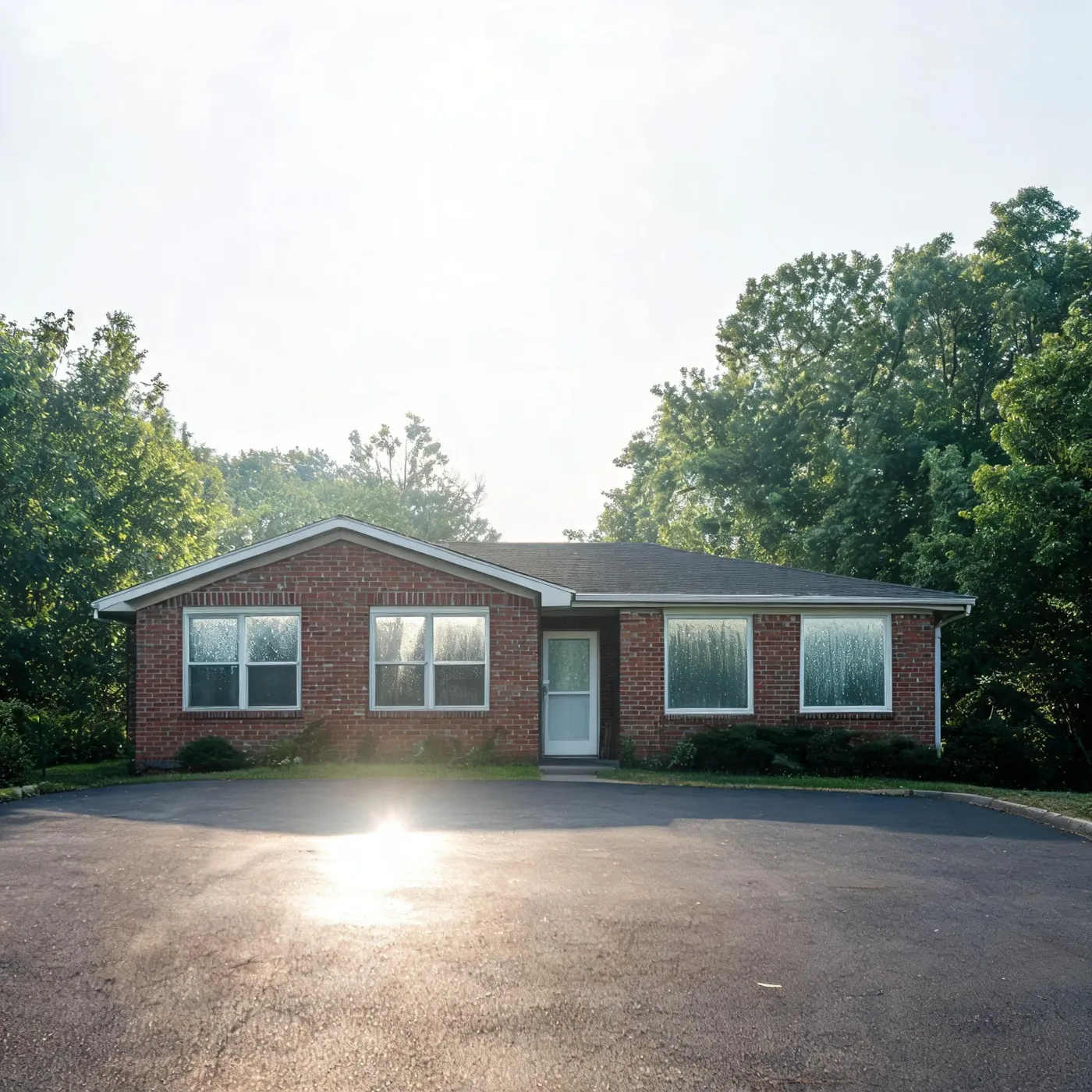
A single-story red brick ranch house with white-framed windows and a white storm door, fronted by a large asphalt parking area and backed by leafy green trees under a bright hazy sky.

Summer dew points average 67°F across North Carolina, counting June, July and August together, according to NOAA climate data. That's the kind of air that feels heavy even standing still. Your heat pump has to pull that moisture out along with the heat, so the compressor and fan run longer stretches than they would on a drier day. The longer the runtime, the more you hear it: a steady hum that turns into something louder by afternoon, or a rattle that wasn't there in the spring. The unit isn't broken just because it's working this hard. But the strain shows up as sound before it shows up anywhere else.

NASA POWER T2MDEW county cells weighted by homes

A weathered gray outdoor condenser unit on a concrete pad beside a house with horizontal vinyl siding, with conduit, refrigerant lines, and an electrical disconnect box on the wall behind it.
Before you get your heat pump repair
A gray outdoor condenser unit on a raised pad beside a house with horizontal lap siding, with refrigerant lines, conduit and an electrical disconnect box on the wall, and shrubs on a mulch bed to the left.
After you get your heat pump repair

Power costs 14.00 cents per kilowatt-hour statewide

At 14 cents per kilowatt-hour, every extra hour your heat pump runs to push through muggy air shows up on the bill. A unit straining and running long isn't just louder, it's pulling more power the whole time it does it.

EIA-861 2025 statewide residential average

A gray outdoor heat pump unit with a large fan grille sits on a concrete pad beside a house with horizontal lap siding, next to a green shrub, mulch bed, and lawn.

Running clean and even

This is what a heat pump should look like outside your house. The fins are clear, the fan spins free, and the sound settles into a steady hum once it's up and running. Air moves through without resistance, so the compressor isn't working past what the afternoon asks of it.


An outdoor air conditioning condenser unit with a top fan grille sits on a concrete pad beside a house with horizontal siding and a concrete step.

Choked with dust and grime

Fins packed with dust and debris block airflow before it ever reaches the coil. The unit has to run harder and longer to move the same air, and that strain is what you hear as rattling, grinding, or a hum that won't quiet down on a muggy afternoon.

A woman in a cream cardigan and jeans stands with one hand raised facing an open front door of a gray horizontal-siding house, with a black lantern wall light, a potted shrub with yellow flowers, and a stone-faced porch column.

A loud heat pump in summer is telling you something specific

The noise is the system working against North Carolina's humidity, and that work shows up as a strain somewhere you can hear: the fan, the compressor, a panel, a line. Which one it is decides whether this is a quick fix or something closer to a failure waiting to happen. That's not something to guess at from the back porch.

Instead of searching for a contractor, calling a few, explaining the sound over and over, and weighing quotes against each other, you can get matched with a contractor who handles heat pumps like yours and have them reach out to you directly. You'll already know from here what the sound likely means. What's left is getting the right person to confirm it and take care of it.

A living room corner with a light beige sofa holding a textured taupe cushion, a large ceramic vase of olive branches by a window, a framed neutral artwork on the wall, and a dark bowl with stacked books in the foreground.
Sunlight falls across a beige upholstered sofa with a textured woven cushion and a chunky knit throw, beside a dark wood cabinet holding a ceramic vase with green leafy branches, near a white-framed window.
A sunlit corner of a room with a wooden side table holding a ceramic vase of green foliage and a wooden bowl, beside a light upholstered sofa with a knit throw and rust-colored pillow, with window shadows cast on a beige wall.
A sunlit room corner with beige walls, a white-framed window with sheer cream curtain, wood floor with a light rug, and a woven basket holding a knit blanket.
A beige ceramic vase holding a leafy green branch sits on a wooden cabinet in a corner, with sunlight through a sheer curtain casting leaf shadows on the wall.
A grey upholstered sofa with a rust-orange velvet cushion and a textured throw sits beside a window with linen curtains, next to a wooden side table holding a pale ceramic vase of olive branches.

Get your heat pump to the right pro

Describe what your heat pump is doing once, in one form.

Get a heat pump pro

Sending the form costs nothing.





