Mini Split Installation in Chapel Hill, NC
A new system here will heat from October through April and cool from May through September every year. Tell us about the house, and a licensed contractor who covers Orange County will get in touch.
Tell us about the job
It takes about a minute.
A mini-split here works all year
Chapel Hill needs heat or cooling every month of the year. Winter nights average 31°F from December through February, so the heat pump side does real work, not just the cooling side. Summer afternoons average 87°F, and the system runs from May through September to keep up with that.
Most homes here heat with electricity, which puts more of the year's load on a mini-split's heat pump than its air conditioner. Any unit installed new has to meet the federal minimum for a split-system heat pump, 14.3 SEER2 for cooling and 7.5 HSPF2 for heating. North Carolina also saw a quarter of households lose power for at least 24 hours in 2024, worth keeping in mind for a system the house will depend on to stay warm.
- 7 months
- October through April, your system heats
- 5 months
- May through September, it cools
- 31°F
- the average winter night it heats against
- 87°F
- the average summer afternoon it cools against
NOAA nClimDiv, 1991–2020 normals
North Carolina requires HVAC contractors to hold a state license.
The State Board of Examiners of Plumbing, Heating and Fire Sprinkler Contractors tests contractors before they can take HVAC jobs in North Carolina and keeps a record of who holds that license. It covers the contractor, not the job itself, so the same license follows them from one house to the next.
For a mini-split install, that license is what stands behind the person doing the work. The install itself also needs a permit from the local building office, and most cities and counties will send someone out to inspect it once the work is done.
Sources: North Carolina General Assembly · North Carolina State Board of Examiners of Plumbing, Heating and Fire Sprinkler Contractors
- Is a mini split worth it?
- For most homes, yes, especially if a room runs hot or cold with no ductwork to fix it. A mini split heats and cools that space directly, and it keeps working on its own schedule rather than fighting the rest of the house. Homes here need heat from October through April and cooling from May through September, so a system that handles both seasons earns its place. Whether it is worth it for your house depends on which rooms you are trying to fix and what you are heating or cooling now, so a contractor should walk through the space before you decide.
- How many rooms can a mini split cover?
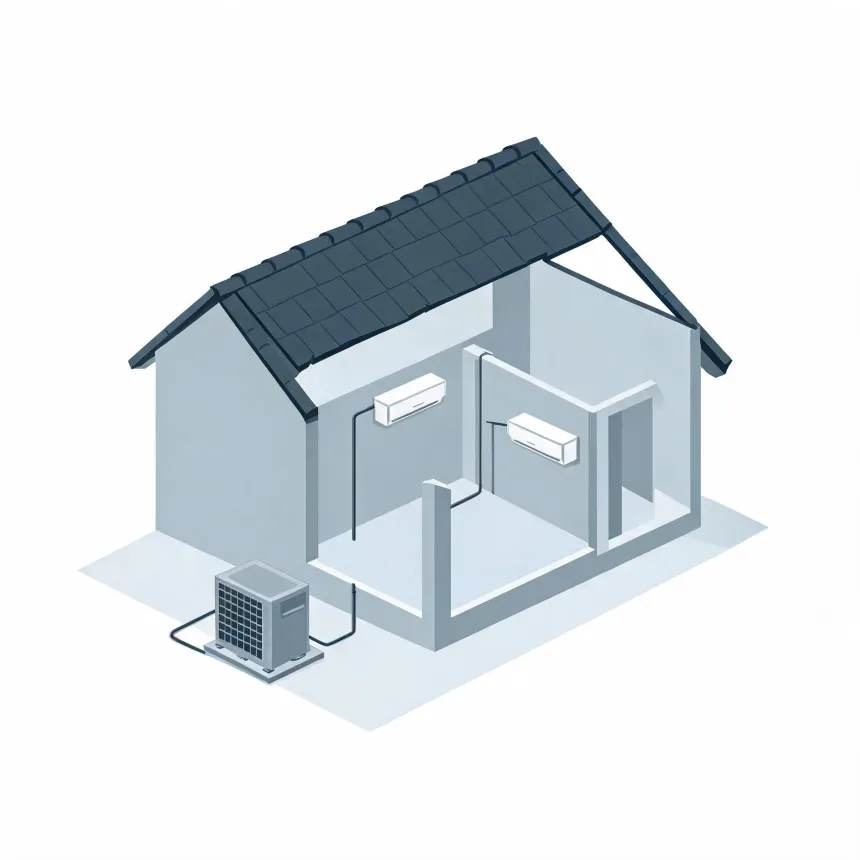
- A single outdoor unit can run one indoor head or several, depending on the system. Single-zone systems cover one room. Multi-zone systems run several indoor heads off one outdoor unit, each with its own thermostat, so different rooms can sit at different temperatures at the same time. How many zones your home actually needs depends on the layout and where the trouble spots are, which is something a contractor sizes room by room.
- Can a mini split heat a whole house?
- It can, if there are enough indoor heads placed to reach every room. A mini split is a heat pump, so it makes heat rather than burning fuel for it, and it works the same way whether it is heating one bedroom or a house full of zones. The harder question is whether it can keep up on the coldest nights, since winter lows here average 31°F. A contractor should confirm the specific unit's output against your coldest days and your home's heat loss before you count on it as your only heat source.