Heat Pump Repair in Concord, NC
Homes here need heat from October through April and cooling from May through September. If your system quits, tell us what it's doing and a licensed contractor who covers Cabarrus County will get in touch.
Tell us about the job
It takes about a minute.
Concord runs its heat pump almost year round
Your heat pump works every month here. It heats from October through April and cools from May through September, so the switch between modes happens more than most machines are asked to do. Winter nights averaging 32°F mean it runs a defrost cycle often, reversing itself to melt frost off the outdoor coil before going back to heating. Each reversal puts a load on the reversing valve, and a valve that sticks will leave you with a system stuck in one mode or blowing cold air when it should be warm.
Summer afternoons near 88°F push the compressor hard for five straight months. Cabarrus County has seen 60 damaging wind events and 7 winter storms over the last ten years, and a quarter of North Carolina households lost power for at least a day in 2024. A heat pump that loses power mid-cycle and comes back on under strain is more likely to trip a breaker or wear on the compressor over time.
- 7 months
- October through April, your system heats
- 5 months
- May through September, it cools
- 32°F
- the average winter night it heats against
- 88°F
- the average summer afternoon it cools against
NOAA nClimDiv, 1991–2020 normals
North Carolina requires HVAC contractors to hold a state license.
The State Board of Examiners of Plumbing, Heating and Fire Sprinkler Contractors tests and licenses HVAC contractors in North Carolina. That license belongs to the contractor, not to any one job, so the same license covers this repair and the next one they do.
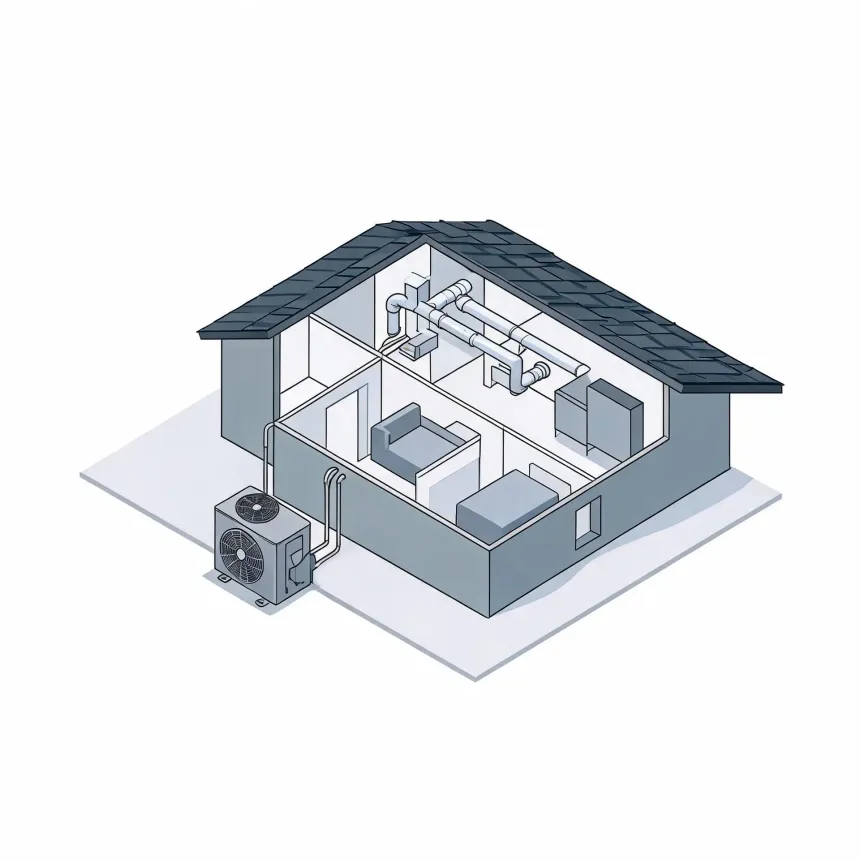
A heat pump moves refrigerant, so whoever opens that side of the system also needs EPA Section 608 certification. That is a federal requirement, the same in every state, and it exists alongside the state license, not in place of it.
Sources: North Carolina General Assembly · North Carolina State Board of Examiners of Plumbing, Heating and Fire Sprinkler Contractors
- Why is my heat pump blowing cold air?
- In winter, your heat pump moves heat from the outside air into your home, so the air coming out of the vents is warm compared to outside but cooler than your skin. That can feel like cold air even when the system is working right. If the air is actually cold, not just cool, check that the outdoor unit isn't caked in ice or blocked by leaves and debris. A thermostat set to "emergency heat" or a stuck reversing valve can also send cold air through the ducts, and that calls for a contractor to look at the system.
- Why is there ice on my heat pump?
- A heat pump forms some frost on its outdoor coil during cold weather, and it should melt that off on its own through a defrost cycle a few times a day. With winter nights here averaging 32°F, that cycle runs often. If ice is building up faster than it melts, or covering the whole unit, something is keeping the defrost cycle from doing its job, often low refrigerant, a failed sensor, or a fan that isn't clearing air across the coil. That needs a licensed contractor, since anyone working on the refrigerant side has to hold EPA certification.
- Why is my heat pump running but not cooling?
- If the outdoor unit and indoor fan are both running but the air isn't cold, the system likely isn't moving refrigerant the way it should. With afternoons here reaching 88°F in summer, a heat pump low on refrigerant or with a failing compressor will run constantly and still lose the fight against the heat. Check first that the filter isn't clogged and that nothing is blocking the outdoor unit. If the air still isn't cooling, the refrigerant charge or a part inside the system needs a contractor to diagnose it.