Heat Pump Installation in Fayetteville, NC
A new system here will heat from November through March and cool from May through September every year. Tell us about the house, and a licensed contractor who covers Cumberland County will get in touch.
Tell us about the job
It takes about a minute.
Ten months of the year, your heat pump is working
Fayetteville doesn't give a heat pump much rest. Homes here need heat November through March and cooling May through September, so between the two, something is running 10 months out of the year. Winter nights average 34°F from December through February, and summer afternoons average 89°F, so the system is working both ends without a break for long.
Most homes here heat with electricity, so the heat pump is carrying that load on its own, not backing up a furnace. Any new split system installed today has to meet 14.3 SEER2 for cooling and 7.5 HSPF2 for heating, the federal minimum since 2023. Wind is the storm risk that shows up most in this area, and a new installation is worth setting up with that in mind.
- 5 months
- November through March, your system heats
- 5 months
- May through September, it cools
- 34°F
- the average winter night it heats against
- 89°F
- the average summer afternoon it cools against
NOAA nClimDiv, 1991–2020 normals
North Carolina requires HVAC contractors to hold a state license.
North Carolina licenses HVAC contractors through the State Board of Examiners of Plumbing, Heating and Fire Sprinkler Contractors. The state tests contractors before they can hold this license and keeps a record of who holds one. The license belongs to the contractor, not to any single job, so it covers this installation the same as any other job they take on.
For a heat pump install in Cumberland County, that license is what stands behind the person doing the work. In most cities and counties, a job like this also needs a permit from the local building office, along with an inspection once the work is finished.
Sources: North Carolina General Assembly · North Carolina State Board of Examiners of Plumbing, Heating and Fire Sprinkler Contractors
- Is a heat pump better than a furnace?
- It depends on what you're heating with now. A heat pump moves heat instead of burning fuel to make it, so it can also cool your home in summer, which a furnace can't do at all. Here winters average a 34°F low and homes need heat from November through March, mild enough that a heat pump can carry the load without much trouble. If you're comparing to a gas furnace, the furnace will push warmer air at the vents, but you'd still need separate equipment for cooling.
- What's the difference between a heat pump and an air conditioner?
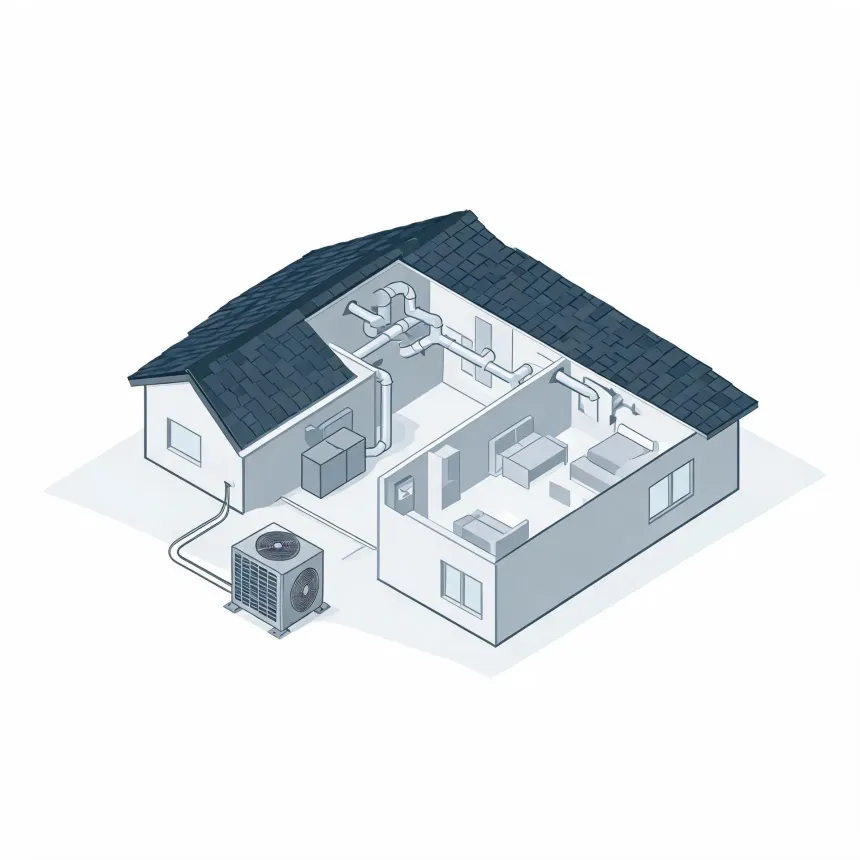
- An air conditioner only cools. A heat pump does the same job in summer, moving heat out of your house, but in winter it runs the cycle in reverse and moves heat into your house instead. The outdoor unit on a heat pump looks almost identical to a central air conditioner's, but inside it has a reversing valve that switches the direction of the refrigerant. That's what lets one system heat and cool instead of just one or the other.
- Does a heat pump work in cold weather?
- Yes. A heat pump pulls heat from outside air even when it's cold, because there's still heat in air well below freezing. Winter nights here average 34°F, which is well within the range a heat pump handles without difficulty. Heat pumps lose some efficiency as the temperature keeps dropping, but that matters more in places with harsh winters than it does here, where the heating season runs November through March at fairly mild lows.