
Dryer Vent Cleaning in Winston-Salem, NC
Tell us about your home, and a licensed contractor who covers Forsyth County will get in touch.
Tell us about the job
It takes about a minute.

Cold vents give lint somewhere to stick
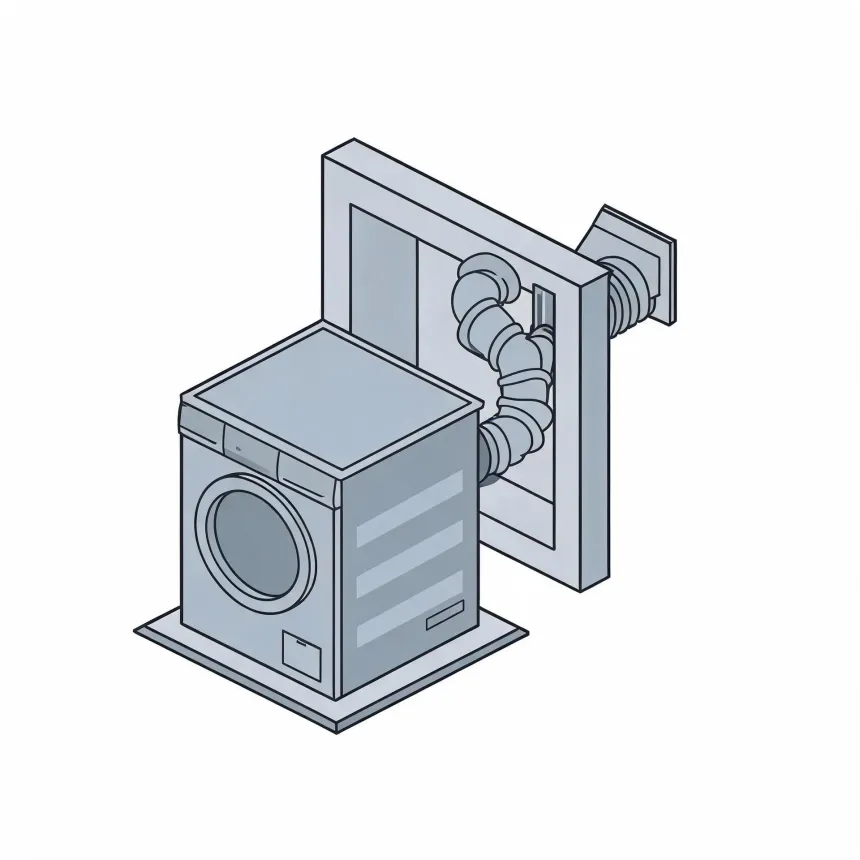
Your dryer pushes out warm, damp air, and it has to travel through metal duct that sits in unheated space, an attic or a crawlspace, before it reaches outside. From October through April, with winter nights averaging 30°F, that duct runs cold. The warm air cools fast inside it, and the moisture in it beads up on the walls of the vent. Lint sticks to a damp surface far more than a dry one, so it builds up right there instead of blowing on through.
Once enough lint packs into the vent, the dryer cannot push air out the way it should. Moist air backs up instead of venting outside, and a blocked vent is a known fire risk.
- 30°F
- the average winter night, and cold vents catch damp lint
- 7 months
- October through April, the vent stays cold
NOAA nClimDiv, 1991–2020 normals
- How often should a dryer vent be cleaned?
- Once a year for most households, unless a contractor tells you otherwise after looking at the run. Lint builds up along the whole length of the duct, not just at the ends, so a vent that looks clear at the wall can still be tight further down. If the dryer is taking longer to dry a normal load than it used to, that is a sign it is overdue.
- Can I clean my dryer vent myself?
- You can clean the lint trap and the first few feet of duct yourself, and you should do that often. A full cleaning of the whole run is a different job. It calls for a brush system sized to the duct and a way to reach the vent hood outside, which is harder on runs that go up through a roof or behind a wall.
- What are the signs of a clogged dryer vent?
- Clothes that take two cycles to dry, a dryer that runs hot to the touch on top, and a musty smell when it runs are the main ones. Check the vent hood outside too. Weak airflow there, or almost none, means lint is packed somewhere along the duct. A burning smell means stop using the dryer and have the vent looked at before running it again.