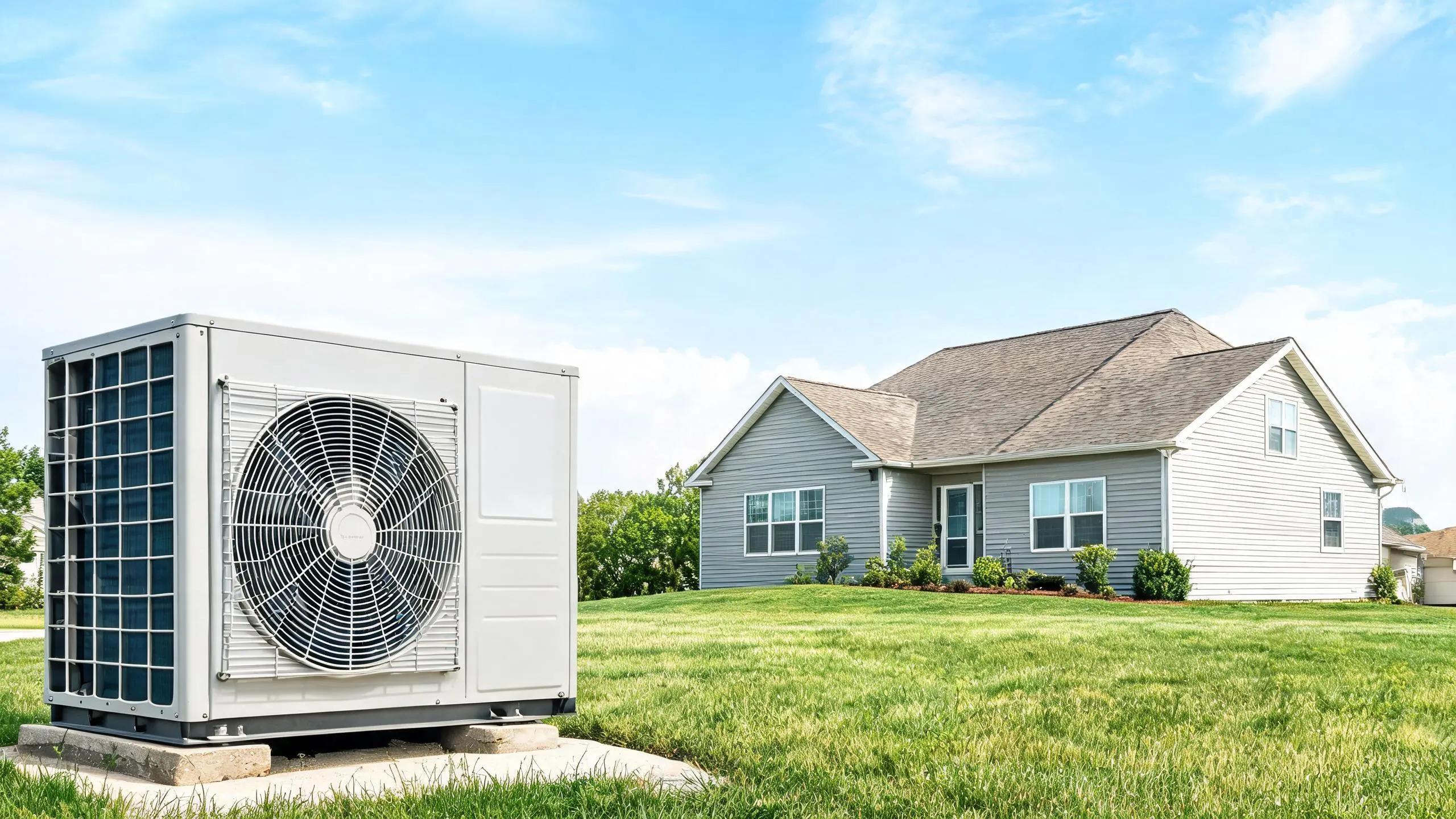
Heat Pump Installation in Charlotte, NC
A new system here will heat from October through April and cool from May through September every year. Tell us about the house, and a licensed contractor who covers Mecklenburg County will get in touch.
Tell us about the job
It takes about a minute.
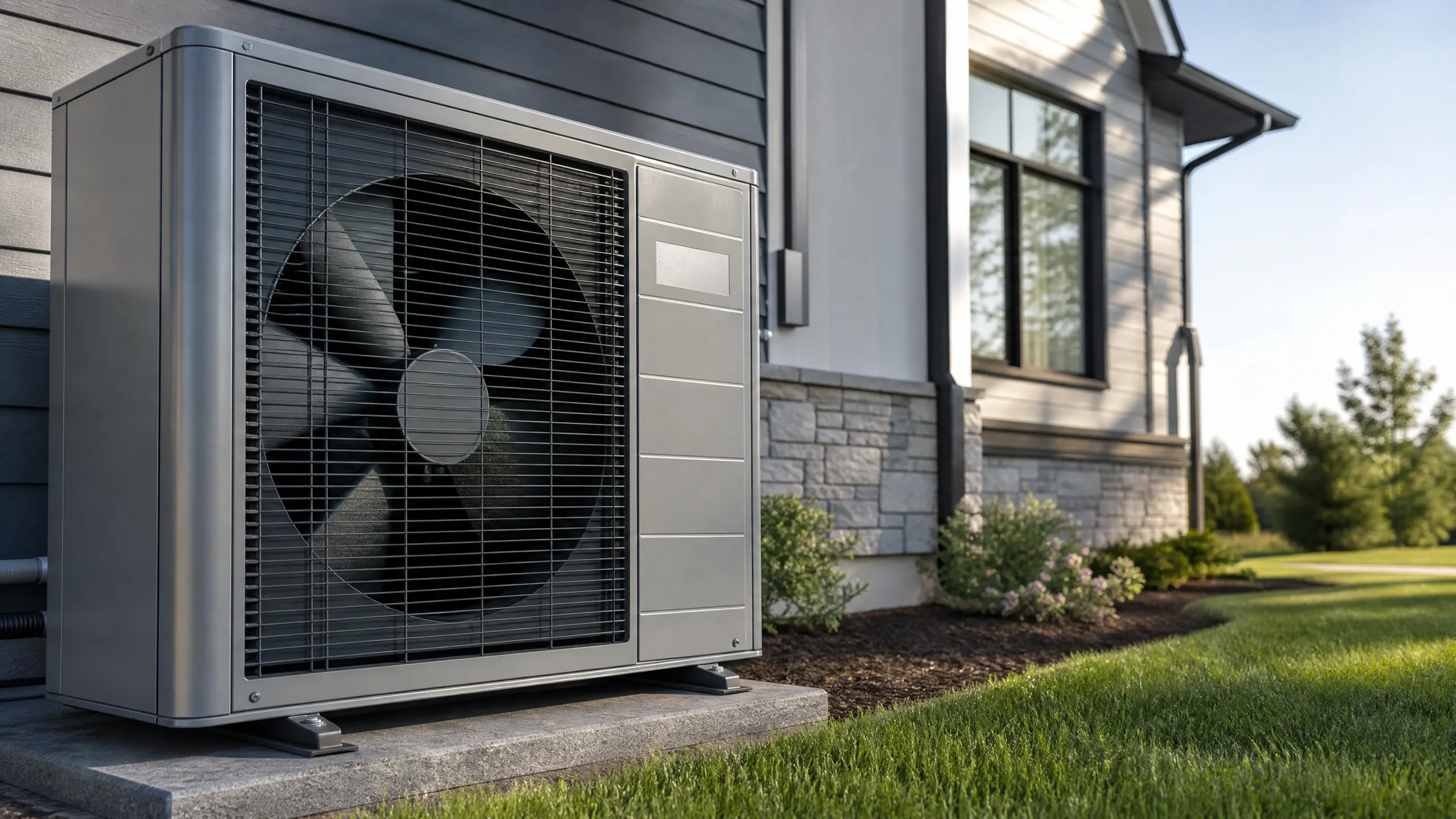
What a heat pump in Mecklenburg County has to handle
Your heat pump works almost year round here. Homes in Charlotte need heat from October through April, then switch to cooling for May through September. That is 12 months of run time with barely a break between seasons.
Winter nights average 32°F, mild enough that a heat pump can carry the heating load without much strain. Summer afternoons average 88°F, and the same unit has to pull that heat back out of the house for five straight months. Any split-system heat pump installed new has to meet 14.3 SEER2 for cooling and 7.5 HSPF2 for heating, the federal minimum as of 2023. More than half of homes here heat with electricity, so the heat pump usually is not backup, it is the main source of heat.
- 7 months
- October through April, your system heats
- 5 months
- May through September, it cools
- 32°F
- the average winter night it heats against
- 88°F
- the average summer afternoon it cools against
NOAA nClimDiv, 1991–2020 normals
North Carolina requires HVAC contractors to hold a state license.
The state tested this contractor before handing out the license, and the Board of Examiners of Plumbing, Heating and Fire Sprinkler Contractors keeps a record of who holds one. That license belongs to the contractor, not to any single job, so it is the business itself that is on file, not just this installation.
For a heat pump install in Mecklenburg County, the license is what makes the contractor accountable for the work. On top of that, most cities and counties here require a permit before the job starts and an inspection once it is done, which is a separate check on the installation itself, not the contractor's credentials.
Sources: North Carolina General Assembly · North Carolina State Board of Examiners of Plumbing, Heating and Fire Sprinkler Contractors
- Is a heat pump better than a furnace?
- It depends on what you're weighing. A heat pump handles both heating and cooling, so it replaces two systems with one. A furnace only heats, and it burns gas or uses electric resistance to do it, which costs more to run than a heat pump moving heat instead of making it. In Charlotte, winter lows average around 32°F, and a heat pump built to today's standard keeps working fine at that temperature. Where a furnace still wins is on the coldest nights, since a furnace's heat output doesn't drop as the air outside gets colder. A contractor can tell you whether your house needs backup heat alongside a heat pump or not.
- What's the difference between a heat pump and an air conditioner?
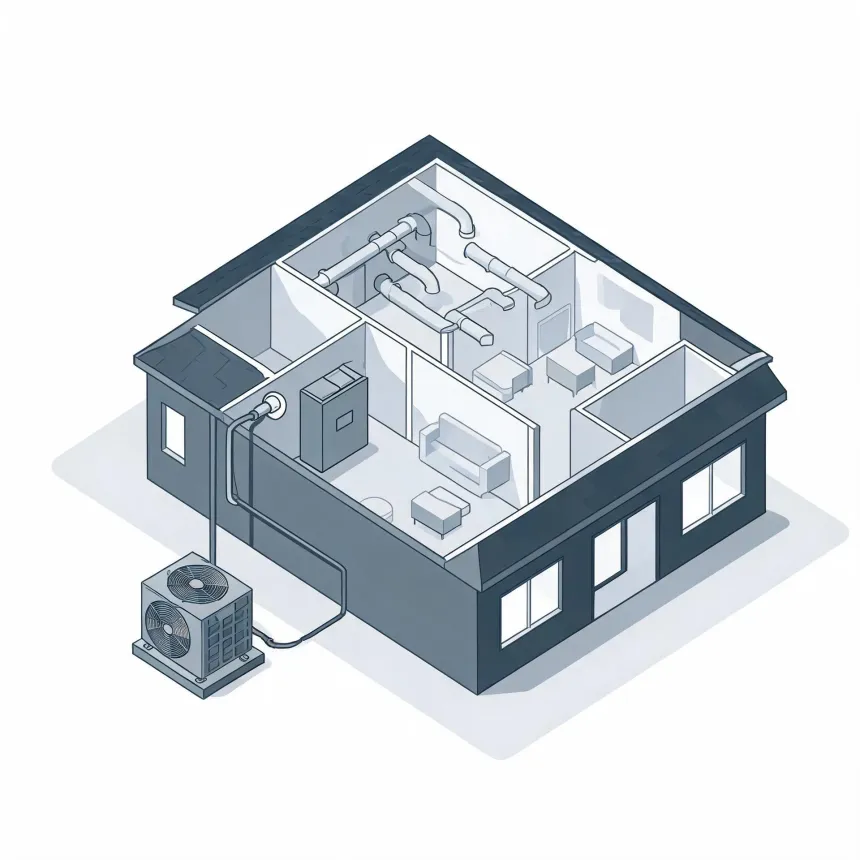
- An air conditioner only cools. A heat pump does the same cooling job in summer, then reverses itself in winter and pumps heat into the house instead of out of it. Mechanically they're close cousins, both use a compressor and refrigerant to move heat rather than generate it. The difference is the reversing valve that lets a heat pump run backward. That's why a heat pump can replace both your furnace and your air conditioner, while an air conditioner only ever does the one job.
- Does a heat pump work in cold weather?
- Yes, a heat pump keeps working in cold weather, though it puts out less heat as the temperature drops. It's still pulling heat from outside air, and there's less heat to pull as the air gets colder. Charlotte's winter nights average around 32°F, which a heat pump handles without trouble. On the rare night that drops well below that, some systems switch on backup electric heat to make up the difference. A contractor can tell you whether a given system needs that backup for this area or handles the cold on its own.